
About Franklin Miller Inc.
Since 1918 we have built machines that break hard things into smaller ones. Three generations of family ownership, engineered and manufactured in Livingston, New Jersey.
Our Story
Engineered in Livingston, NJ Since 1918
Franklin Miller opened in New Jersey in 1918, built on quality craftsmanship and inventive engineering. The company you see today took shape in 1953, when Harold Galanty became president and pointed the business at a harder question: how do you break down the materials nobody else will touch? Chemical processing came first, then wastewater, food, minerals, and recycling — and a single New Jersey shop grew into a globally recognized manufacturer of size reduction and screening equipment.
Three generations of the Galanty family have guided the company through that growth, with William Galanty as president and Jake Galanty as general manager today. Through all of it, Livingston, New Jersey has stayed the constant. Every machine is engineered, machined, assembled, and run under power on the same floor where it was built, then shipped to one of the more than 50 countries where Franklin Miller equipment is at work.
100+
Years in Business
3
Generations
50+
Countries
Before You Buy
Send Us Your Material
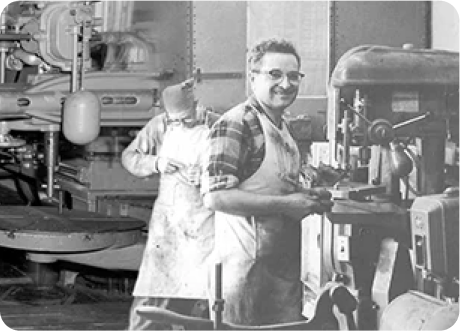
Size reduction is hard to predict on paper, because no two materials fail the same way. Franklin Miller runs an in-house test lab at the Livingston plant, where we process a sample of your material on production equipment, evaluate how it performs, and confirm the result before you commit to a purchase.
Real material, real machines
Trials run on production equipment, not simulations, so what happens in the lab is what happens on your floor.
The right model, the right cutters
Testing settles which unit and which cutter configuration suit your material, instead of sizing it from a spec sheet.
Proof before purchase
You see how your material actually processes before a purchase order exists.
Our Brands
Six Lines, One Engineering Standard
Each line exists because a customer brought us a material that nothing on the market could handle. All six are engineered, built, and tested at our Livingston, NJ facility.
The clearest example is the patented Cutter Cartridge® — twelve separate components consolidated into a single element, cutting the moving parts in a cutter stack by roughly eleven twelfths. Fewer parts, faster changeouts, less to go wrong.
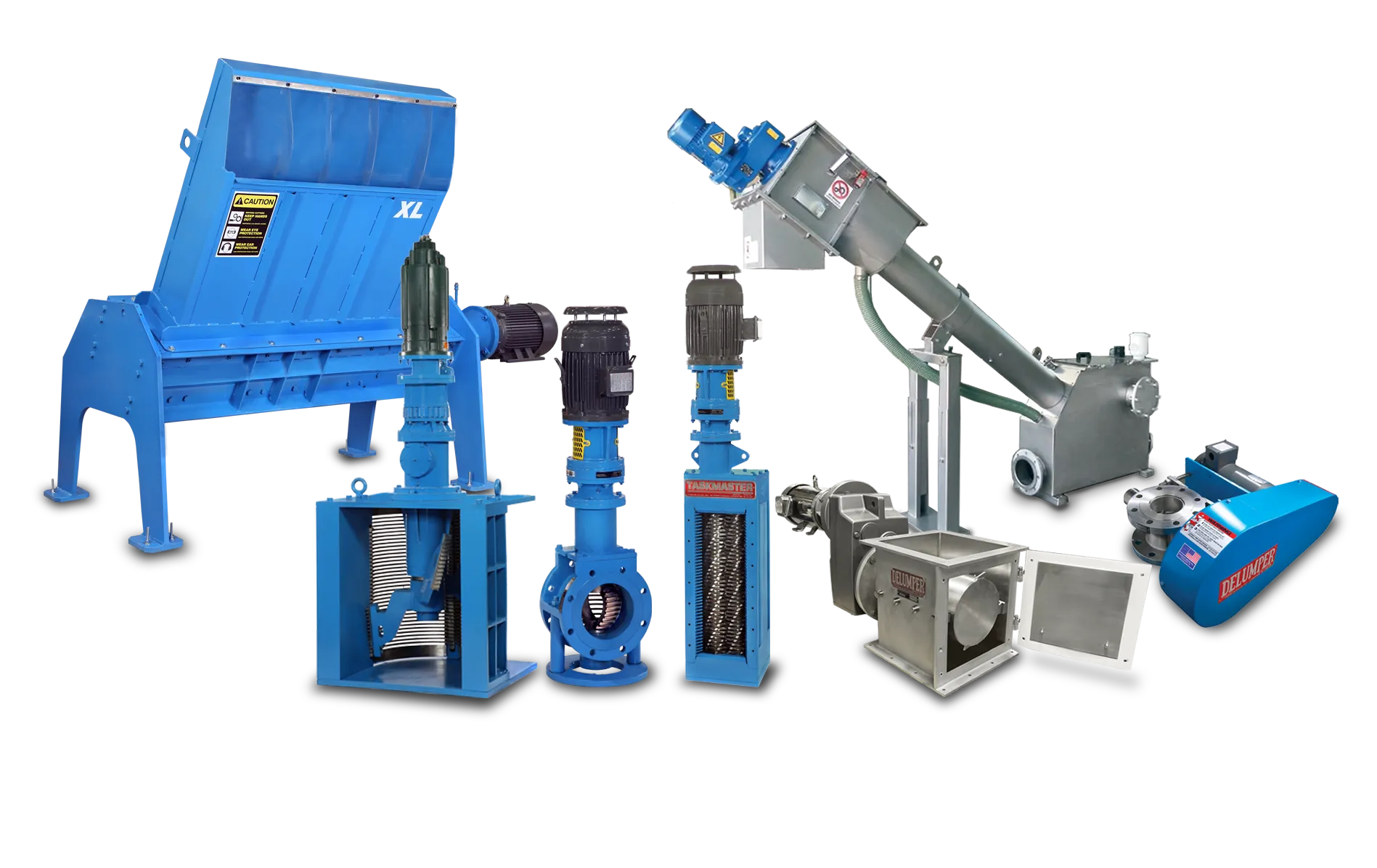
Grinders for wastewater, industrial process, and food applications
Crushers for breaking agglomerated bulk solids and process materials
Open channel comminutors for screening and grinding in a single unit
Heavy-duty dual-shaft shredders for demanding size reduction
Fine screening equipment for solids separation and removal
Septage receiving and bulk water dispensing stations
What Sets Us Apart
Four Things We Do Not Outsource
From the first application drawing through decades of operation, the same company stays responsible for the machine.
Engineering
Our applications engineers size the machine to your material, not to a catalog page. Hard jobs get custom cutter configurations, drives, and housings.
Manufacturing
Machined, welded, and assembled at our Livingston, NJ plant — heavy plate, hardened cutters, and tolerances held in-house.
Testing
Every unit runs under power on our floor before it ships. Nothing leaves Livingston that has not been proven to cut.
Service & Parts
Genuine OEM parts and factory-trained technicians, including for machines that have been in service for decades.
Proof in the Field
Not claims — installations you can read about.
1,300 miles
of sewers
The Metropolitan District in Hartford, Connecticut runs Franklin Miller grinders across its collection system.
Read the case study →4.3 million
gallons a day
The Musconetcong Sewerage Authority upgraded its regional wastewater operation with a new grinder installation.
Read the case study →3 grinders
in Brewer, Maine
A municipal water facility solved its recurring clogging and downtime problems and kept the plant flowing.
Read the case study →Trusted by Industry Leaders Worldwide







Engineering Since 1918
Bring Us Something Difficult
Tell our engineers what you are trying to reduce and how much of it. That conversation is how most of our product lines started.