News & Insights

Industrial Case Studies

Browse all industrial case studies articles from Franklin Miller.

pipes and wheel on wall machine
Industrial Case Studies·February 5, 2015

Case Study: DELUMPER® LP Crusher Improves Cocoa Butter Processing
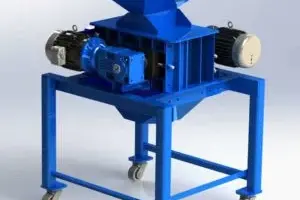
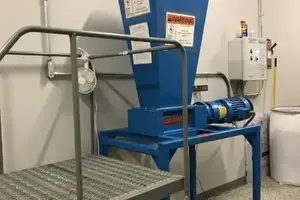
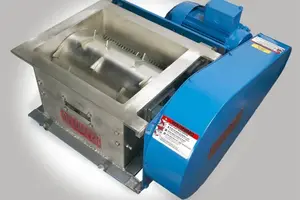
Chef Rubber, based in Las Vegas, Nevada, is a manufacturer and distributor of specialty supplies for chefs and well-known confectioners. The products include silicones, molds, colorants and colored cocoa butter. These unique tools are widely used by artisan chefs to create edible works of art for special events, competitions and other artistic applications. With the recent optimization of their web site, the company experienced worldwide demand for their products and a large increase in sales. It soon became clear that in order to keep up with the expanding business, they would have to upgrade some of their material handling and production practices. “We needed to take a look at how we process cocoa butter, one of our most popular products,” explained Paul Edward, Director of Operation. “It is widely used by chocolatiers and pastry chefs to make their showpiece creations.” “We purchase a very specific type of cocoa butter from Venezuela that comes to us in fifty pound blocks,” he continued. “The first step in the process is to break the blocks down to smaller pieces. Until recently, this meant shaving each block by hand and that wasn’t going to work anymore.” ‍ After examining their options, the company turned to Franklin Miller for a solution. A DELUMPER®1075 LP Crusher was subsequently purchased after a test run with the cocoa butter passed with flying colors. The DELUMPER LP lump breaker processes hard, soft, sticky, dry or wet substances at high volume. The unit features extended cutter teeth that rotate through a rugged bar grating. This powerful processor reduces oversized solids up to the unit’s full input opening size. With each rotation, the teeth clean the slot openings making the unit automatically self-clearing. The result is an efficient, exceptionally low friction cutting action that is excellent for large quantities of food, chemicals, fats, waxes, plastics, filter cake, and more. The units are provided in various sizes with single, dual or triple shaft configurations for capacities up to 27,000 lbs./hr. An optional hardfacing of chrome boride fused coated to all cutting teeth is provided for superior life in abrasive service. Units are available in carbon steel, T304L or T316L stainless steel construction. “The DELUMPER lump breaker has made a big difference,” said Edward. “It chops the blocks down in no time at all. In addition, the stainless steel interior makes it very easy to clean.” “The unit is so big and powerful that I could do a semi truck load of cocoa butter in a day if it was needed,” he concluded.

Read More
supreme roll mill
Industrial Case Studies·February 5, 2015

Case Study: ROLLMASTER™ RM

Problem: A manufacturer needed a mill that could finely reduce highly abrasive glass beads without creating excessive fines and while controlling dust. Solution: The manufacturer heard about the Franklin Miller’s ROLL MILL and decided to give them a try. After trying their material on a test unit at the factory they found the performance and output to be just what they were looking for. It quickly reduced the beads to their desired output range without any problem. ROLL MILL provides dependable fine reduction of a wide variety of solids with an efficient once-through milling action. These units can produce an output in a narrower, more controllable particle size range than other size reduction methods. ROLL MILL employs dual counter-rotating smooth, serrated or grooved rolls that mill, pinch and crack solids to an output range between 13 and 150 mesh without degrading the valuable qualities of the feed material and with low dust. Roll gaps are variable to fine tune the particle size discharged. These units can efficiently reduce such materials as salt, polymers, chemicals, grain, coffee, glass and more. The unit supplied was in carbon steel construction. To control the glass dust a special output enclosure was supplied with for integration with a dust filter system. An additional port was supplied for introduction of a negative pressure in the milling area as well. The unit also features serrated 10″ x 10″ rolls, variable roll gap, a hopper feed regulator, automatic spring overload relief, an over-sized hopper and an automatic electrical controller. Franklin Miller provides the ROLL MILL in a variety of sizes from 10″ x 10″ up to 20″ x 60″ in carbon as well as stainless steel construction.

Read More
dairy cow in field
Industrial Case Studies·February 5, 2015

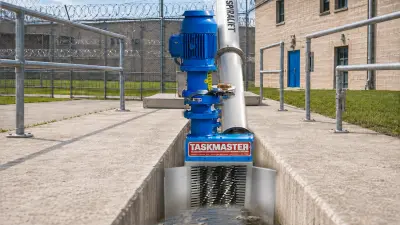
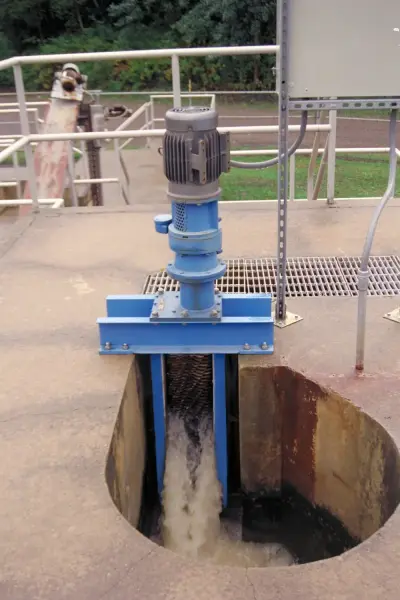
Case Study: Taskmaster® Grinder Contributes to BioFuel Production

The Meadowbrook Dairy in El Mirage, California is part of a growing alternative energy initiative -the production of energy from renewable sources. In this example, the renewable source is manure provided by the dairy’s 2000 cows. Each day, 20,000 gallons of manure are collected, deposited and processed in an anaerobic digester. Methane is released which fuels a turbine that generates electricity. Enough power is generated to meet most of the daily needs of the 159 acre dairy. Size reduction of the raw material is an important first step in the process. The dairy has installed several TASKMASTER® TM8524 grinders which have proved to be extremely reliable and easy to maintain. “This macerator does a great job of processing our manure/slurry at the beginning of our anaerobic digester,” said dairy owner, Ed Imsand. The unit has made a big difference in gas production by creating smaller particles with more surface area for bacterial action. It has helped make more electricity and less green house gas emissions.” The environmental benefits of generating fuel from manure include cleaner air and water. Methane has a global warming effect 21 times that of carbon dioxide. Using methane for energy purposes significantly reduces greenhouse gas emissions. There are also benefits to the water shed, since manure that is used in the biogas process is not washed off land surfaces by rain and irrigation into local rivers and streams. TASKMASTER® grinders set the standard for effective solids reduction, reliability, easy maintenance and exceptional durability. These grinders are provided from small units that can be installed directly in pipe systems up to large shredders that feature 40, 75 and 100 HP motors for handling everything from solid waste and hides to tires and solid rocket fuel. These units are provided with Franklin Miller’s unique sealing technology which makes them uniquely suited for wet processing under pressure conditions as well as for dry gravity applications. TASKMASTER grinders are available with many innovative features including patented “cutter cartridge technology.” With these cartridges, multitudes of individual cutter and spacer disks are replaced with a few one-piece cutter cartridge units that greatly enhance strength and performance.

Read More
tm8500 in car plant
Industrial Case Studies·February 5, 2015

Case Study: TASKMASTER® Grinder Solves Paint Problems for Automakers

A TASKMASTER® TM8512 grinder was recently installed at an automotive manufacturing facility. The unit was chosen as the most effective way to handle dried paint chunks that were passed through a four inch pipeline and deposited into a collection tank. Large pieces of paint debris often clogged the line and needed to be reduced to a smaller size. The TASKMASTER was attached to the line in the area at the bottom of the collection tank. Special “combs” were added to optimize the cutting and shearing of the paint pieces and to help remove anything that would stick on the cutters, spacers or shafts. On each pass or rotation, material that adhered was scraped off and pushed to the cutters again. The paint chunks were ground to desired output size of ¼ inch, flowing easily through the pipeline. The application at another automotive facility was to break up clumps that formed in paint agglomerates in a paint tank. The paint balls clogged the recirculating pump resulting in down time and frequent maintenance. To remedy the problem, the solution was to install a SUPER SHREDDER® SS8000 between the paint tank and the pump. Franklin Miller’s high performance grinders and shredders have been instrumental in solving size reductions problems at manufacturing plants worldwide. They easily process agglomerates, paint solids, food, chemicals, oil solids, pulp and paper, pharmaceuticals and more. They prevent pump and pipeline clogging, reduce downtime and maintenance and help increase plant efficiency.

Read More
taskmaster 8500 installation with piping
Industrial Case Studies·February 5, 2015

Case Study: Taskmaster® Grinder Solves String Problem

Essilor Labs of America, Omega Optical Laboratory in Dallas, Texas specializes in the production of state-of-the-art ophthalmic lenses. One of the products produced in the laboratory is a prescription lens composed of a polycarbonate material. The lens blank is generated using specialized CNC machinery. During the generating process, the machine sprays water based coolant on the lens to remove the waste material. The coolant and waste material is drained to a transfer tank which then pumps the coolant back to the primary coolant tank. The waste material is separated and augured to collection drums. At one time the production of the lenses was straightforward but with the implantation of the newer generating equipment the waste material’s geometry is significantly different than with the traditional lens manufacturing process. “It was a major headache,” said Senior Maintenance Technician, Brent Teichman. “Major problems developed with our coolant system when we converted it over to handle the new process.” The main problem was the stringy waste material created during the process. These strings would build up around the separation auger until the auger would lock up. Soon after that the drive belt would burn off and the system would come to a complete halt. We spent hundreds of man hours working on the string problem. If the auger wasn’t checked periodically and the strings removed then you could count on production going down. “We needed a solution and that’s when we turned to FRANKLIN MILLER,” said Teichman. “After reviewing our options, we purchased the TASKMASTER® TM8500 inline grinder. We saw an immediate difference. The unit chewed up the plastic strings into small particles which passed easily through the catch basket and the transfer pumps. During the initial installation we ran into flow problems which after speaking to our representative we realized that we needed gravity pressure to maintain a positive flow of coolant through the plumbing. We accomplished this by installing the TASKMASTER in the vertical position and placing the unit’s fluid chamber just below plumbing level, which completely solved the flow problem. “The TASKMASTER TM8500 has helped a lot,” Teichman continued. “We spend only thirty minutes a day cleaning out the basket. We don’t have to worry about replacing belts and pumps or production going down. Franklin Miller has been very responsive, providing good technical support and service. And the TM8500 appears to be pretty much maintenance-free,” he concluded.

Read More
metal pipe and shelf
Industrial Case Studies·February 5, 2015

Crusher Takes Its Lumps, Minimizes Elbow Grease

CCP, Inc. in West Paterson, N.J. makes over 1,000 product formulations under private labels for the cosmetics industry, using materials such as persulfates, alkali silicates, phosphates, sodium chloride, and magnesium chloride. The producer processes powder sizes from 20 to 200 mesh, and bulk densities “vary greatly,” according to operations vice president Walter Shepherd. “We produce some talc powders that run just a couple of pounds (per cubic foot),” he said. Previously, for production, raw materials were received in bulk bags or drums, which were then dispensed from bag discharging stations by auger feeders to load ribbon blenders. Material in drums were manually dumped into the blenders, where they were blended, milled and reblended. “Some crushing processes get quite complicated.” Shepherd said. “The material is brought in, checked, blended, and ground to the prescribed size. It’s then post-blended, rechecked, reground, sprayed with ingredients such as conditioners or surfactants, analyzed and packaged. Deagglomerating was inefficient. Many raw materials are prone to caking or agglomerating prior to arrival at CCP, and need to be deagglomerated before processing. To do so in the past, the agglomerates were prescreened or manually removed. “The results were good but it was labor intensive,” said Shepherd. “And there was some waste because material wouldn’t always break up or go through the screens.” After the lumps were discarded, more material was added to make up for them. Production was halted during the processes. CCP decided to install a deagglomerating crusher to streamline the process and sought a crusher that could break up large agglomerates in one pass with minimal particle attrition or heat rise. In the course of their search, CCP received recommendations from three sources for a Franklin Miller deagglomerating crusher, Shepherd said. “Based on these recommendations, we went with Franklin Miller.” CCP chose to install a Franklin Miller DELUMPER 1075-L deagglomerating crusher, a common choice for food, pharmaceutical, and chemical applications. The unit handles several agglomerate shapes and sizes, including chunks, slabs, sheets, and flakes. Typical materials processed are resins, waxes, salts, foods, fertilizers, filter cakes, and tough or soft chemicals. At CCP, the crusher exceeded expectations by successfully breaking up the agglomerates to a specified particle size in one pass with minimal particle attrition and a gentle process that didn’t generate significant material heat rise. Shepherd said production is more efficient because the crusher gives a “dramatic saving over the manual deagglomerating method. The crusher decreased downtime and production delays, and it increased annual output. In batches where agglomerates were a problem, throughput has increased by 75 percent.” The crusher has also relieved some concerns when receiving raw materials because the producer doesn’t have to worry as much about agglomerates. In addition, Shepherd said the crusher operates well and requires little maintenance. View our other crushers here.

Read More
dc1075 mineral crusher machine
Industrial Case Studies·February 5, 2015

Mineral Crushers – Using Crushers To Cut Problem Solids Down to Size

A mineral processing plant in Pennsylvania needed a better way to process large batches of problematic minerals. The contents from 3,200 pound super sacks were placed on a conveyor and then manually hammered to crush them, a labor-intensive operation. Adding to the problems, the minerals were lumpy and rock-solid after spending months on a boat from China. The operation was slow and hazardous, labor costs were high and particle size varied widely. The company made the decision to automate the process. Franklin Miller was asked to assess the entire operation and recommend an easily installed crusher that would quickly reduce the difficult agglomerate lumps. Based on that assessment, the customer purchased a DC1075L DELUMPER® Crusher. The minerals were conveyor fed from the super sacks to the DELUMPER crusher. The unit’s powerful crushing action reduced lumps as large as six inches down to uniform, quarter inch particles in a fraction of the time previously required. DELUMPER Series lump breakers reduce a wide range of materials to desired output with a positive, once-through chopping action without overgrind, heat rise or fines. The units feature specially designed, individually replaceable teeth mounted on a smooth, rotating drum intermesh with sizing combs. Lumps up to full inlet opening size can be processed. The crushers are self-cleaning and self-feeding. They run at low speed and create little vibration or noise. All units feature solid, one-piece body construction, smooth finish and unique design for unsurpassed performance and reliability. According to the plant manager, installation of the DELUMPER lump breaker has helped improve processing, increased output and reduced production costs. “In short, it’s done everything we asked for,” he concluded.

Read More
natural raw rubber in metal machine
Industrial Case Studies·February 5, 2015

Rubber Granulators – Case Study: VULCANATOR® Reduces Rubber Bales and Processing Time

Problem: A manufacturer of surgical gloves had a problem in establishing a new production line to meet their capacity requirements and quality standards. The major raw ingredient in surgical gloves, natural rubber, was received in the form of full 75 lb. bales of raw rubber. The first step in the process was to reduce the bales to a small size, since dissolving of the full rubber bales would take an unacceptably long amount of time and be very costly. A granulator was required that had to meet a number of requirements. It had to be able to reduce the tough rubber and be built to medical standards for cleanability and corrosion resistance. It also could not employ talc in the process because of the concern about allergic reactions. It turned out finding a unit to meet these requirements wasn’t going to be easy. A number of approaches were studied and ruled out including guillotine cutters, hammer mills and extruders. The problem is this rubber material, like most rubber, is a sticky, cold flowing product that can easily gum up in equipment. The cut pieces are sticky to the touch and can quickly re-agglomerate. The handling of this material is amongst the toughest of size reduction applications which has vexed many manufacturers for years. The granulator manufacturers they approached either didn’t have a unit that could handle the tough rubber bales, had equipment that required expensive cooling equipment, or couldn’t supply a unit that could meet the sanitary requirements demanded by this application. In fact, several standard granulators they considered failed completely in performance tests. The key to the project’s success was finding a solution and time was quickly running out. That’s when the company’s project engineer contacted Franklin Miller. Solution: FMI’s application engineers, working closely with the customer, performed some preliminary tests on the rubber bales. Through this evaluation process, it was determined that their 100 HP VULCANATOR® could handle the application and with some special modifications, an order was placed. To meet the tight delivery schedule the machine had to be built on an accelerated time table. The VULCANATOR is a special granulator designed specifically for the rubber industry. It is typically used in these types of applications to promote the dissolving of rubber into solution in the molding of rubber products, adhesives and synthetic fuel oils. The units are typically sold for use before a mixing tank or sold as part of a complete mixing system for accelerated dissolving. The unit can handle various types of natural and synthetic rubber such as Butyl, Viton, EDPM, Solprene, Hypalon, Hycar and more. The VULCANATOR can handle all types and shapes including full bales, sheets and chips. Additionally, the VULCANATOR can be used for foam rubber recycling applications of such items as mattresses, car seat cushions and covers. It can even cut the metal springs trapped in these items. The VULCANATOR employs a unique cutting design that reduces the rubber bales into progressively smaller pieces with rotating knives while minimizing heat rise. With this design, the need for expensive auxiliary cooling equipment is eliminated. A variety of screens are provided to optimize output for each application requirement. To keep the material from re-agglomerating, a partitioning agent is typically used such as talc, or limestone or surfactants. A number of VULCANATOR models are available for handling from 500 lbs to 5000 lbs per hour of rubber. These units use from 60 HP to 250 HP motors. For this application, the VULCANATOR was designed with all contact parts constructed of stainless steel and with a special seal system to operate in a wet environment. Access doors were provided for easy maintenance of all major cutting elements as well as convenient cleaning and sanitizing. The unit is built with a rugged welded frame construction for rigidity. A special hopper was designed to meter the bales into the chamber and insure that the material is effectively processed by the cutting knives. The VULCANATOR can be mounted directly above a dissolving tank or used in conjunction with a discharge conveyor such as a belt conveyor or pneumatic system. Feeding is either manual or automated with conveying equipment. After completion of construction, the machine was put through a final shop performance test with the actual material. The powerful VULCANATOR dependably reduced a number of the full bales and met the required output size. The unit was then installed at the plant site. After installation, the unit was started up and the results were impressive. Not only is the new process with the VULCANATOR meeting production goals, but a higher quality product is being produced. The VULCANATOR has shaved a great deal of time off the dissolving process and in so doing has made the operation more profitable. In fact, according to the plant engineer the dissolving time has been reduced by 93%. “Without the VULCANATOR, the project would not have been a success,” he said.

Read More

Technical Resources & White Papers

Access engineering guides, technical specifications, and industry white papers to support your project planning.

Engineering Excellence Since 1918

Ready to Solve Your Toughest Processing Challenges?

Our team of engineers is ready to help you find the right equipment for your application.