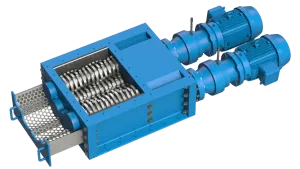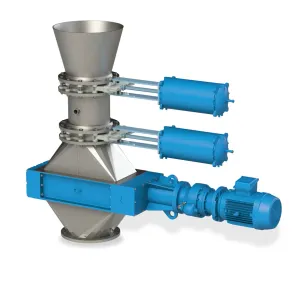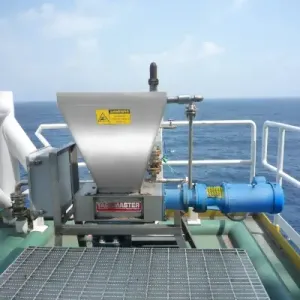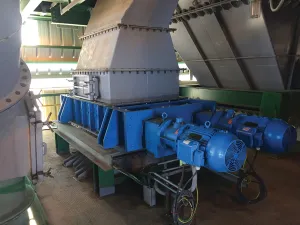
In a high-capacity industrial setting, the DELUMPER Model DC4856LP crusher has proven to be a game-changer for processing calcium phosphate filter cake.
Calcium phosphate filter cake is a common byproduct in the production of fertilizers and pharmaceuticals. Due to its high density and abrasive nature, processing this material poses significant challenges. Effective handling and reduction are crucial to streamline subsequent processing steps and improve overall efficiency.
Instituting the DELUMPER helped to fully optimize the reduction process and allowed for the proper measures to be taken when handling the byproducts. Because of this, no fertilizer material is compromised, which can happen when this process involves sub-optimal equipment.
The DELUMPER DC4856LP crushers are capable of processing up to one million pounds per hour, and were selected in this application for their robust construction and impressive performance capabilities. Built from carbon steel and powered by (3) 75 HP motors, these machines are designed to handle the demanding conditions of processing abrasive materials.
A standout feature of the DELUMPER DC4856LP is its triple shaft mechanism. This innovative design incorporates heavy sizing teeth that rotate through a sturdy bar cage, ensuring effective crushing and sizing of the material. This unit employed a double tooth design which results in high capacity, and a balanced design for low vibration or noise. The teeth are made from hardened alloy steel, for durability in abrasive service such as the filter cake.
One of the key advantages of these crushers is their self-clearing mechanism, which is crucial for preventing blockages and ensuring uninterrupted operation. By automatically clearing any material build-up, the machines minimize downtime and reduce the need for manual intervention, which contributes to a smoother and more efficient operation.
The DELUMPER DC4856LP crusher features a low profile design so it can be easily retrofitted into existing plant locations without requiring extensive modifications. This proved particularly beneficial in this application. This seamless integration allowed for a smooth upgrade to the processing line, improving efficiency without the need for major infrastructure changes.
Overall, the implementation of the DELUMPER Model DC4856LP crushers has significantly improved the processing of calcium phosphate filter cake at this plant.
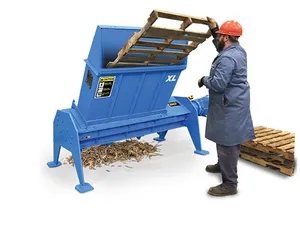
The TASKMASTER XL shredder efficiently handles whole natural wood pallets, significantly cutting down their bulk volume. This powerful unit can greatly reduce pallet disposal costs. Unlike traditional models, the XL uses a gear drive system—eliminating the need for drive belts and the hassle of re-tensioning or replacing them. It’s built for simplicity and ease of maintenance. The machine's hopper is designed to automatically guide the pallet into the cutting chamber, while the automatic reversing control ensures smooth, effortless operation.
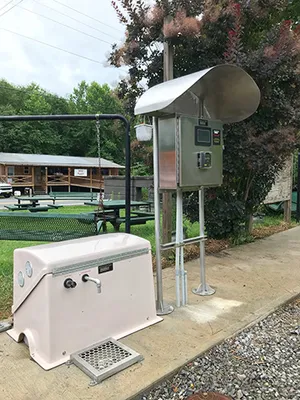
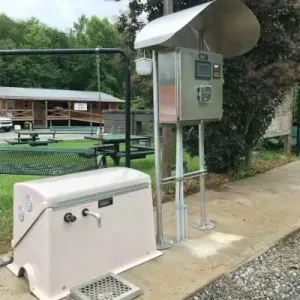
Watch the HAULERPORT® Bulk Water Fill Station in action! This system provides a comprehensive solution for automated water dispensing, giving you full control over your water supply. Each station includes two primary elements: a pre-assembled, compact equipment enclosure ready for easy installation, and an advanced control system featuring a touch screen HMI interface, specifically designed for effortless, unattended operation.
Click here to learn more about how the HAULERPORT® Bulk Water Fill Station can be the right solution for you.
Like many WWTP, the facility in Broomfield Colorado found themselves battling lots of issues with their pumps. After undergoing a lift station rebuild of a 40-year -old station, they began to look at their old pumps as the next step to get their facility upgraded and as efficient as possible.
“We had so much ragging with our old pumps,” said KevinLosey, Electrical and Mechanical Utility Manager. “We would take a pump apart and pull tons of rags out of the impellers. We were able to isolate the pump so it didn’t shut our operation down, but it did create a lot of work and use a lot of manpower.”
Previously, the city had installed a Franklin Miller grinder at one of their other stations, so they felt positive that going with another Franklin Miller unit would work well in their upgraded lift stations as well. After all, their original Franklin Miller unit was in great working order and its teeth had remained sharp and effective.
The city decided to install a Franklin Miller Dimminutor. The effect was immediate. “We installed the Dimminutor grinder in the inflow and it has been working really really well. We have had it installed since early2023. No trouble at all. It’s just been such a great change,” Losey said.
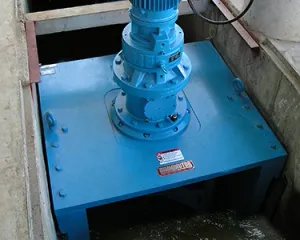
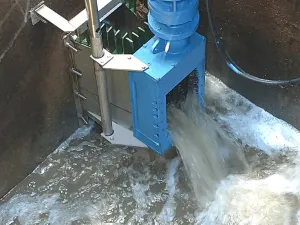
The DIMMINUTOR® provides automatic screening and grinding of liquid-borne solids with a straight-through open channel design. This unit reduces plastics, wood, vegetable matter, disposables and other oversized items to a fine particulate. The DIMMINUTOR® is designed for reliable operation and easy maintenance. For example, with its cantilevered design, the DIMMINUTOR® needs no seals or bearings near the gritty channel floor.
The unit’s screen is stationary so it never wears against bottom grit. Each cutter is interchangeable and cutters can be removed or adjusted independently. The unit’s seals and bearings are immersed in an oil bath for long life and low maintenance. These units can be installed in straight through channels, wet wells or water inlets. They can be installed for full or occasional submergence.
“Our whole experience with Franklin Miller has been great,” Losey said. “Everyone at their company, and at their rep here in Colorado have been great to deal with.”
High Brothers Lumber Services has been serving Missouri for over 40 years. Their 125,000-square-foot facility houses all their building materials, from which they are able to serve professional tradesmen and homeowners.
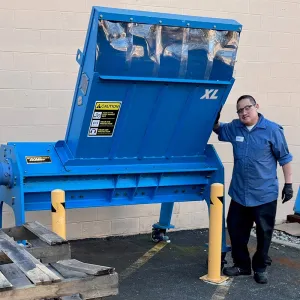
High Brothers found they were dealing with a lot of unwanted pallets around their 11-acre facility. For a while, they were disposing of them by burning them, but soon found they had too many to keep up with them. The pallets started to pile up faster than they could dispose of them. Because this is a lumber yard, they have insurance and regulatory limitations to follow. For example, they needed to keep the pallets fifty feet from the building and keep them stacked in a certain way. They were soon running out of space and time tending to the discarded pallets. They knew they needed a better solution and that’s when they reached out to Franklin Miller. After speaking to the company, they decided a pallet shredder would be perfect for their needs. They installed the Taskmaster XL in early 2023.
“We are still getting caught up on shredding all the older pallets,” said Kevin Brell, fleet manager at High Brothers Lumber Services. “It is working great.”
Brell explained that once they get caught up on the backlog of pallets, they expect to probably shred around 20-40 pallets a week. They don’t anticipate the Taskmaster XL having any problems with that volume, considering they’re doing so much more now.
“The machine truly works great,” Brell said. “Shreds them right up. Nails and all.”
The TASKMASTER XL shredder effectively shreds entire natural wood pallets to reduce their bulk volume. This unit can substantially reduce the expense of disposing of pallets. With the XL, there are no drive belts to replace or re-tension. Instead, it features a smooth-running gear drive which is simple to operate. This unit is designed to be easy to use and easy to maintain. Its hopper automatically directs the pallet into the cutting chamber. An automatic reversing control makes operation simple. Optional equipment includes forklift waste hoppers, or a choice of discharge conveyors to automatically transport the output into waste containers.
High Lumber keeps their Taskmaster XL in a small shelter that is open on one side to the elements. Brell expresses how easy the machine is to operate exactly where they need it to work.
“I’ve spoken to others in the market for a pallet shredder and recommended this machine to anyone who asks,” Brell said. “It is a great shredder. It does what I want it to do. And what I need it to do.”
In the realm of industrial shredding equipment, choosing the right shredder can be tough. How do you decide which shredder is best for your application and which will provide maximum operational efficiency and material processing? Two heavy-duty options for shredders are the dual-shaft and the quad-shaft shredders. Not sure which machine you need? Let’s delve into the features, advantages, and applications of both types to help you make uninformed decision to address your specific application and shredding needs.
Dual-Shaft Shredders
Dual-shaft shredders, as the name suggests, come equipped with two shafts that rotate in opposite directions. These machines are known for their versatility and are commonly used in various industries, some of which include recycling, electronics, glass, wood, metal, plastic, and larger items like tires.
Top features of dual-shaft shredders:
1. Flexibility and versatility: Dual-shaft shredders can handle a wide range of materials. Their dual-shaft design ensures efficient cutting and tearing of diverse materials.
2. Price and Maintenance: The simple design of dual-shaft shredders results in a lower price. In addition, this simpler unit generally requires less maintenance, which can mean less downtime.
3. Energy efficiency: Because of their lower power requirements, dual-shaft shredders are often more energy-efficient than the quad-shaft shredders, which can result in cost savings over time.
Quad-Shaft Shredders
Quad-shaft shredders have even more powerful shredding action by using four rotating shafts, along with a specially-designed sizing screen. This design increases the shredding capabilities, which can be ideal for applications requiring a higher volume or uniform output of material shredded.
Top features of quad-shaft shredders include:
1. Increased capacity: With two additional shafts, quad-shaft shredders can handle larger volumes of material. This makes them suitable for organizations with high-capacity shredding needs.
2. Sizing screen for homogeneous output: The additional shafts contribute to a more uniform shredding process as the shafts are able to rotate continuously until the material passes through a specially-designed sizing screen until reaching the desired output size. This is particularly useful when dealing with materials that require a precise size output.
3. Heavy-duty applications: Quad-shaft shredders are designed to handle tougher, more challenging materials, including industrial waste and e-scrap.
But, How Do You Choose the Right Shredder for Your Application?
What is your material and what volume are you shredding? Dual-shaft shredders offer flexibility for a wide range of materials at moderate volumes, while quad-shaft shredders are designed for higher volumes and tougher materials.
Do you have any space and/or energy constraints? If you have any concerns about available space and energy, dual-shaft shredders might be the better choice.
What are your output needs? If your operation demands precise output shape or size, a quad-shaft shredder with its specialty sizing screen might be the better option for your application.
There is no one answer when it comes to choosing a shredder. Your specific application requirements will help you choose the type of shredder that will best serve your operation. Specific needs should be taken into consideration, such as the type of the material to be shredded, the volume requirements and precision needs, as well as your available space and energy. Whatever you decide is best, whether the versatile dual-shaft or the powerful quad-shaft, your application will benefit from this crucial piece of your industrial shredding operation.
Streamline, Manage and Secure Bulk Water Dispensing with the FMI Bulk Water Fill Station
The Complete Engineered Solution
Franklin Miller, a leading manufacturer of innovative wastewater treatment equipment, is proud to introduce its latest product: the Bulk Water Fill Station. Designed for businesses and organizations in need of large quantities of water, this dispensing station offers a convenient and cost-effective solution for dispensing potable water.
The HAULERPORT® Bulk Water Fill Station is a self-contained unit that can be connected to a potable water supply. It is designed to be a stationary dispensing station, making it ideal for facilities that require large amounts of water on a regular basis, such as manufacturing plants, water treatment facilities, or agricultural operations.
In addition to its convenience, the Bulk Water Fill Station also offers significant cost savings compared to traditional water delivery services. By eliminating the need for multiple trips to refill smaller containers, businesses can save on transportation costs and reduce their carbon footprint. The water fill station also reduces the risk of spills and leaks, minimizing the risk of environmental damage and potential fines.
The Bulk Water Fill Station is a result of Franklin Miller's commitment to providing innovative solutions that meet the needs of its customers. It offers a cost-effective and sustainable solution for businesses and organizations in need of bulk water dispensing.
To learn more about the Bulk Water Fill Station and how it can benefit your business, visit Franklin Miller's website or contact a representative today. With its convenience, cost savings, and environmental benefits, the Bulk Water Fill Station is the ideal solution for any business or organization in need of large quantities of potable water.
The ever-growing demand for electric vehicles (EVs), such as Tesla and Rivian, has led to a surge in the production and use of lithium-ion batteries. Consequently, there is an urgent need to address the environmental and safety concerns related to their disposal and recycling. At Franklin Miller, we have developed the ultimate solution for this problem - our cutting-edge EV Battery Shredder. In this article, we will explore the innovative features of our submerged shredding technology and discuss how it is revolutionizing the EV battery recycling process.
Submerged Shredding Technology: A Game-Changer in Battery Recycling
Our EV Battery Shredder is designed with state-of-the-art submerged shredding technology, ensuring the highest levels of safety and efficiency during the recycling process. This feature not only minimizes the risk of thermal runaway and fires but also reduces the release of harmful gases and particles into the environment.
The submerged shredding system works by immersing the batteries in a liquid medium, typically water, which acts as a heat sink, cooling agent, and fire suppressant. The shredder then reduces the batteries into small particles, making it easier to separate and recover valuable materials such as lithium, cobalt, nickel, and copper.
Key Benefits of Franklin Miller's EV Battery Shredder with Submerged Shredding Technology
Enhanced Safety: The liquid medium in the submerged shredding system reduces the risk of fires, explosions, and toxic gas emissions, ensuring a safer working environment for recycling facility personnel.
Improved Efficiency: The EV Battery Shredder's efficient design allows for a high throughput, enabling recycling facilities to process a larger volume of batteries in less time.
Increased Recovery Rates: The advanced shredding technology results in higher recovery rates for valuable materials, which can be further refined and reused in the production of new batteries, promoting a circular economy.
Reduced Environmental Impact: By facilitating the efficient recycling of lithium-ion batteries, our EV Battery Shredder helps reduce the environmental impact associated with mining for raw materials and disposing of hazardous battery waste in landfills.
Scalable Solution: The modular design of our EV Battery Shredder allows for easy integration into existing recycling processes and can be scaled up to accommodate future growth in battery recycling demands.
Franklin Miller's EV Battery Shredder, featuring submerged shredding technology, is the ultimate solution for the safe, efficient, and environmentally friendly recycling of lithium-ion batteries. By leveraging this innovative technology, we are not only addressing the challenges posed by the rapid growth of the EV market but also paving the way for a more sustainable and circular economy. Discover how our EV Battery Shredder can revolutionize your recycling operations and contribute to a greener future.
Introduction
As the world's population continues to grow, so does the need for effective wastewater treatment. Properly managing wastewater is essential to maintaining the health and safety of our communities and the environment. A critical component of wastewater treatment is the protection of the pumps used in these systems. In this blog post, we'll explore the importance of grinding in wastewater treatment pump protection and why it's crucial to the overall efficiency and success of these systems.
The Role of Pumps in Wastewater Treatment
Wastewater treatment plants rely on a variety of pumps to move water and waste through the treatment process. These pumps are responsible for tasks such as transferring raw sewage, pumping treated effluent, and recirculating sludge. The pumps must be able to handle solid materials, including debris and waste, which can be found in wastewater.
The Challenge: Protecting Pumps from Damage
One of the most significant challenges faced in wastewater treatment is the potential damage to pumps caused by solid materials, such as rags, plastics, and other debris. If these materials are not adequately managed, they can clog or damage the pumps, leading to costly repairs, downtime, and decreased efficiency in the treatment process.
The Solution: Grinding in Wastewater Treatment
Grinding plays a critical role in protecting wastewater treatment pumps from damage. By breaking down solid materials into smaller particles, grinding equipment helps prevent clogs and damage to pumps, ensuring they continue to operate efficiently.
Inline grinders, such as those manufactured by Franklin Miller, are installed directly in the wastewater flow path. These grinders use sharp, hardened steel cutters to shred and reduce the size of debris, making it easier for the pumps to handle and transport the materials.
Benefits of Grinding for Wastewater Pump Protection
Increased Pump Efficiency: With solid materials effectively ground into smaller particles, pumps can operate more efficiently and with less strain. This reduces the likelihood of clogs and damage, ensuring the wastewater treatment process runs smoothly.
Reduced Maintenance Costs: Grinding helps prevent clogs and pump damage, which in turn leads to less frequent maintenance and repair costs. This not only saves time but also reduces the overall expense of wastewater treatment plant operation.
Prolonged Pump Lifespan: By protecting pumps from damage and reducing strain, grinding equipment helps extend the life of wastewater treatment pumps. This results in long-term cost savings and increased operational efficiency.
Environmental Impact: Properly functioning pumps are essential for effective wastewater treatment. Grinding equipment ensures that pumps can effectively manage solid materials, leading to more successful treatment outcomes and a reduced impact on the environment.
Franklin Millers Offerings
Taskmaster:
The Taskmaster is a powerful grinder that is ideal for a variety of applications, including solids reduction, wastewater treatment, and more. It is available in several different models, each with its own unique features and capabilities. Some of the key benefits of the Taskmaster include its ability to handle tough materials, its low maintenance requirements, and its high capacity grinding capabilities.
Dimminutor:
The Dimminutor is a versatile grinder that is designed to handle a wide range of solids, including wipes, rags, and other tough materials. It is ideal for use in wastewater treatment facilities and other high flow environments where solids reduction is a critical component of the process. The Dimminutor is available in several different sizes and configurations to meet the specific needs of each application.
Super Shredder:
The Super Shredder is a high-performance inline grinder that is designed to handle large volumes of solids and sludge. It is ideal for use in wastewater treatment facilities, food processing plants, and other industrial settings where solids reduction is a critical component of the process. Some of the key features of the Super Shredder include its ability to handle tough materials, its low maintenance requirements, and its high capacity shredding capabilities.
Conclusion
Grinding is a crucial component in wastewater treatment pump protection, ensuring that these essential systems continue to operate efficiently and effectively. By incorporating grinding equipment into the wastewater treatment process, operators can reduce maintenance costs, extend pump lifespans, and ultimately contribute to a healthier environment. As the demand for wastewater treatment continues to grow, the importance of grinding in pump protection will only become more critical to the success of these systems.
The Importance of Choosing the Right Grinder
The cannabis industry has experienced rapid growth, and as a result, businesses are seeking efficient and reliable equipment to streamline their processes. One key component in cannabis processing is the grinder, which plays a crucial role in preparing the plant material for further processing. Selecting the right grinder for your business can significantly impact your productivity, product quality, and long-term success. This comprehensive guide will help you make an informed decision when choosing the best industrial cannabis grinder for your needs.
Understanding Your Cannabis Processing Needs
Before choosing a grinder, it's essential to evaluate your business's specific requirements:
Volume and Capacity Requirements: Determine the amount of cannabis material you need to process daily or weekly, and choose a grinder with the appropriate capacity to handle that volume efficiently.
Types of Cannabis Products: Identify the range of products you want to produce, such as flower, concentrates, or edibles, as this will affect the type of grinder you require.
Scalability and Growth Potential: Consider your business's growth plans and whether your chosen grinder will accommodate increased production volumes in the future.
Key Features to Consider in an Industrial Cannabis Grinder
When comparing grinders, keep these critical features in mind:
Size Reduction Technology: Grinders should provide consistent particle size and be able to handle a variety of materials without damaging essential oils or causing excessive heat.
Material Construction and Durability: Look for grinders made of high-quality materials, such as stainless steel, to ensure long-lasting performance and easy cleaning.
Ease of Cleaning and Maintenance: Grinders with minimal moving parts and easy access for cleaning will save time and effort in the long run.
Safety and Compliance Standards: Ensure the grinder meets industry safety standards and complies with local regulations to prevent potential accidents or legal issues.
Energy Efficiency and Environmental Impact
Selecting an energy-efficient grinder helps reduce operating costs and contributes to a greener, more sustainable operation. Consider grinders with features like low power consumption, low noise emissions, and minimal waste generation.
Evaluating Performance and Reliability
When comparing grinders, pay attention to these performance indicators:
Grinder Throughput: The grinder should process material quickly and efficiently to keep up with your production demands.
Consistency and Quality of Output: A good grinder should produce uniform particle size, ensuring a high-quality final product.
Grinder Lifespan and Warranty: Choose a grinder with a proven track record of durability and reliability, backed by a comprehensive warranty to protect your investment.
As the global population continues to grow, so does the demand for efficient food production and waste management systems. Food waste processing is an essential component of a sustainable environment, and it plays a critical role in conserving resources, reducing pollution, and minimizing landfill space. Franklin Miller, a leading manufacturer of industrial shredders and other size reduction equipment, is committed to providing innovative solutions for food waste processing. In this article, we will discuss the importance of industrial shredders in food waste management and explore their benefits and applications.
Understanding Food Waste
Food waste refers to any edible material that is discarded, lost, or uneaten throughout various stages of the supply chain, from production and processing to retail and consumption. According to the Food and Agriculture Organization (FAO) of the United Nations, roughly one-third of all food produced for human consumption is wasted, which amounts to approximately 1.3 billion tons per year. This waste has significant environmental, economic, and social consequences, making it essential to develop effective strategies for its management and reduction.
The Role of Industrial Shredders in Food Waste Processing
Industrial shredders play a crucial role in food waste processing by reducing the size of waste materials, which allows for more efficient handling, transportation, and disposal. Franklin Miller's industrial shredders are designed to handle a wide range of food waste types, from fruits and vegetables to meats, fish, and dairy products. Here are some of the key benefits of using industrial shredders in food waste processing:
Volume Reduction
By shredding food waste into smaller particles, industrial shredders significantly reduce the overall volume of the waste. This reduction in volume not only leads to decreased transportation and disposal costs but also conserves valuable landfill space
Improved Waste Processing Efficiency: Shredded food waste is more easily processed by downstream equipment, such as pumps, conveyors, and separators. This improved efficiency translates into faster and more cost-effective waste processing operations.
Enhanced Biogas Production: Smaller food waste particles have an increased surface area, which allows microorganisms to break down the organic material more quickly during anaerobic digestion. As a result, shredding food waste can enhance biogas production and contribute to renewable energy generation.
Facilitates Composting: Shredded food waste provides a more uniform particle size, which is advantageous for composting processes. The reduced particle size increases the surface area for microbial activity, resulting in a faster and more efficient composting process.
Compliance with Regulations: Proper food waste management is essential to comply with various local, regional, and national regulations. By employing industrial shredders, companies can ensure they are meeting waste management requirements and reducing their environmental impact.
Franklin Miller's Solutions for Food Waste Processing
Franklin Miller offers a range of industrial shredders and grinders designed specifically for food waste processing. Our equipment is ideal for reducing food waste into smaller particles that can be easily transported and disposed of. Our grinders and shredders are built to handle a variety of food waste materials, including fruits and vegetables, meat and poultry, seafood, and more.
Our products are designed to maximize efficiency, reduce labor costs, and minimize downtime. We offer a range of options to meet your specific needs:
Taskmaster® TM8500 twin shaft shredder: This shredder is designed for smaller food waste processing applications and has a compact design for easy installation in tight spaces. It has a high torque, low-speed design that provides efficient shredding of a wide range of food waste materials, including fruits and vegetables, meat and poultry, and seafood.
Taskmaster® TM1600 twin shaft shredder: This shredder is designed for medium to large food waste processing applications and can handle a wide variety of food waste materials, including fruits and vegetables, meat and poultry, seafood, and more. It has a unique cutting chamber design that provides efficient shredding while minimizing noise and vibration, making it ideal for use in commercial kitchens and other food processing facilities.
Taskmaster® TM2300 twin shaft shredder: This shredder is designed for large volume and high capacity food waste processing applications. It has a powerful motor and rugged construction to handle tough materials, such as fruits and vegetables, meat and poultry, seafood, and more. It can reduce food waste into smaller particles, making it easier to transport and dispose of.
All of these shredders are built with high-quality materials and are designed to maximize efficiency and minimize downtime in food waste processing applications. They are also easy to maintain and come with a range of optional features and accessories to meet your specific needs.
Reduce Your Environmental Impact and Improve Your Bottom Line with Franklin Miller's Food Waste Shredding Solutions
Food waste is a growing problem for businesses and communities around the world. By implementing a food waste shredding solution, businesses can reduce their environmental impact, save money on waste disposal costs, and even create new revenue streams through the production of compost and renewable energy.
Franklin Miller offers a range of industrial shredders and grinders designed specifically for food waste processing. Our equipment is built to handle a wide variety of food waste materials, from fruits and vegetables to meat and poultry, and is designed for maximum efficiency and minimal downtime.
Whether you're operating a commercial kitchen, a food processing facility, or a waste management company, Franklin Miller has the expertise and equipment to help you reduce your environmental impact and improve your bottom line. Contact us today to learn more about our food waste shredding solutions.
Meeting Cannabis Waste Regulations
The Regulations
As the cannabis industry continues to grow, waste disposal and management practices have become increasingly important. With changing regulations surrounding cannabis waste, it is essential for businesses to stay up-to-date and ensure compliance. This article explores the latest cannabis waste regulations and offers guidance for businesses operating in the industry.
Federal vs. State Regulations:
Although cannabis remains a Schedule I controlled substance under federal law, many states have legalized its use, either for medical or recreational purposes. Consequently, individual states have implemented their own regulations for cannabis waste disposal. It is crucial for businesses to follow state-specific guidelines in addition to remaining aware of any changes in federal policies.
Waste Definition and Classification:
Cannabis waste generally refers to any leftover plant material, such as stems, leaves, and roots, as well as any other waste generated during the production, processing, or manufacturing of cannabis products. This waste is typically classified as either hazardous or non-hazardous, depending on the state's regulations and the specific materials involved. It is essential for businesses to understand and correctly classify their waste in order to ensure proper disposal.
Waste Management and Disposal Requirements:
Cannabis waste disposal requirements vary from state to state, but there are some general guidelines that most states follow. These include:
a) Waste Rendering: Cannabis waste must often be rendered unusable and unrecognizable before disposal. This process typically involves grinding and mixing the waste with other materials, such as paper, plastic, or soil.
b) Waste Storage: Secure storage of cannabis waste is vital to prevent unauthorized access, theft, or diversion. Waste storage areas should be well-ventilated, clean, and free from pests.
c) Waste Tracking: Businesses must maintain detailed records of their cannabis waste disposal, including the amount and type of waste disposed, the method of rendering, and the final disposal method. These records should be kept for a minimum of three years or as required by state regulations.
d) Waste Disposal Methods: Approved disposal methods vary by state but may include composting, incineration, or disposal at a licensed solid waste facility. It is essential to follow your state's specific guidelines for waste disposal to ensure compliance and avoid fines.
e) Waste Disposal Companies: Some states require businesses to work with licensed waste disposal companies for the management and disposal of cannabis waste. These companies must adhere to strict regulations and demonstrate expertise in handling cannabis waste.
Regulatory Changes and Compliance:
Cannabis waste regulations are constantly evolving, and businesses must stay informed of any changes to remain compliant. Regularly reviewing state and federal guidelines, attending industry conferences, and consulting with legal or compliance experts can help businesses stay up-to-date with the latest regulations.
Taskmaster Shredders
TASKMASTER® cannabis shredders help cannabis growers meet the regulatory requirements of cannabis waste disposal in a cost-effective and efficient way. The units can process root bulbs, stalks, leaves, and stems and reduce and/or compost both solid and liquid waste to meet state and local safety and environmental regulations. These high capacity units can be hand fed, conveyor-fed or fed by a bucket loader, depending on the model. TASKMASTER industrial shredders are designed to meet any cannabis waste regulatory environment you may encounter. Read more about the TASKMASTER TM8500 and TASKMASTER TM1600.
TASKMASTER® shredders provide a complete shredding solution for cannabis plant waste, medical plant waste, and hemp size reduction. These shredders significantly reduce the volume of output material, making compact disposal or further processing significantly easier and more efficient. The TASKMASTER features dual counter-rotating cutter stacks, designed to carefully intermesh at low speed under close clearance and extremely high torque. They cut, shear, tear, slice, and rip apart solids typically in a strip or chip-like output shape. Each plant can be processed in approximately eight to twelve seconds.
TASKMASTER shredders are used by companies all over the United States and Canada to help with the disposal of their cannabis waste. These powerful shredders are a clean and quiet alternative to a gas-powered wood chipper. They typically employ up to a 15 HP motor and gear drive, and are complete with a stand, hopper and automatic reversing controller.
Read more about Cannabis Shredders here https://franklinmiller.com/applications/cannabis-shredders/, and see TASKMASTER cannabis waste shredders featured on Cannacribs show.
*These regulations are a general guideline. Always check current local laws and regulations for your state. The information presented by Franklin Miller is not legal advice, is not to be acted on as such, may not be current and is subject to change
without notice.