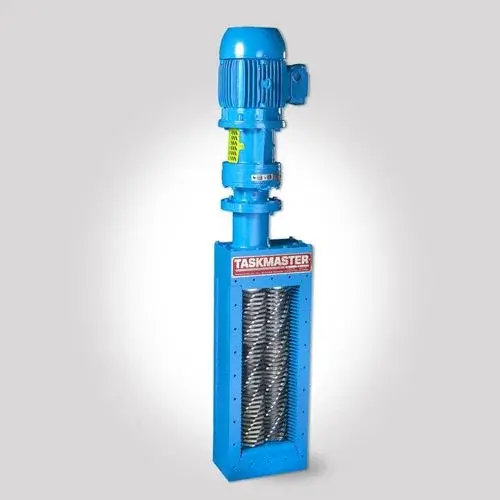
The Muffin Monster® is one of the most recognized names in wastewater grinding. Manufactured by JWC Environmental, it became so widely installed that many operators use "Muffin Monster" as a generic term for any twin-shaft sewage grinder. But brand recognition does not always equal the best engineering. For decades, Franklin Miller’s TASKMASTER® grinder has offered a compelling Muffin Monster alternative — delivering fewer parts, stronger materials, and lower total cost of ownership. This article compares the Muffin Monster and TASKMASTER® twin-shaft grinders head to head so you can make an informed decision for your next wastewater grinder project.
What Is the Muffin Monster Grinder?
The Muffin Monster is a twin-shaft grinder designed for sewage and wastewater solids reduction. Produced by JWC Environmental (Muffin Monster 300001-series), it uses two counter-rotating shafts fitted with interlocking cutters and spacers mounted on hex-shaped shafts. The unit is typically installed in lift stations, headworks, sludge processing lines, and anywhere tough solids like rags, wipes, and debris need to be reduced before reaching downstream equipment.
Since its introduction, the Muffin Monster grinder has built a large install base across municipal and industrial facilities worldwide. Its name recognition is such that many specifications simply call for a "Muffin Monster or equal" — making it the de facto reference point when engineers evaluate wastewater grinder options. However, that familiarity has also led many engineers to overlook alternatives that may offer meaningful advantages in durability, maintenance, and lifecycle cost.
What Is the TASKMASTER® Grinder?
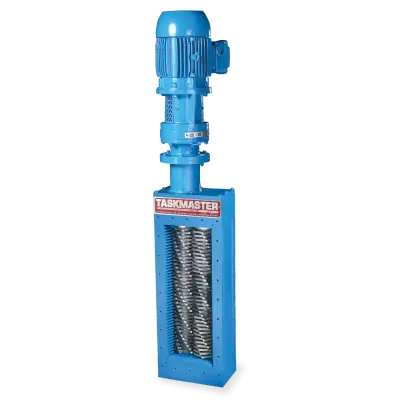
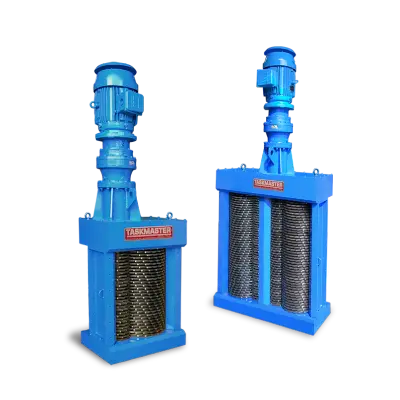
The TASKMASTER® is Franklin Miller’s twin-shaft grinder product line, purpose-built for the same wastewater and sludge applications where the Muffin Monster is typically specified. Franklin Miller Inc. has manufactured size reduction equipment since 1918 — over a century of engineering experience in grinding, screening, and crushing for municipal and industrial markets.
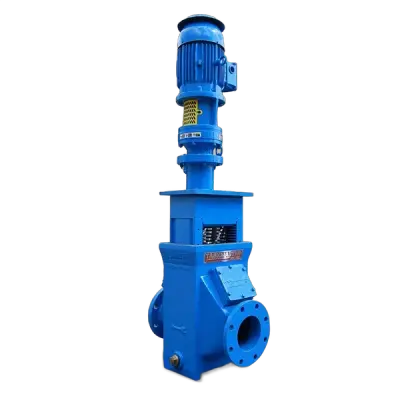
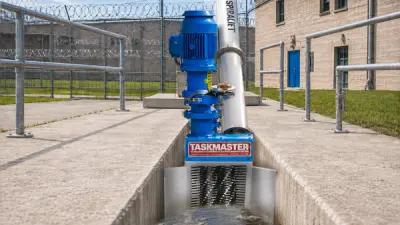
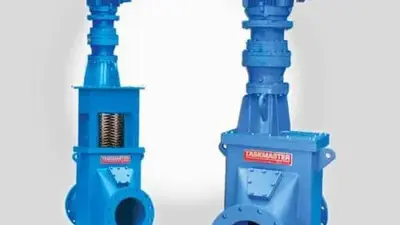
The TASKMASTER® TM8500 is the direct equivalent to the Muffin Monster, designed as a drop-in replacement in most installations. Franklin Miller also offers the TASKMASTER® TM8500 Inline for pipeline applications and the TASKMASTER® TITAN for higher-capacity requirements. What sets the TASKMASTER® apart from every other twin-shaft grinder on the market — including the Muffin Monster — is its patented CUTTER CARTRIDGE® technology, which dramatically reduces parts count, simplifies maintenance, and improves reliability.
Muffin Monster vs TASKMASTER®: Head-to-Head Comparison
Both the Muffin Monster and TASKMASTER® are twin-shaft wastewater grinders that use counter-rotating cutters to reduce solids. But the engineering philosophy behind each machine differs significantly. Below, we break down the key areas where the TASKMASTER® offers distinct advantages over the Muffin Monster.
Cutter Design and Parts Count
This is the single biggest difference between the two grinders. The TASKMASTER® uses Franklin Miller’s patented CUTTER CARTRIDGE® technology: a one-piece cutter stack that integrates cutters and spacers into a single cartridge unit. Each shaft holds just 3 CUTTER CARTRIDGE® units for a total of 6 parts — and zero loose spacers.
The Muffin Monster, by contrast, uses a traditional stack-up of individual cutters and spacers that must be assembled one by one on each hex shaft. A typical Muffin Monster configuration requires 36 cutters and 36 spacers — 72 loose pieces that must be precisely aligned, stacked, and secured.
The implications are significant:
- Faster changeouts — swapping 6 cartridges versus manually restacking 72 individual parts cuts maintenance time dramatically
- Lower inventory cost — stock a few cartridge sets instead of dozens of individual cutters and spacers
- Reduced assembly error — fewer parts means less opportunity for incorrect stacking, misalignment, or missing spacers
- No stack retightening — the Muffin Monster’s loose-piece stack can loosen over time, requiring periodic retightening; the TASKMASTER®’s cartridge design eliminates this
Material and Construction Quality
The materials used in a wastewater grinder directly impact service life and resistance to the corrosive, abrasive conditions found in sewage and sludge environments.
Cutter material: TASKMASTER® cutters are manufactured from 4140 alloy steel, which offers superior hardness and wear resistance compared to the Muffin Monster’s 4130 alloy steel. The higher carbon and chromium content of 4140 provides better edge retention and longer cutter life in abrasive wastewater streams.
Housing material: The TASKMASTER® housing is cast from ductile iron, which delivers approximately ten times the impact strength of the Muffin Monster’s grey cast iron housing. Ductile iron is far more resistant to cracking from shock loads — a common occurrence when large, hard debris enters the grinder unexpectedly.
Seal design: The Muffin Monster relies on metallic seal springs that are continuously exposed to wastewater. These springs are susceptible to corrosion and fatigue, eventually leading to seal failure and costly rebuilds. The TASKMASTER® eliminates metallic seal springs entirely, using a robust seal design that removes this common failure mode.
Motor and Drive Options
The TASKMASTER® is available with a true submersible motor rated for continuous underwater operation — ideal for wet-well installations where the grinder may be submerged during high-flow events. The Muffin Monster offers only an immersible motor rating, which means the motor can tolerate temporary submersion but is not rated for permanent underwater duty.
This distinction matters in lift station and wet-well applications. A true submersible motor ends repeated motor maintenance problems that occur when motors rated only for immersion are exposed to extended submersion during storm surges or high-inflow events.
Installation Flexibility
Both the Muffin Monster and TASKMASTER® twin-shaft grinders can be installed in a variety of configurations. However, the TASKMASTER® offers broader mounting versatility:
- Channel frame mount — drop-in installation in existing open channels
- Wet well frame mount — submerged installation in lift station wet wells
- Inline (pipeline) mount — flanged connection in pressurized or gravity pipelines
- Duplex configurations — dual units with automatic isolation valves for redundancy
The TASKMASTER®’s high-flow side-rail guide system is designed for both channel and inline applications, giving engineers a single platform to standardize across different installation types within the same facility. The TASKMASTER® TM8500 Inline model is purpose-built for pipeline applications and features flanged connections for direct integration into force mains and pressure systems.
Maintenance and Total Cost of Ownership
The total cost of owning a wastewater grinder extends far beyond the initial purchase price. Maintenance labor, spare parts inventory, downtime, and rebuild frequency all contribute to the true lifecycle cost.
The TASKMASTER®’s CUTTER CARTRIDGE® design delivers measurable savings across all these categories:
- Parts inventory — 6 cartridges versus 72 individual pieces means lower inventory costs and simpler procurement
- Changeout time — cartridge swap takes a fraction of the time compared to disassembling and restacking individual cutters and spacers
- Skilled labor requirements — the simplified design means less specialized knowledge is needed for routine maintenance
- No stack retightening labor — eliminates a recurring maintenance task required by the Muffin Monster
The TASKMASTER® also includes a jam-sensing controller with automatic reverse capability. When the grinder encounters an obstruction that exceeds normal torque, the controller automatically reverses the shafts to clear the jam, then resumes normal operation — all without operator intervention. This reduces nuisance callouts and extends unattended operating time. Learn more about the benefits of grinders for wastewater treatment.
Detailed Specifications Comparison
The following specifications provide a detailed side-by-side comparison of the TASKMASTER® TM8500 and the Muffin Monster twin-shaft grinders. Data reflects standard configurations; custom options are available for both units.
Cutter stack type: TASKMASTER® — patented CUTTER CARTRIDGE® (one-piece) | Muffin Monster — individual loose cutters and spacers
Total cutter parts per shaft: TASKMASTER® — 3 cartridges (6 total) | Muffin Monster — 18 cutters + 18 spacers per shaft (72 total)
Cutter material: TASKMASTER® — 4140 alloy steel | Muffin Monster — 4130 alloy steel
Housing material: TASKMASTER® — ductile iron (10x impact strength) | Muffin Monster — grey cast iron
Seal design: TASKMASTER® — no metallic seal springs | Muffin Monster — metallic seal springs (corrosion risk)
Motor type: TASKMASTER® — true submersible available | Muffin Monster — immersible only
Shaft type: TASKMASTER® — alloy steel with integral hex | Muffin Monster — hex shaft
Stack retightening: TASKMASTER® — not required (cartridge design) | Muffin Monster — required periodically
Flow capacity: Both units are available in a range of sizes to match specific flow requirements. Contact Franklin Miller for sizing assistance.
Installation options: TASKMASTER® — channel, wet well, inline, duplex | Muffin Monster — channel, wet well, inline
Drive system: Both — gear-reduced electric motor with reversing capability
Controls: TASKMASTER® — jam-sensing controller with auto-reverse | Muffin Monster — controller with auto-reverse
Manufacturing origin: TASKMASTER® — Livingston, NJ, USA | Muffin Monster — Santa Ana, CA, USA
Why Wastewater Plants Are Switching to TASKMASTER®
Across the country, municipalities and industrial facilities that previously specified the Muffin Monster are evaluating — and selecting — the TASKMASTER® as their preferred twin-shaft grinder. The reasons are consistent: operators want fewer parts to maintain, stronger materials that last longer, and a design that reduces total cost of ownership over the life of the equipment.
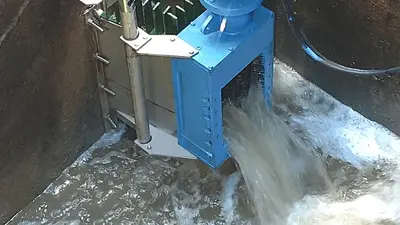
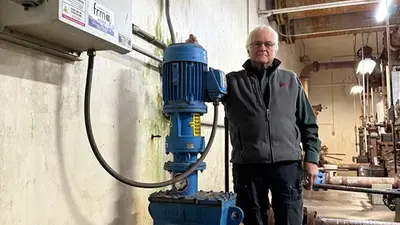
Real-world results support the case. In one installation, a TASKMASTER® TM8512 twin-shaft grinder ran continuously for years in a demanding lift station application — outlasting the Muffin Monster units it replaced and delivering significant savings in parts and labor costs. In another facility, switching to a TASKMASTER® with a true submersible motor eliminated the repeated motor failures that had plagued the previous Muffin Monster installation.
Franklin Miller brings over 100 years of size reduction engineering to every TASKMASTER® installation. The company’s applications engineering team works directly with plant operators and consulting engineers to specify the right grinder for each application — a level of technical support that ensures optimal performance from day one. For a broader understanding of the technology, see our white paper on grinders, shredders, and comminutors: evolving technology.
Which Grinder Is Right for Your Application?
Every wastewater application is different. Flow rates, solids loading, installation constraints, and budget all influence which grinder is the best fit. While the Muffin Monster has served the industry for decades, the TASKMASTER® offers measurable advantages in cutter design, material quality, motor options, and lifecycle cost that make it a Muffin Monster alternative worth serious consideration.
If you are specifying a new wastewater grinder, replacing an existing Muffin Monster, or evaluating twin-shaft grinder options for an upcoming project, Franklin Miller’s engineering team can provide a free, no-obligation application assessment. We will review your specific requirements and recommend the right TASKMASTER® configuration for your facility.