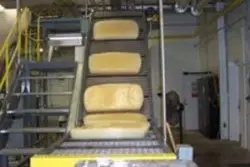
A mineral processing plant in Pennsylvania needed a better way to process large batches of problematic minerals. The contents from 3,200 pound super sacks were placed on a conveyor and then manually hammered to crush them, a labor-intensive operation. Adding to the problems, the minerals were lumpy and rock-solid after spending months on a boat from China. The operation was slow and hazardous, labor costs were high and particle size varied widely.
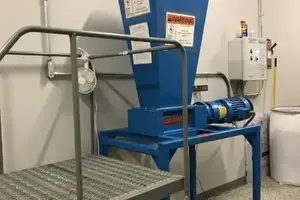
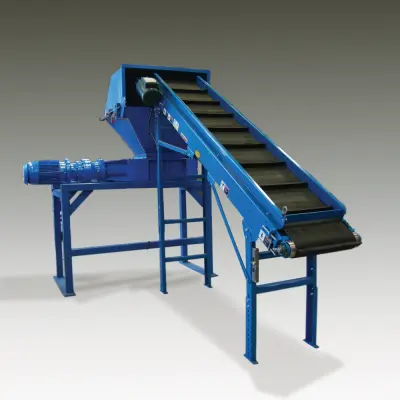
The company made the decision to automate the process. Franklin Miller was asked to assess the entire operation and recommend an easily installed crusher that would quickly reduce the difficult agglomerate lumps. Based on that assessment, the customer purchased a DC1075L DELUMPER® Crusher. The minerals were conveyor fed from the super sacks to the DELUMPER crusher. The unit’s powerful crushing action reduced lumps as large as six inches down to uniform, quarter inch particles in a fraction of the time previously required.
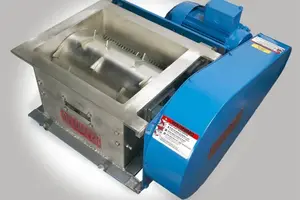
DELUMPER Series lump breakers reduce a wide range of materials to desired output with a positive, once-through chopping action without overgrind, heat rise or fines. The units feature specially designed, individually replaceable teeth mounted on a smooth, rotating drum intermesh with sizing combs. Lumps up to full inlet opening size can be processed. The crushers are self-cleaning and self-feeding. They run at low speed and create little vibration or noise. All units feature solid, one-piece body construction, smooth finish and unique design for unsurpassed performance and reliability.
According to the plant manager, installation of the DELUMPER lump breaker has helped improve processing, increased output and reduced production costs. “In short, it’s done everything we asked for,” he concluded.
Problem: A manufacturer of surgical gloves had a problem in establishing a new production line to meet their capacity requirements and quality standards. The major raw ingredient in surgical gloves, natural rubber, was received in the form of full 75 lb. bales of raw rubber. The first step in the process was to reduce the bales to a small size, since dissolving of the full rubber bales would take an unacceptably long amount of time and be very costly.
A granulator was required that had to meet a number of requirements. It had to be able to reduce the tough rubber and be built to medical standards for cleanability and corrosion resistance. It also could not employ talc in the process because of the concern about allergic reactions.
It turned out finding a unit to meet these requirements wasn’t going to be easy.
A number of approaches were studied and ruled out including guillotine cutters, hammer mills and extruders. The problem is this rubber material, like most rubber, is a sticky, cold flowing product that can easily gum up in equipment. The cut pieces are sticky to the touch and can quickly re-agglomerate. The handling of this material is amongst the toughest of size reduction applications which has vexed many manufacturers for years.
The granulator manufacturers they approached either didn’t have a unit that could handle the tough rubber bales, had equipment that required expensive cooling equipment, or couldn’t supply a unit that could meet the sanitary requirements demanded by this application. In fact, several standard granulators they considered failed completely in performance tests. The key to the project’s success was finding a solution and time was quickly running out. That’s when the company’s project engineer contacted Franklin Miller.
Solution: FMI’s application engineers, working closely with the customer, performed some preliminary tests on the rubber bales. Through this evaluation process, it was determined that their 100 HP VULCANATOR® could handle the application and with some special modifications, an order was placed. To meet the tight delivery schedule the machine had to be built on an accelerated time table.
The VULCANATOR is a special granulator designed specifically for the rubber industry. It is typically used in these types of applications to promote the dissolving of rubber into solution in the molding of rubber products, adhesives and synthetic fuel oils. The units are typically sold for use before a mixing tank or sold as part of a complete mixing system for accelerated dissolving. The unit can handle various types of natural and synthetic rubber such as Butyl, Viton, EDPM, Solprene, Hypalon, Hycar and more. The VULCANATOR can handle all types and shapes including full bales, sheets and chips. Additionally, the VULCANATOR can be used for foam rubber recycling applications of such items as mattresses, car seat cushions and covers. It can even cut the metal springs trapped in these items.
The VULCANATOR employs a unique cutting design that reduces the rubber bales into progressively smaller pieces with rotating knives while minimizing heat rise. With this design, the need for expensive auxiliary cooling equipment is eliminated. A variety of screens are provided to optimize output for each application requirement. To keep the material from re-agglomerating, a partitioning agent is typically used such as talc, or limestone or surfactants.
A number of VULCANATOR models are available for handling from 500 lbs to 5000 lbs per hour of rubber. These units use from 60 HP to 250 HP motors.
For this application, the VULCANATOR was designed with all contact parts constructed of stainless steel and with a special seal system to operate in a wet environment. Access doors were provided for easy maintenance of all major cutting elements as well as convenient cleaning and sanitizing. The unit is built with a rugged welded frame construction for rigidity.
A special hopper was designed to meter the bales into the chamber and insure that the material is effectively processed by the cutting knives.
The VULCANATOR can be mounted directly above a dissolving tank or used in conjunction with a discharge conveyor such as a belt conveyor or pneumatic system. Feeding is either manual or automated with conveying equipment.
After completion of construction, the machine was put through a final shop performance test with the actual material. The powerful VULCANATOR dependably reduced a number of the full bales and met the required output size.
The unit was then installed at the plant site. After installation, the unit was started up and the results were impressive. Not only is the new process with the VULCANATOR meeting production goals, but a higher quality product is being produced. The VULCANATOR has shaved a great deal of time off the dissolving process and in so doing has made the operation more profitable. In fact, according to the plant engineer the dissolving time has been reduced by 93%. “Without the VULCANATOR, the project would not have been a success,” he said.
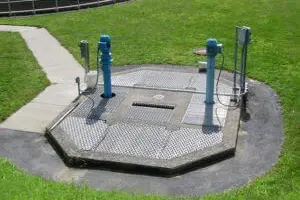
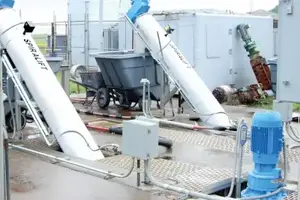
The Broward County Wastewater Treatment Plant in Pompano Beach, Florida is a regional facility processing 80 million gallons of wastewater every day. Adjacent to the plant and across the street is a septage receiving area used for pre processing and receiving septage from haulers. Proper treatment of this septage was a problem for the facility.
Every day, haulers with an average capacity of 4000 gallons per tanker truck continually arrive at the pre-treatment area and dump the effluent from septic tanks, portable toilets and other septage systems into a discharge bay. The septage then needs to be processed so that it passes smoothly through the pumps to the treatment facility. According to Supervisor of Plant Management, Curtis Preece, “Previously a large bar screen captured the incoming debris which was then removed to a dumpster. Maintenance of the screen was costly because it had so many moveable parts. This also contributed to a lot of down time.”
I knew there had to be a better way.” Preece continued. He attended a trade show and found exactly what he was looking for. “A light went on in my head when I saw the TASKMASTER® TT,” he said.
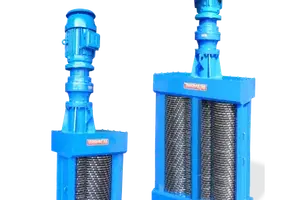
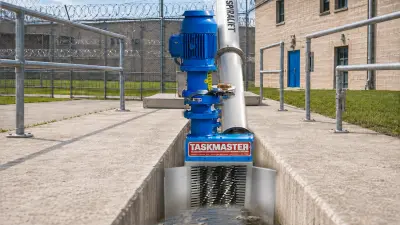
The TASKMASTER is a rugged workhorse of a grinder and a part of Franklin Miller's full line of wastewater grinders. The unit’s twin shaft mechanism is especially rugged due to the use of ”CUTTER CARTRIDGE® technology" instead of standard individual cutter and spacer disks.
This design gives it the extra strength needed to successful process these tough septage materials. Says Mr. Preece, “We installed it and did away with the bar screen altogether. It does the job completely”
The unit has offered day-in and day-out dependability and performance. The TASKMASTER’S powerful size reduction capabilities facilitates further processing at the plant, protects downstream process equipment and ensures that systems run smoothly.
“We’re very pleased with our choice,” Preece concluded. “Maintenance is non-existent and we’ve saved a lot of money.”
A biogas station in Poběžovice, the Czech Republic could be a prototype for what the future holds for the production of energy from renewable sources. Built by the Spin Plzeň company, the facility is located on the grounds of an agricultural farm focused on pig breeding. The station processes a combination of biodegradable waste to produce the biogas. The main component is 100 m3/day of liquid pig manure which is combined with maize silage and slaughterhouse waste.
The components of the station were designed and manufactured by the company, Tomášek SERVIS, s.r.o. Various proposals for processing input raw materials were considered. The goal was to install size reduction equipment capable of handling 9.5 t/day of raw materials with a required particle size at output of 12 mm. Proper treatment was essential, as the form and output size of solid particles was strictly regulated.
After meeting with a technologist and several company representatives, a recommended solution was the addition of two Franklin Miller -TASKMASTER® twin shaft grinders: a horizontal twin-shaft model with a feeding hopper and a second vertical grinder further down the line. Following several test runs, the two grinders were installed and the station began production in 2009.
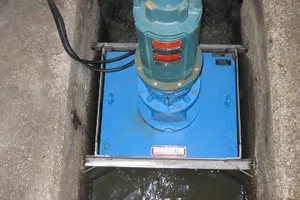
In operation, the input raw material passes through the TASKMASTER, Model TM2342, where the primary grinding of solids is carried out. The raw material continues gravitationally to a reservoir where the ground solids are mixed with liquid pig manure. The combined material is sent to the TASKMASTER, Model TM851204 for secondary maceration and piped into the pasteurizing vessel. The material is then put into a digester which begins the biogas production process.
At present, the grinders process raw materials several times a week prior to pasteurization. Since their installation, the operation of the units have been excellent. A problem arose only once when animal hides with bristles were erroneously added to the input material. Franklin Miller solved the problem by providing optional combs for automatic cleaning of these areas and advising personnel of the necessity of following guidelines in the operating manuals.
According to both the station owner and operators, the units do an excellent job of size reduction, are extremely reliable and easy to maintain. The pasteurization process, an important step, has successfully passed several inspections by state agricultural, environmental and health agencies, an indication that the units are optimally processing the raw material. And to top things off, the station recently decided to expand their operations and subsequently ordered two more TASKMASTER grinders.
TASKMASTER grinders set the standard for effective solids reduction, reliability, easy maintenance and exceptional durability. These grinders are provided from small units that can be installed directly in pipe systems up to large shredders that feature 40, 75 and 100 HP motors for handling everything from solid waste and hides to tires and solid rocket fuel. These units are provided with Franklin Miller’s unique sealing technology which makes them uniquely suited for wet processing under pressure conditions as well as for dry gravity applications. TASKMASTER grinders are available with many innovative features including patented CUTTER CARTRIDGE® technology. With these cartridges, multitudes of individual cutter and spacer disks are replaced with a few one-piece multi-cutter cartridges that greatly enhance unit strength and performance.
A paper company located in the northeast experienced frequent problems at its wastewater treatment plant. Under normal conditions, sludge from the milling process is directed to this facility and is ground up and placed in a primary clarifier. The sludge is then put through a press where it is dewatered, extracted and sent to a landfill.
n reality, according to the maintenance manager, the actual operation was often a headache. The problem was traced to the grinder used to grind the sludge before it moved to the sludge press. The particulate matter consisting of fines and milling debris was not ground finely enough. Consequently, when the sludge was pressed between the fabric rolls, the large particles caused pock marks and holes in the press fabric and, in extreme cases, cut the material.
The plant turned to Franklin Miller for a solution, and a TASKMASTER® TM8512 was purchased for the application. ” We realized we needed a grinder with a much finer cutting surface and that is what we got when we installed a TASKMASTER”; said the maintenance manager.
“We noticed an immediate difference in the fabric life of the sludge press and the unit has permanently replaced other grinders.”
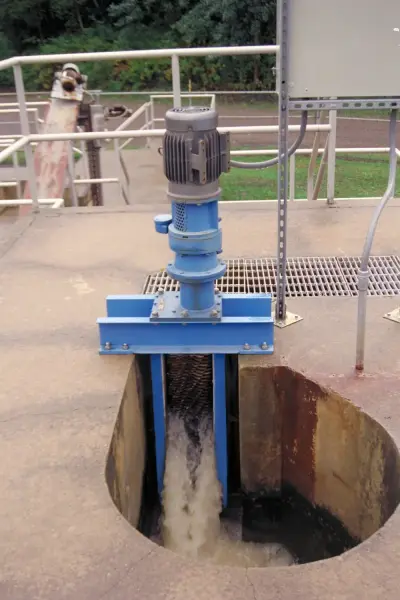
The TASKMASTER TM8500 series is a high performance, twin-shaft grinder that provides powerful size reduction capabilities, easy maintenance and exceptional durability. The TASKMASTER TM8500 is part of our Full Line Of Wastewater Grinders. The unit employs two counter-rotating cutter stacks that intermesh at close clearance to intensively shred solids into fine bits. The output is easily processed by downstream equipment such as pumps, centrifuges, and belt filter presses.
The TASKMASTER’S one-piece, CUTTER CARTRIDGE® technology increases unit strength and completely eliminates the need for cutter stack re-tightening. Cutting elements are machined from solid alloy steel or stainless steel, resulting in a unit with remarkable resistance to cutter and spacer cracking.
TASKMASTER® Inline Grinders employ a powerful twin-shaft mechanism to reduce solids in sludge, slurry and sewage pipelines. These versatile processors reduce such materials as rags, plastics, wood, debris, tampons, sanitary napkins and more. They are invaluable in plant operations worldwide keeping pipelines flowing, reducing pump downtime and protecting dewatering equipment such as centrifuges, filter presses and more.
These grinders are available for pipe sizes from 4″ through 30″ pipe sizes.
TM8500 SERIES
The TASKMASTER TM8500 series inline grinders feature a drop-in housing for easy maintenance, 2″ hex shafts, heavy-duty mechanical seals with tungsten carbide seal faces and CUTTER CARTRIDGE® technology. With TASKMASTER cutter cartridges, individual cutters and spacers are replaced by rugged one-piece elements that incorporate 6 cutters and 6 spacers for less components, no stack loosening and the elimination of cutter stack retightening (required by competing units). These units are made for pipe sizes from 4″ through 10″.
TM1600 SERIES
TASKMASTER TM1600 series grinders are heavy-duty inline disintegrators built for 12″ ANSI flanged systems and larger. These rugged processors are ideal for high flow rates and extremely heavy institutional solids. These units feature 2-3/4″ hexagonal shafting, up to 20HP motor and drive, a variety of cutter profiles and much more. They are available for 12″ – 18″ pipe sizes in carbon as well as stainless steel construction.
Each grinder comes standard with our PLC-based S260 program control system.
Taskmaster TT
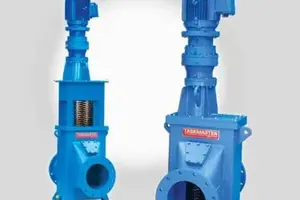
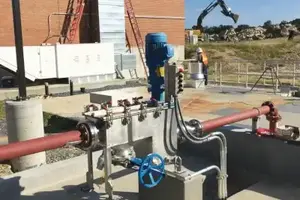
The TASKMASTER TT twin shaft grinder features an integrated tramp trap housing. This unit was specially designed for septage receiving and waste handlers where occasional rocks and other heavy objects get into the flow.
Built with a heavily constructed extended housing, the TASKMASTER TT housing features a trap area designed to allow heavy tramp materials to settle out. This provides protection not only for the grinder itself, but for downstream equipment as well. The unit is provided with a slide gate for easy unloading of accumulated debris.
The TASKMASTER® TITAN® Model TM22000 stands out as an exceptionally powerful and efficient channel grinder, representing the pinnacle of industrial shredding technology combined with unparalleled high flow capabilities. This formidable unit is specifically engineered to tackle and effectively reduce a wide array of robust institutional solids, such as towels, blankets, shirts, pants, and bed sheets. These materials, notorious for their potential to obstruct pumping systems and trigger backups, are effortlessly processed by the TM22000.
At the heart of the TM22000's unmatched performance lies its exclusive TITAN cutter. This innovative feature boasts an open design, which is critical for facilitating excellent twin-shaft cutting while maintaining a high flow capacity. This unique design ensures that the grinder can handle large volumes of waste material without the risk of clogging or reduced efficiency.
One of the most remarkable aspects of the TM22000 is its 100% cutting performance. This high efficiency is a direct result of its unique cutter geometry, a feature that eliminates the need for additional diverter drum screens. This not only simplifies the operational process but also enhances the overall effectiveness and reliability of the unit.
To power this robust machinery, the TM22000 is equipped with a 10HP motor, paired with a planetary gear drive that offers both strength and durability. This powerful combination ensures consistent, high-performance grinding under various industrial conditions. Furthermore, the unit includes the S260 Automatic Control System, an advanced feature that enhances the grinder's functionality and user control. This system allows for precise management of the grinding process, ensuring optimal performance and efficiency in handling challenging waste materials.
Overall, the TASKMASTER® TITAN® Model TM22000 represents a significant advancement in grinder technology, offering an ideal solution for industries seeking a powerful, efficient, and reliable method to manage tough waste materials.
When other companies’ grinders wear out prematurely and you’re not getting the customer support you need, Franklin Miller can get you up and running fast and even save you money! With our reliable parts, exceptional warranty and outstanding customer service, your grinder problems will soon be history.
It is surprisingly easy to swap out the full working end or “lower works” of most major brand grinders, often using your existing drive, guide rails, and controls, making this is a fast, easy and cost-effective way to make your grinder new again. Franklin Miller’s Rebuild, Replace and Re-NEW program uses cutter cartridge® technology to upgrade your twin-shaft grinder. Did you know TASKMASTER® cutter cartridge® elements fit directly in other major brand twin-shaft grinders, often without modification? You’ll get a completely re-newed grinder with superior TASKMASTER performance. Our Re-NEW program is available for in-channel, inline and gravity-fed grinders.
Customers utilizing the Rebuild, Replace and Re-NEW program are thrilled with their newly built grinders. They love the faster and easier assembly, increased strength, no stack re-tightening, increased longevity and long-term cost savings. Not only does this program make your old grinder newer and better, you will also have a brand-new warranty and your new grinder will be covered by Franklin Miller Customer Care.
Many of our reliable, low-maintenance grinders can also be outfitted to replace difficult-to-maintain, troublesome units. To check out our full line of innovative grinders – click here.
Call us today to find out how Franklin Miller can Rebuild, Replace or Re-NEW problematic grinders that aren’t holding up with something that will truly last. To speak to a grinder specialist, call Franklin Miller today at 1-800-932-0599.
The Muffin Monster® is one of the most recognized names in wastewater grinding. Manufactured by JWC Environmental, it became so widely installed that many operators use "Muffin Monster" as a generic term for any twin-shaft sewage grinder. But brand recognition does not always equal the best engineering. For decades, Franklin Miller’s TASKMASTER grinder has offered a compelling Muffin Monster alternative — delivering fewer parts, stronger materials, and lower total cost of ownership. This article compares the Muffin Monster and TASKMASTER twin-shaft grinders head to head so you can make an informed decision for your next wastewater grinder project.
What Is the Muffin Monster Grinder?
The Muffin Monster is a twin-shaft grinder designed for sewage and wastewater solids reduction. Produced by JWC Environmental (Muffin Monster 300001-series), it uses two counter-rotating shafts fitted with interlocking cutters and spacers mounted on hex-shaped shafts. The unit is typically installed in lift stations, headworks, sludge processing lines, and anywhere tough solids like rags, wipes, and debris need to be reduced before reaching downstream equipment.
Since its introduction, the Muffin Monster grinder has built a large install base across municipal and industrial facilities worldwide. Its name recognition is such that many specifications simply call for a "Muffin Monster or equal" — making it the de facto reference point when engineers evaluate wastewater grinder options. However, that familiarity has also led many engineers to overlook alternatives that may offer meaningful advantages in durability, maintenance, and lifecycle cost.
What Is the TASKMASTER Grinder?
The TASKMASTER is Franklin Miller’s twin-shaft grinder product line, purpose-built for the same wastewater and sludge applications where the Muffin Monster is typically specified. Franklin Miller Inc. has manufactured size reduction equipment since 1918 — over a century of engineering experience in grinding, screening, and crushing for municipal and industrial markets.
The TASKMASTER TM8500 is the direct equivalent to the Muffin Monster, designed as a drop-in replacement in most installations. Franklin Miller also offers the TASKMASTER TM8500 Inline for pipeline applications and the TASKMASTER TITAN for higher-capacity requirements. What sets the TASKMASTER apart from every other twin-shaft grinder on the market — including the Muffin Monster — is its patented cutter cartridge technology, which dramatically reduces parts count, simplifies maintenance, and improves reliability.
Muffin Monster vs TASKMASTER: Head-to-Head Comparison
Both the Muffin Monster and TASKMASTER are twin-shaft wastewater grinders that use counter-rotating cutters to reduce solids. But the engineering philosophy behind each machine differs significantly. Below, we break down the key areas where the TASKMASTER offers distinct advantages over the Muffin Monster.
Cutter Design and Parts Count
This is the single biggest difference between the two grinders. The TASKMASTER uses Franklin Miller’s patented cutter cartridge technology: a one-piece cutter stack that integrates cutters and spacers into a single cartridge unit. Each shaft holds just 3 cutter cartridges for a total of 6 parts — and zero loose spacers.
The Muffin Monster, by contrast, uses a traditional stack-up of individual cutters and spacers that must be assembled one by one on each hex shaft. A typical Muffin Monster configuration requires 36 cutters and 36 spacers — 72 loose pieces that must be precisely aligned, stacked, and secured.
The implications are significant:
Faster changeouts — swapping 6 cartridges versus manually restacking 72 individual parts cuts maintenance time dramatically
Lower inventory cost — stock a few cartridge sets instead of dozens of individual cutters and spacers
Reduced assembly error — fewer parts means less opportunity for incorrect stacking, misalignment, or missing spacers
No stack retightening — the Muffin Monster’s loose-piece stack can loosen over time, requiring periodic retightening; the TASKMASTER’s cartridge design eliminates this
Material and Construction Quality
The materials used in a wastewater grinder directly impact service life and resistance to the corrosive, abrasive conditions found in sewage and sludge environments.
Cutter material: TASKMASTER cutters are manufactured from 4140 alloy steel, which offers superior hardness and wear resistance compared to the Muffin Monster’s 4130 alloy steel. The higher carbon and chromium content of 4140 provides better edge retention and longer cutter life in abrasive wastewater streams.
Housing material: The TASKMASTER housing is cast from ductile iron, which delivers approximately ten times the impact strength of the Muffin Monster’s grey cast iron housing. Ductile iron is far more resistant to cracking from shock loads — a common occurrence when large, hard debris enters the grinder unexpectedly.
Seal design: The Muffin Monster relies on metallic seal springs that are continuously exposed to wastewater. These springs are susceptible to corrosion and fatigue, eventually leading to seal failure and costly rebuilds. The TASKMASTER eliminates metallic seal springs entirely, using a robust seal design that removes this common failure mode.
Motor and Drive Options
The TASKMASTER is available with a true submersible motor rated for continuous underwater operation — ideal for wet-well installations where the grinder may be submerged during high-flow events. The Muffin Monster offers only an immersible motor rating, which means the motor can tolerate temporary submersion but is not rated for permanent underwater duty.
This distinction matters in lift station and wet-well applications. A true submersible motor ends repeated motor maintenance problems that occur when motors rated only for immersion are exposed to extended submersion during storm surges or high-inflow events.
Installation Flexibility
Both the Muffin Monster and TASKMASTER twin-shaft grinders can be installed in a variety of configurations. However, the TASKMASTER offers broader mounting versatility:
Channel frame mount — drop-in installation in existing open channels
Wet well frame mount — submerged installation in lift station wet wells
Inline (pipeline) mount — flanged connection in pressurized or gravity pipelines
Duplex configurations — dual units with automatic isolation valves for redundancy
The TASKMASTER’s high-flow side-rail guide system is designed for both channel and inline applications, giving engineers a single platform to standardize across different installation types within the same facility. The TASKMASTER TM8500 Inline model is purpose-built for pipeline applications and features flanged connections for direct integration into force mains and pressure systems.
Maintenance and Total Cost of Ownership
The total cost of owning a wastewater grinder extends far beyond the initial purchase price. Maintenance labor, spare parts inventory, downtime, and rebuild frequency all contribute to the true lifecycle cost.
The TASKMASTER’s cutter cartridge design delivers measurable savings across all these categories:
Parts inventory — 6 cartridges versus 72 individual pieces means lower inventory costs and simpler procurement
Changeout time — cartridge swap takes a fraction of the time compared to disassembling and restacking individual cutters and spacers
Skilled labor requirements — the simplified design means less specialized knowledge is needed for routine maintenance
No stack retightening labor — eliminates a recurring maintenance task required by the Muffin Monster
The TASKMASTER also includes a jam-sensing controller with automatic reverse capability. When the grinder encounters an obstruction that exceeds normal torque, the controller automatically reverses the shafts to clear the jam, then resumes normal operation — all without operator intervention. This reduces nuisance callouts and extends unattended operating time. Learn more about the benefits of grinders for wastewater treatment.
Detailed Specifications Comparison
The following specifications provide a detailed side-by-side comparison of the TASKMASTER TM8500 and the Muffin Monster twin-shaft grinders. Data reflects standard configurations; custom options are available for both units.
Cutter stack type: TASKMASTER — patented cutter cartridge (one-piece) | Muffin Monster — individual loose cutters and spacers
Total cutter parts per shaft: TASKMASTER — 3 cartridges (6 total) | Muffin Monster — 18 cutters + 18 spacers per shaft (72 total)
Cutter material: TASKMASTER — 4140 alloy steel | Muffin Monster — 4130 alloy steel
Housing material: TASKMASTER — ductile iron (10x impact strength) | Muffin Monster — grey cast iron
Seal design: TASKMASTER — no metallic seal springs | Muffin Monster — metallic seal springs (corrosion risk)
Motor type: TASKMASTER — true submersible available | Muffin Monster — immersible only
Shaft type: TASKMASTER — alloy steel with integral hex | Muffin Monster — hex shaft
Stack retightening: TASKMASTER — not required (cartridge design) | Muffin Monster — required periodically
Flow capacity: Both units are available in a range of sizes to match specific flow requirements. Contact Franklin Miller for sizing assistance.
Installation options: TASKMASTER — channel, wet well, inline, duplex | Muffin Monster — channel, wet well, inline
Drive system: Both — gear-reduced electric motor with reversing capability
Controls: TASKMASTER — jam-sensing controller with auto-reverse | Muffin Monster — controller with auto-reverse
Manufacturing origin: TASKMASTER — Livingston, NJ, USA | Muffin Monster — Santa Ana, CA, USA
Why Wastewater Plants Are Switching to TASKMASTER
Across the country, municipalities and industrial facilities that previously specified the Muffin Monster are evaluating — and selecting — the TASKMASTER as their preferred twin-shaft grinder. The reasons are consistent: operators want fewer parts to maintain, stronger materials that last longer, and a design that reduces total cost of ownership over the life of the equipment.
Real-world results support the case. In one installation, a TASKMASTER TM8512 twin-shaft grinder ran continuously for years in a demanding lift station application — outlasting the Muffin Monster units it replaced and delivering significant savings in parts and labor costs. In another facility, switching to a TASKMASTER with a true submersible motor eliminated the repeated motor failures that had plagued the previous Muffin Monster installation.
Franklin Miller brings over 100 years of size reduction engineering to every TASKMASTER installation. The company’s applications engineering team works directly with plant operators and consulting engineers to specify the right grinder for each application — a level of technical support that ensures optimal performance from day one. For a broader understanding of the technology, see our white paper on grinders, shredders, and comminutors: evolving technology.
Which Grinder Is Right for Your Application?
Every wastewater application is different. Flow rates, solids loading, installation constraints, and budget all influence which grinder is the best fit. While the Muffin Monster has served the industry for decades, the TASKMASTER offers measurable advantages in cutter design, material quality, motor options, and lifecycle cost that make it a Muffin Monster alternative worth serious consideration.
If you are specifying a new wastewater grinder, replacing an existing Muffin Monster, or evaluating twin-shaft grinder options for an upcoming project, Franklin Miller’s engineering team can provide a free, no-obligation application assessment. We will review your specific requirements and recommend the right TASKMASTER configuration for your facility.