News & Insights

Wastewater Case Studies

Browse all wastewater case studies articles from Franklin Miller.

Case Study: Sludge Buildup and Aerator Blockage Solved
Wastewater Case Studies·February 5, 2015

Case Study: Sludge Buildup and Aerator Blockage Solved

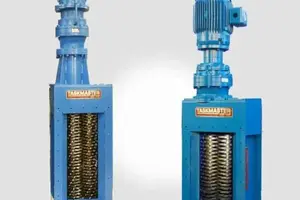
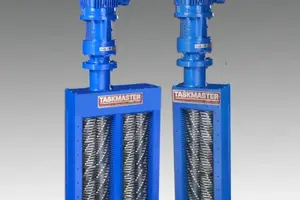
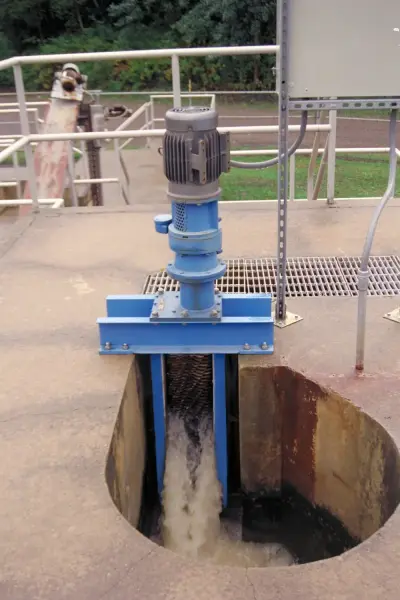
Case study: The District of Kitimat, British Columbia, a pristine coastal community with 10,000 residents, is located at the head of the Douglas Channel and the Kitimat River. The area is a major salmon spawning corridor, supporting a large sports fishing industry. For both ecological and economic reasons, any facility discharging wastewater into the river must be mindful of strict discharge regulations. No one is more aware of this than the management of the Kitimat Wastewater Treatment Plant. Recently, the plant, which treats 2.6MGD and handles peak flows of 7.3 MGD, was faced with an emergency upgrade. A barminutor, installed in the 1970’s as a bar screen and grinder, had rusted and developed holes, allowing rags, wood, rocks and other debris to pass through unimpeded. The debris not only caused blockages and clogs in the aerators but also contributed to the build up of sludge in the lagoon. The facility’s management was determined to install a more efficient system and end the chronic problems. After carefully reviewing their options, they chose Franklin Miller’s DIMMINUTOR® Turbo Design Channel Disintegrator. “We originally planned to buy one DIMMINUTOR, “said Wayne Sussbauer, Technical Services Manager. “The size of the unit was important because we needed to be sure it could handle peak flows and not require a head differential that would cause the upstream channel to overflow back into the wet well and subsequently untreated effluent into the river. Based on assessment, we decided that two units would do a better job of meeting peak flows and minimizing the probability of an overflow.” The DIMMINUTOR comminutors were placed side by side in two existing channels. “With the supplied frames they were easily installed into the existing headworks units,” commented Sussbauer.” This was a consideration in the purchase.” The DIMMINUTOR offers effective, automatic screening and disintegrating of wastewater solids in straight through channels and wet wells. This powerful unit reduces plastics, wood, rags and other solids to fine bits, improving the reliability of pumps and other downstream equipment. The unit employs a smooth, continuously rotating design with high torque. As its three bi-directional rotary cutters intermesh at close clearance with stationary cutters, solids are finely reduced to a size small enough to pass through a sizing screen. With no gaps or openings between the screen and cutters, output is controlled and complete reduction assured. The DIMMINUTOR has an intrinsically open design to handle high flow rates with low head-loss. This unit is extremely easy to maintain and features individually replaceable cutters, oil lubrication and a simple rotary design requiring no auxiliary diverter screens. A unique, cantilevered design eliminates seals or bearings near the gritty channel floor. Every component of the unit is constructed for precision and long life. The DIMMINUTOR offers effective, automatic screening and disintegrating of wastewater solids in straight through channels and wet wells. This powerful unit reduces plastics, wood, rags and other solids to fine bits, improving the reliability of pumps and other downstream equipment. The unit employs a smooth, continuously rotating design with high torque. As its three bi-directional rotary cutters intermesh at close clearance with stationary cutters, solids are finely reduced to a size small enough to pass through a sizing screen. With no gaps or openings between the screen and cutters, output is controlled and complete reduction assured. The DIMMINUTOR has an intrinsically open design to handle high flow rates with low head-loss. This unit is extremely easy to maintain and features individually replaceable cutters, oil lubrication. A unique, cantilevered design eliminates seals or bearings near the gritty channel floor. Every component of the unit is constructed for precision and long life.

Read More
Case Study: SPIRALIFT® SC Solves Screenings Disposal Problem
Wastewater Case Studies·February 5, 2015

Case Study: SPIRALIFT® SC Solves Screenings Disposal Problem

The City of Collinsville had a problem. The screenings coming off from their bar screen were odorous, wet and costly to dispose of. Three container loads a week of screenings were very costly to dispose of. Initial tests of a screenings washer were discouraging. Although the unit worked well initially, it quickly broke a shaft on the shredder. That's when the town turned to Franklin Miller Inc. for a better solution. Franklin Miller supplied a SPIRALIFT® SC, screenings conditioner to the town to test in the application. The operators were impressed with the rugged construction of the unit. After installation, the unit quickly went to work grinding and then washing the screenings. The results were excellent. The output was extremely dry and clean and the unit handled the tough screenings without any problem. That's when Collinsville decided to convert the trial into a purchase. Since installation the unit has worked extremely well. What used to require 3 containers now fits in one container per week, resulting in a substantial savings in disposal. Furthermore, odorous screenings are no longer a problem. The output comes out extremely clean, dry and homogeneous for easy disposal. The SPIRALIFT SC consists of two units in one package. First, a rugged 10HP TASKMASTER® TM1600 grinder reduces the screenings to small pieces exposing surface area for thorough subsequent washing. The solids then drop into the wash portion of the unit, which consists of a wash-press. As the unit's auger conveys the solids, they are intensively washed in a water spray. Contaminants are washed down the unit drain and enter the sewage plant for further processing. The solids are de-watered in the SPIRALIFT press zone and ejected into a bin or conveyor. Says the plant operator, "We found no other unit that was as ruggedly constructed and durable as the SPIRALIFT SC."

Read More
spiralift sl in arizona
Wastewater Case Studies·February 5, 2015

Case Study: SPIRALIFT® SL Minimizes Downtime

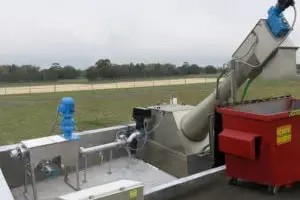
The Town of San Manuel is located in the heart of the Galiuro Mountains in Arizona. For over fifty years, the town was served by a wastewater treatment plant consisting of primary treatment followed by treatment of the wastewater in oxidation ponds. When a new utility company took over management of the plant, they hired Santec Corporation to design and build a modern water reclamation facility that would meet current standards for wastewater reuse. Santec focused on three key objectives during the design phase of the project; 1) Class B+ reclaimed water quality standards for effluent, 2) Minimization of operating expenses and 3) Maximize value of expenditures. The new facility consists of automated headworks incorporating a spiralift, flow equalization and pumping, 4 stage anoxic/ aeration/ anoxic/ reaeration process, secondary clarifier, disinfection and effluent pumping system. In addition to the typical Fiberglass tank construction utilized in Santec water reclamation facilities, this plant incorporates more traditional, concrete elements such as the circular clarifier and headworks system. This blended approach provides all the benefits of an underground design (noise, odor and aesthetic control) with the open access of standard wastewater treatment systems. According to Marty Zulkoski, Project Manager, Santec Corporation, “A big part of achieving these objectives was the installation of a Franklin Miller® SPIRALIFT® SL. Since its installation, the SPIRALIFT® SL has provided the new facility with a highly effective, low maintenance, automated system for removing solids and debris from the influent wastewater.” “At an average of .350 MGD the facility would quickly run into huge maintenance headaches without proper screening and removal of incoming solids. The simple addition of the SPIRALIFT® SL has minimized solids related maintenance and downtime for the entire system!” he concluded. The SPIRALIFT SL® provides fine screening, washing, transporting and compacting of wastewater solids while leaving essential organics in the flow. The SL is easy to install in existing channels, reduces solids disposal costs and protects downstream equipment. The SPIRALIFT is provided as a fully integrated system including a shaftless screw screen, a powerful TASKMASTER® Grinder and control system which coordinates the system’s normal and special functions. The PLC driven unit uses flow level data to cycle the screw to minimize power and wear. The SPIRALIFT combines the benefits of a rugged grinder with dependable screening technology for a uniquely effective and trouble-free system.

Read More
Case Study: SPIRALIFT® SL Solves Headworks Problem
Wastewater Case Studies·February 5, 2015

Case Study: SPIRALIFT® SL Solves Headworks Problem
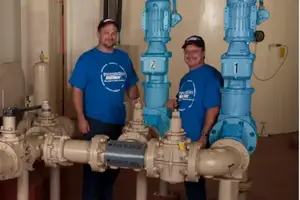
The facility, which handles .55 mgd of wastewater from domestic sources as well as from a Veterans home, was getting deluged with rags and other debris spilling over into various areas of the wastewater treatment process causing frequent maintenance headaches. The debris was constantly clogging up the pumps and had to be removed manually. Of particular concern was the solid waste from the Veterans home, which contained enormous quantities of cooking grease. Once the grease entered the waste stream, it congealed into large blocks that coated and clogged the lines, increasing down time and maintenance headaches. After examining the options with their consulting civil engineer, the facility personnel determined that the best solution would be a screening device to remove the solids. A Franklin Miller SPIRALIFT® Model SL fine screening system was selected for the job. This SPIRALIFT® SL employs a shaftless auger screw and a finely perforated screen that captures debris. The screen is wiped by the auger brushes and conveyed up and out of the system. A TASKMASTER® TITAN® Grinder reduces all the solids assuring a highly dependable system performance. “We immediately saw the difference,” said Don Moore, wastewater system Supervisor. “The combination of SPIRALIFT and grinder virtually eliminated the debris and most of the grease. In our application, it has helped us immensely.” He concluded. The SPIRALIFT® is a versatile screening system that is easy to employ for a variety of channel sizes and capacity requirements. The unit features a built-in washing system to clean the debris before lifting them out of the flow. A special control system integrates and coordinates the system’s normal and special functions. The PLC-based control system uses flow level data to cycle the screw to minimize power and wear. Mr. Moore added, “I am impressed at how the company has always been there when we needed them. Whenever we call them, they get right back to us. I’d definitely recommend the Spiralift System.”

Read More
Spiralift® SLX Defends Prision
Wastewater Case Studies·February 5, 2015

Spiralift® SLX Defends Prision

First Line of Defense for Prison Effluent For years, Graterford Prison, a maximum security facility in Pennsylvania, experienced continuous problems with their wastewater system. Their antiquated equipment consisted of bar screens, grinders and comminutors which were frequently overwhelmed by the sewage generated daily by 3,600 inmates. To make matters worse, the trash and debris often included full sheets, blankets, clothing, shoes, and plastics which the prisoners stuffed into the toilets in their cells and flushed. The ensuing sewage clogs, backups and flooding created headaches for the maintenance staff and interfered with the institution’s functioning. The crushing load of debris adversely affected downstream equipment. Pumps would often clog and jam, requiring endless maintenance and emergency repairs. Pump bearings and seals would be damaged and need to be replaced, causing frequent system downtime. According to Stan Pace, Utility Supervisor, the main problem was the equipment. “The equipment worked too slowly. We were running 650,000 gallons per day. Our obsolete units could not handle the flow.” A solution was urgently needed and that’s when the prison called on Franklin Miller for help. Franklin Miller engineers evaluated the problems associated with the plant’s wastewater discharge and equipment problems. They suggested one of their SPIRALIFT® SLX auger screening and grinding systems which is part of Franklin Miller's full line of Wastewater Screens. The SPIRALIFT SLX system, specifically designed for screening of heavy prison and institutional effluent, was selected and installed for each channel which was designed to process a maximum flow of 1.5 mgd each. SPIRALIFT Screening systems provide screening, washing, conveying, and compacting of wastewater solids in one integrated, easy to install system. The SLX features a heavy TASKMASTER® TM1630 shredder with a 10 HP motor and drive coupled with an oversized auger style channel screen which removes the solids. Once installed, the TASKMASTER TM1600 Grinder quickly went to work finely shredding all the heavy solids in the flow. The “confetti sized” particles were captured on the screen and intensively washed. As the solids were conveyed up the transport, free water drained back into the channel and the solids were discharged into a bin with moisture reduced by over 50%. “The SPIRALIFT worked,” commented Rusty Brown, Maintenance Operator. “None of us wanted to believe it until we saw it in action.” After only a few weeks in operation, the results were dramatic. Problems with the pumps were eliminated as were maintenance calls in the middle of the night. “SPIRALIFT technology has made our plant run 98% more efficient,” said Mr. Pace. “It’s our first line of defense.”

Read More
Case Study: SPIRALIFT® SR: Solves Major Septage Disposal Problem
Wastewater Case Studies·February 5, 2015

Case Study: SPIRALIFT® SR: Solves Major Septage Disposal Problem

Septage haulers in a rural Florida County used to offload their truck’s gooey contents into a large open field. That all changed when the local residents’ complaints about noxious odors led to television and newspaper coverage. That’s when county officials directed the local wastewater treatment facility to come up with a better method of septage disposal. The plant manager researched the available options and spoke to other plants. Based on the information gathered, a decision was made to purchase a SPIRALIFT® SR from Franklin Miller Inc. The SPIRALIFT SR is a complete, turnkey septage receiving system that features dependable operation, easy installation and low operating costs. This system is designed to receive, grind, wash, screen and separate septage solids. A special hauler control station monitors and authenticates haulers for automated access. Once the hauler hooks up to the system, a TASKMASTER® Model TT grinder chews up the incoming septage solids – a key to reliable system performance. The grinder housing has a special built-in tramp trap to collect heavy unshreddable solids. The septage solids are then screened and washed in the unit’s fully enclosed shaftless spiral screen and conveyed to the unit discharge. The screened liquids then pass into the plant headworks. The SPIRALIFT tank and grinder enclosures are constructed of stainless steel.

Read More
Case Study: SUPER SHREDDER® Disintegrators Eliminate Downtime
Wastewater Case Studies·February 5, 2015

Case Study: SUPER SHREDDER® Disintegrators Eliminate Downtime

The Trenton Sewer Utility handles wastewater and sewage generated for the city of Trenton, New Jersey. The utility typically processes 12 mgd, which can quickly rise to 27 mgd during storm events. For the past ten years, the facility has relied upon the powerful grinding capabilities of several strategically placed SUPER SHREDDER Disintegrators to ensure that operations run smoothly. “We have a combined system, which is essentially more complicated,” explains Plant Superintendent, Leigh Jones. “We’re dealing with sewage from homes, businesses, and industries as well as enormous amounts of rocks, trash, grass, wood and other debris that wash in from the streets.” A network of lift stations and gravity collection systems carries effluent into the central pumping station at the plant site where the material is distributed through the treatment processes. Concentrated sewage that has settled out as sludge is collected and sent downstream from the pumps, pulled through a SUPER SHREDDER and ground up. This step prevents the pumps from clogging. The sludge is sent to the primary digester and then transferred to a heat exchanger, where hot water tubes treat the sludge. Before entering the heat exchanger, the sludge passes through another SUPER SHREDDER, effectively preventing residual debris from clogging the tubes. The utility has four SUPER SHREDDER Disintegrators, but only two are in service at any given time. “Most plants have tandem shredding systems so if one unit goes out of service, you can switch to the other one,” explains Jones. “Our spacing doesn’t allow for this configuration. The shredders were an add-on to the original design and there is no room to build in redundancy. The space saving SUPER SHREDDER meets our needs because we can use one shredder at a time. The unit in service can be easily pulled out for repairs and a spare slipped in. Fortunately, we don’t need to use the rebuild services very often, but when we do we’ve been very pleased.” “The units have saved us a lot of maintenance and downtime,” Jones concludes. “They’re well worth the investment.” The SUPER SHREDDER in-line disintegrator easily reduces tough solids directly in sludge or raw sewage lines. The unit combines unsurpassed grinding capabilities with streamlined, easy to maintain features. Its innovative design provides a high level of open area to fluid flow making the SUPER SHREDDER ideal for applications requiring a heavy duty size reduction processor that can handle high flows with minimal headloss. The unit features a patented “spherical shredding” mechanism that cuts and shears tough sewage solids into fine bits. The hard faced stainless steel cutters offer unsurpassed wear resistance. Because of the spherical rotor design, the SUPER SHREDDER has far fewer moving parts and requires much less maintenance than units with banks of cutter disks. With two easily replaceable one-piece cutters, maintenance is convenient and down time is minimal. Included with the SUPER SHREDDER is a S-250 Auto-Reversing control system that senses jam conditions and automatically reverses.

Read More
Case Study: SUPER SHREDDER® – Just What the Warden Ordered
Wastewater Case Studies·February 5, 2015

Case Study: SUPER SHREDDER® – Just What the Warden Ordered

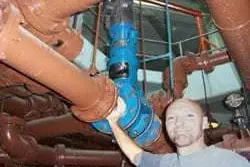
Inmates in correctional institutions have found a new pastime. By flushing oversized items down their toilets they either accidentally or deliberately cause the facility’s wastewater to back up. Often the goal is to gain extra time out of the cell. By flooding their cell or cell block, they force the facility to move them during the cleanup period. These misdeeds have often been rewarding ….that is up until now! A women’s correctional institution had a major problem with plugging of pumps and plumbing systems. Inmates were flushing every conceivable item into the sewage system including tampons, aluminum cans, pillow cases, pants, full blankets, and bed sheets. The result was repeated sewage backup and flooding.The pumps would become so jammed that it would be necessary to dismantle them to clear them – a time consuming and grueling job. Often the pump’s bearings and seals would become damaged and have to be replaced. The pump downtime would last between a few hours and a few days. In the meantime, sewage would back up into the inmate’s cells requiring their relocation. This would only encourage a repeat performance. The situation called for an urgent solution. That’s when the maintenance personnel turned to Franklin Miller for help. Franklin Miller Inc. supplies a full line of grinders and shredders designed for wastewater solids reduction. Several of the company’s grinders are well suited for such heavy solids applications including their SUPER SHREDDER® and TASKMASTER® grinders. These units employ a powerful, low speed, high shear mechanism to reduce tough concentrated solids. They can keep pump systems running smoothly and assure the discharged wastewater is pre-treated to meet the connected sewer district’s regulations. A Model SS12000 SUPER SHREDDER was selected and installed on the suction side of the pump. With its 12 inch flanges and a 10 HP direct coupled gear drive the SUPER SHREDDER was a perfect match to the system’s capacity requirements. The unit, with a straight thru flanged design, was easy to connect, much like an ordinary valve. The results were immediate. The pumps were no longer subject to frequent jamming. In fact, there hasn’t been any pump ragging or backup since installation. As a bonus, major pump components such as impeller, seals and bearings have lasted much longer as well. The inmates have had to resign themselves to their cells and their normal daily routine. To quote the maintenance supervisor, “We depend on the SUPER SHREDDER for our system operation. Without it our system would be down in a matter of hours, so we just can’t be without it.”

Read More
men with super shredder indoors
Wastewater Case Studies·February 5, 2015

Case Study: SUPER SHREDDER® To The Rescue

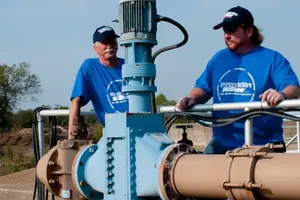
The City of Corning, New York Wastewater Treatment Plant serves its 10,500 residents by managing wastewater through full secondary treatment with nitrification. This facility processes an average of 1.2 million gallons per day (mgd), with a peak capacity of 6.8 mgd. The treatment includes grit screening, primary settling, flow through a trickling filter, and biological contractors for nitrification before releasing effluent into the Chemung River. Sludge and solids from the settling tanks are processed in an anaerobic digester, heated to 95-97°F using a spiral heat exchanger. After several weeks, the digested solids are mixed with polymer, dewatered, and then disposed of in a landfill. Since 1994, the facility has relied on the Franklin Miller SUPER SHREDDER® Disintegrator for enhancing its operational efficiency. Alan M. Bontorno, the Chief Operator, attests to the crucial role of the SUPER SHREDDER® in maintaining the heat exchanger's efficiency at two different wastewater plants. He notes that before the installation of the SUPER SHREDDER®, raw sludge would clog the flow in the heat exchanger within two days. The SUPER SHREDDER® effectively makes debris uniform, ensuring a smooth flow. The SUPER SHREDDER® features modular construction, facilitating easy maintenance and allowing options for either pre-assembled cartridge replacement or individual part ordering for rebuilding. Its durable cutter and cage assembly have consistently improved operations. Bontorno highlights the machine's reliability and the excellent support from knowledgeable staff. The SUPER SHREDDER® is designed for grinding tough solids in sludge or sewage lines, combining unparalleled grinding capabilities with a maintenance-friendly design. It features a patented "spherical shredding" mechanism that finely cuts and shears tough sewage solids. The unit is known for its hard-faced stainless steel cutters, offering exceptional wear resistance. With fewer moving parts due to its spherical rotor design, the SUPER SHREDDER® requires less maintenance compared to other units. It includes a convenient S250 Auto-Reversing control system that detects jam conditions and automatically reverses, minimizing downtime. ‍

Read More
men with taskmaster grinder outside
Wastewater Case Studies·February 5, 2015

Case Study: TASKMASTER® TM8512 Twin Shaft Grinder Goes the Distance

The city of Longview, Texas Waste Water Treatment Plant treats the wastewater generated by approximately 100,000 customers. The plant handles an average of 15MGD with a maximum of 21 MGD and has the ability to handle 60MGD for short periods of time. The facility is a trickling filter/ activated sludge plant with tertiary filters and ultraviolet disinfection. Sludge is treated in four anaerobic digesters and subsequently dewatered. The effluent is discharged into the Sabine River and eventually flows into the Toledo Bend Reservoir. For the past 25 years, the plant has undergone various upgrades and expansions including the installation of a TASKMASTER® 8512 Twin Shaft Grinder. According to Scott Baggett, Utility Plant Manager, the unit, installed in 1999, has been extremely dependable and reliable. “The macerator continuously processes waste activated sludge from four final clarifiers,” he explained. “The sludge is pumped approximately 1200 feet to the macerator and then to the Primary Thickener.” The TASKMASTER TM8500 Inline is a high performance, twin shaft grinder that provides powerful size reduction capabilities, easy maintenance and exceptional durability. The unit features CUTTER CARTRIDGE® technology which increases unit strength completely and eliminates the need for cutter stack re-tightening. With the TASKMASTER TM8500, banks of individual cutters and spacers are replaced by the one piece CUTTER CARTRIDGE. By eliminating these multiple parts, maintenance is dramatically simplified. These cutting elements are machined from solid alloy steel or stainless steel using a proprietary manufacturing process. The result is a high strength grinder that has a remarkable resistance to cutter and spacer cracking. The cutters are installed on two counter rotating shafts, intermeshing one with another at close clearance to shear and shred solids into fine bits. One shaft feeds solids to the center of the unit while the other shreds them. The output achieved is easily processed by downstream equipment such as pumps, centrifuges, and belt filter presses. The TASKMASTER can be successfully installed in sewage treatment plants, sludge lines, and pumping stations. It is supplied for open channel or in-line applications Mr. Baggett recently expressed his satisfaction with the TM8500 “The unit was rebuilt in October, 2005. Since the rebuild, the macerator has been running like a champ!”

Read More
Case Study: TASKMASTER® Alleviates Screenings Conveying Problem
Wastewater Case Studies·February 5, 2015

Case Study: TASKMASTER® Alleviates Screenings Conveying Problem

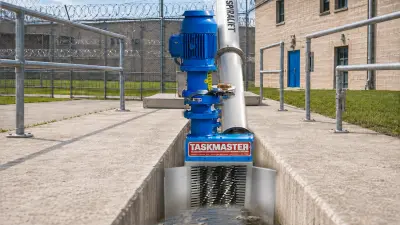
The Central Valley Water Reclamation Facility, located in Salt Lake City, Utah, is a thoroughly modern 65 MGD wastewater treatment plant, which uses the Trickling Filter/Solids Contact Process. Like many other facilities across the country, Central Valley is continuously challenged to meet the expanding water treatment demands of a growing residential and industrial community. With this growth has come a vexing problem for the plant. “We were experiencing more and more large objects coming into the headworks of our plant,” said Dan James, Maintenance Manager of Central Valley WRF. “There were huge grease balls, sticks, rocks, wood two by fours and every kind of garbage. We were constantly dealing with plugging of our conveying system that handles the screenings and major problems with our downstream equipment.” That’s when the plant called in Franklin Miller for a solution. A heavy-duty TASKMASTER® TM1630 screenings grinder was purchased. The unit was strategically placed between the discharge of the screens and the inlet hopper of the vacuum screenings conveying system. The TASKMASTER employs a twin shaft shredding mechanism with two banks of intermeshing cutters that easily grind even large screenings solids down to a size readily handled by the system. At Central Valley, the shredded output is discharged from the TASKMASTER, transported to another level and hauled off to a landfill for disposal. The TASKMASTER TM1630 is a heavily constructed 10HP grinder suitable for handling heavy solids accumulations. This unit employs 2-3/4″ hardened hex shafting, mechanical seals, direct inline gear drive, and special cleaning combs that assure the cutting chamber is kept clear. A model S260 Automatic Reversing Control reverses the unit in case of a jam condition. According to Mr. James, the unit has operated perfectly to stop the plugging in the screenings conveyance piping and has been instrumental in protecting downstream equipment. The TASKMASTER TM1600 series are powerful and versatile workhorses that can shred heavy solids in both gravity and liquid systems. The units can be installed horizontally with a stand, hopper or flange adapter, or vertically for channel or pipeline applications. Typical applications include gravity and conveyor fed sewage screenings, in-channel raw sewage, correctional institution effluent, documents, product rejects and returns, garments, filters, bottles and containers, plastics, turnings, packaging, wood, paper, and more. The TM1600 can be supplied with high profile cutters for grabbing solids that roll on others, or with ultra-fine cutters that finely reduce wastewater solids to a size easily handled by downstream equipment. Units are available in stainless steel construction in addition to standard alloy steel and iron body construction. Available input sizes range from 16″ x 20″ (400mm x 500mm) up to 16″ x 60″ (400mm x 1500mm). Recently, Mr. James received a call from another wastewater facility with almost the identical problem. He spoke to the engineer and highly recommended the TASKMASTER. “I told them that it does everything we need,” he concluded. These rag-laden grease mounds would float downstream and present a menace to the entire system. That was until they installed a TASKMASTER® grinder. Purchasing the TASKMASTER TM8516, a powerful grinding unit employing counter rotating banks of intermeshing cutters, made all the difference. The unit was installed right over the influent pipe, negating the need for a bar screen or a catch basin. When the debris entered the station, it passed directly through the grinder where it was ground up into small particles. As a bonus, the “aircraft carriers were completely destroyed and the grease was dispersed. Thereafter, it smoothly and easily passed through the pumps with no difficulties. “We’re very pleased with the unit,” said Mr. Balcom. “It has improved system operations, cut down on maintenance and is very reliable. We maintain it according to the specs and we’ve had no trouble whatsoever.”

Read More
Case Study: TASKMASTER® Grinder Saves Over $36,000 For Kirksville, Mo.
Wastewater Case Studies·February 5, 2015

Case Study: TASKMASTER® Grinder Saves Over $36,000 For Kirksville, Mo.

The City of Kirksville, Mo. had a problem. Their 25-year-old Smith and Loveless comminutor suddenly stopped working and could not be repaired. Their main bar screen could not handle the complete flow of the plant headworks at daily peak periods, which meant that unreduced solids could get into the plant’s downstream equipment and cause severe operational difficulties. The City found out that the replacement cost for a similar design unit was going to cost over $60,000.00, way over their budget. That’s when the plant personnel turned to Franklin Miller Inc. for help. It turned out the TASKMASTER® Duplex sewage grinder could be retrofitted into the same channel application for a fraction of the cost of the other offers received for the replacement. According to Ernest West, plant supervisor “the TASKMASTER Duplex was very simple to install in the same channel as the Smith and Loveless. The unit has been great! It has easily handled all the debris, solids and what not that comes down the channel.” The City not only received a channel grinder with far greater capabilities than their previous comminutor, but its cost was only half what they would have had to spend with their other choice. The TASKMASTER Duplex employs a twin shaft cutting mechanism that intensively grinds solids with counter-rotating cutters that intermesh at close clearance. The DUPLEX has two sets of these cutter stacks providing the added advantage of higher flow and solids handling capability. As the unit is 100 percent cutting area, it has greatly extended cutter life. The TASKMASTER also employs exclusive CUTTER CARTRIDGE® technology, the most advanced cutter design for twin shaft grinders available. This design eliminates countless individual cutter and spacer disks that tend to break down and cause excessive maintenance on competing units. Instead, each one-piece cartridge incorporates six cutters. The result is the unit has far fewer individual pieces, stronger cutting, and the elimination of cutter loosening problems.

Read More

Technical Resources & White Papers

Access engineering guides, technical specifications, and industry white papers to support your project planning.

Engineering Excellence Since 1918

Ready to Solve Your Toughest Processing Challenges?

Our team of engineers is ready to help you find the right equipment for your application.