News & Insights

Latest News

Product updates, industry insights, case studies, and company news from Franklin Miller.

pipes and spraying water
Latest News·May 15, 2020

Pipeline Delumper®: Industrial Processing for Solids & Agglomerates

While the impact of improperly reduced solids is often overlooked, there has been an increased need to find better ways to process them. A Pipeline Delumper® may serve as the ideal solution. A pipeline delumper is an ultra-compact processor that chops, shreds and disperses solids and agglomerates, including chemicals, food and powders. It works directly with enclosed pipe systems, and helps to protect downstream equipment and improve flow properties. To find out if a pipeline delumper can help resolve your industrial processing dilemmas, read on. The Benefits of a Pipeline Delumper Most industrial organizations don’t think much about reducing solids until they become troublesome. If heavy sludge and slurries are not properly broken down, it can result in blockages, which negatively impacts stream flow and processing. Taking it a step further, pumps, piping, valves, nozzles and other downstream equipment may suffer damage, which can be costly to fix from a repair and productivity loss perspective. The pipeline delumper is designed for easy installation in straight-thru, liquid, pneumatic or gravity systems. It reduces solids and agglomerates with a self-clearing, self-feeding mechanism, helping save you time. Lastly, it's easy to maintain the bearing/seal cartridge, eliminating the need for plan workers to handle its delicate components. This frees them up for other activities, saving organizations additional time and money. Take a look at our case study to learn more about the many benefits. How a Delumper Works The pipeline delumper instantly converts a solids-laden stream into a fully suspended homogeneous flow. It is suitable for wet, dry, pressure or gravity systems. This processor contains rugged impeller teeth that chop up agglomerates in materials and sends them through a bar grating while cleaning the entire pipe cross section area. Settling out, clustering and over-pressure are avoided, as reduced solid particles are sent through the stream, away from the pipe walls. Anything that becomes dislodged from reactors, silos and tanks is crushed before it can impede the standard flow. Choosing a Delumper System Manufacturers in food and chemical industries frequently make use of an in-line crusher, although depending on your industry, each system may have different applications. For instance, some facilities prefer to use an inline lump breaker to break up a product that has become lumpy during storage. Others may use a delumper at the point of raw material discharge. Manufacturers might use a delumper system at a manual bag emptying station, while others may have a delumper unit at the discharge point of containers or storage silos. Enterprises may use them to prepare materials for movement on a conveyor system, or they may use them to break up particles throughout the manufacturing process. Delumper systems are used for a range of compounds, which might include, but are not limited to: Coal Detergent Filter cake Frozen vegetables Gypsum Herbicide Salt Soda ash Sodium bicarbonate Chemicals Powders Delumper systems are very convenient - they’re self-cleaning and fit into existing production systems. Companies can also have one installed as a standalone station for deployment above containment vessels. Alternatively, an enterprise may have a pipeline delumper system installed within an existing plant system for discharge management. Can Your Organization Benefit From a Delumper? The Franklin Miller Pipeline Delumper® can help you reclaim your industrial agglomerate management and enclosed pipe systems. Whether your needs range from light to heavy-duty, we have the equipment to satisfy your needs. Contact one of our experts today to find the right solution.

Read More
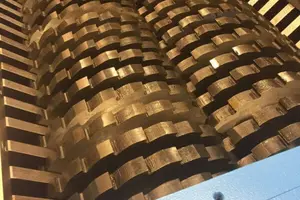
taskmaster shredder teeth close-up
Solid Waste Case Studies·March 17, 2020

Taskmaster® Shredders Play Critical Role In E-Waste Recycling Operation

A major e-waste recycler which handles massive quantities of electronics received from many states wanted to make improvements. Their installed 4-shaft shredders were causing excessive maintenance expense and downtime. The company processes all types of e-waste from the smallest electronic components, such as flash cards and circuit boards, to the largest, such as mainframe computers - and everything in between. Their process is design to reclaim valuable metals found in the waste components such as silver, gold, and copper which can only be reclaimed after a shredding process. The company has only one production line which is at work shredding 24 hours a day, 7 days a week. In order to extract the precious metals, the e-waste must go through a multi-stage size reduction sequence to get down to the required output size. The company processes a one-line system which is at work shredding 24 hours a day, 7 days a week.  In order to extract the precious metals, the e-waste must go through a multi-stage size reduction sequence to get down to the required output size. The company stated they weren’t satisfied with the 4-shaft shredders they were using and were looking for a better solution. Those units were taking too much time to repair. Repair costs were excessive and cleaning was required between every production lot, resulting in far too much overall effort, money, and time. That’s when they turned to Franklin Miller for a solution. The company purchased four Franklin Miller TASKMASTER® Shredders to address vital stages of their shredding process. They have two dual-stage size reduction lines running simultaneously, with a dual TASKMASTER TM3000 and a dual TASKMASTER TM1600 in each line. The e-waste first goes through the larger shredder, a TM3000 with fine, multi-tooth cutters. “The TASKMASTER 3000 is our first step of shredding for our e-waste line,” said the technical engineer. The heavy duty TASKMASTER TM3000 industrial shredder reduces high volumes of solids with low speed, high torque, dual shaft design. This shredder is suitable for a variety of shredding applications that demand high power, large throat openings and extra heavy-duty construction. The design of this unit provides effective operation with low noise, sparking, dust or heat rise. The unit can rip, tear and shred through a variety of tough solids, reducing the volume for further processing or economical disposal. After the e-waste is processed by the TM3000, the material next goes through a dual stage Franklin Miller TASKMASTER Model TM1600. These machines have very fine cutters to achieve the final output size required. The TASKMASTER TM1600 shredder, though smaller, is still a powerful workhorse that can shred heavy solids in both gravity and liquid systems. Once the Franklin Miller shredders have finely reduced the e-waste, the material is ready for the final processes. Due to the intensive, high volume nature of the operation, up-time on the shredders is highly critical. The e-waste includes some very tough materials that can challenge the strongest shredders. Finding the right cutter alloy that was tough and resistant to the heavy wear played a big role in the success of the TASKMASTER shredders. It was doubly important here because TASKMASTER  Shredders play a critical role in this 24/7 e-waste recycling operation. ‍                                                                      Video: Franklin Miller TASKMASTER electronics shredder.

Read More
The Powerful XL Shreds Bulky Pallets
Latest News·March 10, 2020

The Powerful XL Shreds Bulky Pallets

Franklin Miller's TASKMASTER® XL Pallet Shredder is a robust and powerful tool designed for efficient pallet shredding. It skillfully handles entire pallets, including nails, effectively reducing their bulk volume. This capability is not only beneficial for shredding but also aids in maintaining a safer and cleaner workplace environment, while helping to reduce the costs associated with pallet disposal. The TASKMASTER® XL comes fully equipped with a stand, hopper, and advanced automatic reversing controls. Its design focuses on efficiency, incorporating a direct coupled gear drive for smooth and simple operation. One of the key benefits of the TASKMASTER® XL is its low-maintenance design, particularly the absence of drive belts that require re-tensioning, which is a common issue with other shredders. Ease of use and maintenance are central to the TASKMASTER® XL's design. It features a unique enclosed hopper that automatically channels the pallet into the cutting chamber for efficient shredding. For additional functionality, optional equipment such as auxiliary discharge conveyors can be included to transport shredded material to a waste container. An infeed conveyor is also available for those looking for a completely automated system. Overall, the TASKMASTER® XL Pallet Shredder from Franklin Miller stands out as a comprehensive solution for efficient and easy shredding operations, contributing significantly to a cleaner, safer, and more cost-effective workplace. ‍ ‍ ‍

Read More
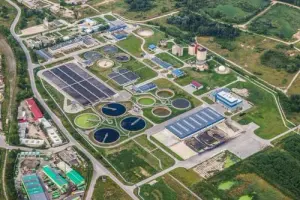
aerial view wastewater treatment plant
Blog·March 8, 2020

What is Wastewater Treatment and What are its Stages?

You would never drink the water straight out of your toilet, would you? Of course you wouldn't, but there's a good chance you've consumed water that was waste at some point. But can wastewater ever be made clean enough to drink? And how does it get processed to become something that can be used for irrigation and industrial purposes? Well, the process of treating water starts in the toilet. American toilets drain to wastewater treatment plants. In fact, 76% of the United States rely on an estimated 14,748 wastewater treatment plants, according to ASCE. But what happens after the water is sent to a wastewater treatment facility? And what health implications are caused when a step in this process doesn't go according to plan? Continue reading to find out what is wastewater treatment, how it works, and how wastewater can be processed into a drinkable liquid. What is Wastewater Treatment So what is wastewater treatment? It's the process of removing pollutants from wastewater and converting it into something free of solids and organic matter. This allows the treated water to be returned into an ecosystem with little-to-no impact on the environment. There are five steps in the wastewater treatment process: pre-treatment, primary treatment, secondary treatment, the disinfection process, and the release. Improper execution and/or skipping any of these steps can have disastrous effects on local water supplies and public health. Pre-Treatment Once wastewater arrives at a water treatment plant, it goes through the process of pre-treatment. This begins with the wastewater flowing through a bar screen. A bar screen is a mechanical filter used to separate larger things from the wastewater. Unfiltered sediments and organic material can accumulate and cause major clogs. This can slow down the water treatment process overall and clogs can result in downtime for a wastewater treatment facility. They also tend to make a mess. The items removed from the bar screen then get sent to landfills. After processing through the bar screen, the wastewater gets sent through a grit chamber. Grit chambers are narrow and long tanks that lower the velocity of flowing water. This allows small particles like coffee, eggshells, and rocks to settle out. These particles have to be sifted out because they can't be removed with chemicals. The sediments settled in grit chambers can cause excessive wear on other pieces of equipment in the wastewater treatment process. The grit can also clog and destroy pumps. Now that the water has gone through pretreatment, it's ready for primary treatment. Primary Treatment After sediments have settled in the grit chambers wastewater can move on to a primary clarifier. A primary clarifier is a tank that holds wastewater and allows heavier solids to settle at the bottom, becoming sludge. The lighter materials float to the surface of the water, where it becomes scum. Primary clarifiers rely on settling velocity. Settling velocity is the speed at which a particle settles. As wastewater is pumped into a primary clarifier, its flow rate cannot exceed the settling velocity of the water. After completing primary treatment, wastewater becomes effluent - a slightly treated wastewater free of solids and organic material. Now the effluent can move on to secondary treatment. Secondary Treatment This is the last step of the water treatment process that removes solids and larger biological matter. Secondary treatment begins with the effluent flowing into an aeration basin. An aeration basin holds the effluent and artificially adds air to it. This process, known as aerobic digestion, breaks down the organic matter left in the effluent. Some older water treatment plants use an additional step ahead of the aeration basins involving biofilters. Here, the effluent is poured over stone or plastic and bacteria eat away at the organic material in the water. Generally, this process isn't used anymore because it isn't as efficient or effective as modern wastewater treatment practices. Next, the effluent is pumped into a secondary clarifier. In the secondary clarifier, the sludge is removed and pumped back into aeration basin. Now, the effluent is ready for disinfection. The Disinfection Process By the time effluent reaches the disinfection process, 85% of organic matter has been removed from it. The disinfection process removes the harmful pathogens still in the effluent. It can be accomplished through one of three steps. Chlorine Disinfection - Imagine chlorine disinfection as a process of bleaching the effluent. This is a chemical form of disinfection, and the chlorine must be removed from the effluent before it can be discharged to stream or lake. Ozone Disinfection - This process involves pumping an electrical current through the effluent to disassociate diatomic oxygen molecules (O2) so they can combine with a free oxygen molecule and form ozone (O3). The process of ozone disinfection can kill as much as 99.99% of bacteria. UV Disinfection - UV disinfection uses ultraviolet light to sterilize the harmful microbiomes left in the effluent. Even though the microorganisms aren't removed, they are dead and harmless. Now the wastewater has been stripped of all large and microscopic organic and inorganic materials and it has been disinfected. The effluent can finally be released. Effluent Release Effluent release generally exists in two forms. The treated wastewater can be released into local streams or waterways since it is no longer harmful. This allows the effluent to rejoin the water cycle of the local ecosystem. But in areas where water is scarce, effluent can also be discharged into another treatment plant. Here, the effluent is treated for consumption. This is typically not practiced in the United States. However, some cities and municipalities are considering pumping effluent into their aquifers to increase their water supply. Reclaiming Water Though it may sound like a long journey, the water treatment process only takes about 24 to 36 hours from start to finish. Water sanitation is a dirty job, but you can thank the 14,748 water treatment plants for the peace of mind you have after you flush the toilet. If you're still wondering what is wastewater treatment, if you have questions about the wastewater treatment process, or if you are hoping to use water treatment at your business, please contact us.

Read More
cannabis plants greenhouse
Latest News·February 1, 2020

Cannabis Waste Shredders: Your Complete Guide to Understanding How They Work

The cannabis industry is evergreen. As it continues to grow in a multi-billion dollar industry, so does the waste that it creates. Waste management has become quite a thorn in the side for growers, producers, and retailers alike—and it all has to do with state and federal regulations. Luckily, cannabis waste shredders are here to make life easier for everyone on the cannabis supply chain, bringing peace of mind and a simple, effective way for disposal. Keep reading to find out more about what is meant by cannabis waste and how cannabis waste shredders are helping everyone in the industry remain compliant. A Special Kind of Waste Cannabis may be a plant but in terms of waste, it doesn't have plant equivalency in accordance with EPA standards. From cultivation byproduct—leaves, trim, stalks, roots, etc.—to manufacturing and laboratory byproduct, you get organic and inorganic profiles that create a variety of waste streams. It's especially important to take into consideration the different types of cannabis cultivated and manufactured, i.e., marijuana and hemp. The marijuana variety of cannabis is still a Schedule I controlled substance due to its THC concentration. The hemp variety of cannabis has been declassified and is 100-percent legal—it only contains trace amounts of THC that can be found throughout this variety in particular. This leaves the cannabis waste in question as either non-hazardous cannabis waste, traditional hazardous waste, or hazardous cannabis waste. Non-Hazardous Cannabis Waste Non-hazardous cannabis waste is defined as such by the Bureau of Cannabis Control (BCC). It refers mainly to the hemp variety of cannabis by-products such as leaves, stems, roots, bulbs, stalks, etc. These whole plant parts become nothing more than "organic waste." To dispose of this organic waste by law, it must be made unusable and unrecognizable. To do this, it has to be mixed with other non-hazardous waste like food or yard scraps until it's only a certain percentage of cannabis. Traditional Hazardous Waste Hazardous waste is defined by the EPA as any waste that is dangerous or potentially harmful to our health and/or the environment. Hazardous waste can take the form of a liquid, gas, solid, and even sludge. They're typically the by-product result of manufacturing processes that involve other chemicals. To be classified as hazardous, the waste must have one or more of four characteristics: flammability, reactivity, corrosivity, and toxicity. Cannabis by-products can have any of these characteristics as a result of poor manufacturing processes—not the plant itself Hazardous Cannabis Waste Hazardous cannabis waste refers to two types of hazardous. The first is outlined as the four categories listed above (liquid, gas, solid, and sludge). The second is any chemical constituents within the plant. In other words, marijuana is considered a hazardous cannabis waste. This is because THC is still federally illegal and is classified as a Schedule I controlled substance. This type of cannabis waste can sometimes be aggregated with other materials until it becomes unusable and unrecognizable. Some states treat THC-containing cannabis as medical waste and require that it's disposed of as such. The main rule of thumb in terms of cannabis waste disposal is that you can't just throw it away. This is to prevent any leftover cannabis materials containing THC from getting into the wrong hands. Those wrong hands would be minors, pets, or other animals. It's also to prevent any THC from contaminating soil or water sources. Why You Need Cannabis Waste Shredders Each member of the cannabis supply chain must dispose of their cannabis waste properly. This includes everyone from growers, to extractors/producers, to dispensary owners. This is where cannabis waste shredders come into play. For Growers Growers deal with the bulk of whole cannabis plants and their disposal. Plant materials leftover from cultivation and processing must become "unrecognizable and unusable." Once this new identity is achieved, the cannabis waste can then be shipped off to a licensed composter or landfill. Of course, between cultivation, harvest, and processing, a lot of plant waste is generated. Cannabis waste shredders can take care of those large quantities of processed materials. For Extractors/Producers Extracting THC or CBD from cannabis is a process that may utilize solvents, chemicals, and a lot of water. What's leftover are whole plants or plant parts that have retained any chemicals or solvents used. They also contain remnants of THC and/or CBD. Of course, not all extraction methods call for chemicals and solvents. The ones that do use them create hazardous cannabis waste that must be disposed of in accordance with state regulations. Extractors/producers have responsibilities. Those responsibilities include grinding down all materials into an unrecognizable pulp. Then they can turn over their hazardous waste to a licensed company. For Dispensary Owners All cannabis products have an expiration date. As a cannabis retailer, it's against the law to throw away expired products and materials. Dispensary owners must work with a licensed waste company to remove these products. Those who work in bulk retail find cannabis waste shredders helpful. They help retailers remain compliant with cannabis laws and regulations in terms of waste. Grinding expired cannabis flowers and plant materials is also a preventative measure. It keeps anything from being stolen while waiting for a waste removal company's scheduled pickup. Are You in Need of a Shredder? If you're in the cannabis business, then the answer is yes—you need a cannabis waste shredder. The last thing you want is the wrong person getting their hands on your leftover plants and plant parts. This is something that could end up in fines and possibly losing your business. We have plenty of different types of industrial shredders suited for all purposes. Contact us today with any questions or concerns. We'll gladly guide you in the right direction.

Read More
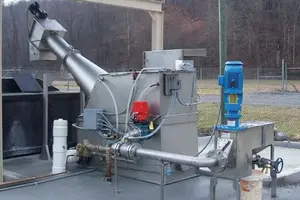
septage system mechanics
Latest News·January 22, 2020

SPIRALIFT® SR Enhances Septage Receiving and Administration

The SPIRALIFT® SR is a complete multi-function Septage Receiving system that automates plant receiving operations. The SPIRALIFT grinds, screens and conditions the flow reducing the loading on plant processes and readies screened solids for economic disposal. The system’s comprehensive control system authenticates users and records transactions for billing and tracking purposes. These units wash and efficiently compact screenings by up to forty percent. The processed solids are conveyed to a convenient elevation for discharge into a bin, bag or conveyor. This pre-engineered system features dependable operation, easy installation and low operating costs. The SPIRALIFT SR is provided with an S270-SR Automatic Control System which controls and monitors all system operations, and an optional S270-SRH Hauler Station Control System which collects transaction data, authenticates haulers, tracks loads and supplies a receipt via a card swipe system. The SPIRALIFT units are housed in a stainless steel tank enclosure with a quick disconnect inlet flange for fast connection to septage trucks. An automatic inlet valve automatically regulates internal fluid level. A TASKMASTER® TT automated rock removal system is also available as an option.

Read More
three rotary knife mill machine items
Latest News·December 30, 2019

Introducing the DEFINER® KM Series Rotary Knife Mills

Introducing DEFINER® KM Series Rotary Knife Mills for fine particle size reduction and uniform particle size distribution. The DEFINER® KM series mills employ high shear knives that quickly and efficiently cut solids to the desired output size without over grind or excessive fines. DEFINER Mills can quickly reduce high volumes of product and achieve uniform particle size distribution. The unique, proprietary cutting mechanism is designed to minimize heat rise or product overwork typically associated with conventional processing equipment such as hammer mills. Rotary Knife Mill Uses DEFINER knife mills deliver consistent particle output while maintaining product integrity. They effectively handle such materials as hemp, spices, cannabis and more. Whatever the application, the heavy, precision construction of the DEFINER KM delivers reliable operation and maximum machine uptime with minimal maintenance. Sizes and Availability These units are available in various models and sizes to handle a capacity ranges from 125 lbs. per hour (56 kg/hr) to 5000 lbs. per hour (2272 kg/hr) or more, depending on the application.

Read More
Taskmaster® Titan® Grinders to the Rescue at ECUA
Wastewater Case Studies·September 26, 2019

Taskmaster® Titan® Grinders to the Rescue at ECUA

The Emerald Coast Utilities Authority (ECUA) was having a difficulty with their sewage grinders. They were running four grinders supplied by a well known manufacturer at two of their pump stations, with each station processing approximately 10 mgd. Unfortunately, their first set of grinders turned out to be problematic. They created a lot of down time and generated excessive maintenance costs. ECUA needed a new solution to solve their problems and get their pump stations functioning properly. “From day one, they did not work,” said Gerry Piscopo, Deputy Executive Director of Maintenance & Construction. “We have a 48 inch gravity line feed. The machines ragged up, broke, and just plain didn’t work. The rotating baskets would fill with wipes and stop the flow. We sometimes got things such as wet plywood in the grinders. We would have to pull out the entire machine and use a blow torch on the plywood.” “We knew this couldn’t go on,” Piscopo said. After weighing their options, they decided to go with Franklin Miller Grinders as they began to replace their current machines. “We installed the first TASKMASTER® TITAN® four years ago. “ Since then, the ECUA has installed a total of four grinders, the TASKMASTER TITAN Duplex, in these two major pump stations. “We have not had one day of maintenance since,” Piscopo said. “We couldn’t believe it,” Piscopo said. “No maintenance. None. With our last machines, we never had even a single month without major service needed.”  He also discussed that with the previous supplier, they had to send the entire machine back to the company to be serviced.  Piscopo continued, “Now, we have no maintenance issues. We never have to take the machine out of the channel.” Because the ECUA is a coastal operation, uptime really has a trickle effect. Less down time means less damage to pumps. The Emerald Coast Utilities Authority (ECUA) operates three wastewater treatment plants in Escambia County, Florida. There are currently 895.5 miles of gravity main pipes, 300.6 miles of force main, 17,041 manholes, 483 air release valves and 960 valves in operation in the system. The ECUA is beyond happy with their Franklin Miller units. “I’m really happy the Franklin Miller machines have worked as well as they have. The Franklin Miller Titan grinders have sure as heck held up,” Piscopo said. He also discussed Franklin Miller’s true submersible motor.  He says this was a huge benefit for him as the previous company’s machines were supplied with immersible motors as opposed to true submersible. The TASKMASTER TITAN DUPLEX is a unique, high-flow 4-shaft channel grinder with a full-cut™ design that offers optimal protection for pumps, filter presses and other downstream equipment. Its  innovative design features CUTTER CARTRIDGE® Technology. These cutters intermesh with a second cutter stack with a much larger diameter. The result is a truly heavy-duty, high flow channel grinder. “Overall,” Piscopo said. “Working with FMI has been really great. We haven’t needed parts or to do any maintenance at all. I am definitely a satisfied customer.”

Read More
SPIRALIFT® Screening System- Solves Sludge and BOD Problems at City of Plymouth

SPIRALIFT® Screening System- Solves Sludge and BOD Problems at City of Plymouth

The City of Plymouth processes 150,000 gallons of raw sewage a day. Before 2009, the plant had no headworks installed at all. The raw sewage was being dumped into a pond. Because of this, the plant suffered major ongoing sludge and BOD problems. A city engineer recommended a new system be installed to combat these problems. After doing research, the engineer found a Franklin Miller system that proved a perfect solution. In 2009, the city installed a system consisting of a SPIRALIFT® S and SPIRALIFT® SC. The system screens the raw sewage, removes solids that do not break down and finally washes and conditions them. Greg Wood, Chief Wastewater Operator, reports the plant is very happy with the SPIRALIFT System. Says Wood, “It works well and really does its job!  It never goes down or offline.” The SPIRALIFT screens both use augers to process the solids. The SPIRALIFT S channel screen has a shaftless auger design.  Solids captured on its semicircular screen are swept from the screen by brushes affixed to the perimeter of the auger, washed and transported up to a discharge. The screenings then fall into the SC Screenings Conditioner. The SPIRALIFT SC employs two technologies for optimal washing. First, a TASKMASTER® grinder reduces the solids to uniform particles exposing multiple surfaces to the washing action.   Next, the SPIRALIFT SC intensively washes organics and flushes them back into the system. The unit’s auger then conveys the solids into the unit’s press zone. The output is deposited into a bin, bag or conveyor — washed, ground and reduced in weight. The grinder and press technology, along with highly rugged construction, makes the SC uniquely effective. Wood performs very basic maintenance, oiling and cleaning the machines once a year. “In addition, the city has had to replace the brushes only once in all these years,” he said. Before installing the Franklin Miller system, the sludge and BOD problems caused a lot of headaches at the plant on a very regular basis. The SPIRALIFT system has eliminated them all. “Now, we have no problems,” Wood said.

Read More
County Drastically Cuts Costs With DIMMINUTOR®

County Drastically Cuts Costs With DIMMINUTOR®

Fairfield Wastewater Treatment Plant in Butler County, Ohio was having a lot of trouble with their grinders. The plant serves over 42,500 domestic customers, a number of commercial and industrial institutions as well as Mercy Hospital of Fairfield. They treat about five million gallons of wastewater collected in over 175 miles of sewer pipe each day. The brand of grinders they were using was extremely costly to maintain. They had two – one in each of their wet wells. Each year, one of the units would come out for a full rebuild due to the cutters’ complete deterioration. This was costing them about $25,000 a year in rebuild costs. “It was ridiculously expensive,” Brad Abner, Chief Operator at Fairfield WWTP, said. “There was no way we could keep using something with such high maintenance costs.” After some market research, the plant decided to install a Franklin Miller DIMMINUTOR® Wastewater Grinder to replace their current machine. Almost immediately, they found the DIMMINUTOR to be more reliable and easier to maintain than their old grinders ever was. “They are running wonderfully,” Abner said. “Even if we had to maintain the DIMMINUTOR on the same schedule as our old machines, it would still be half the price.” The DIMMINUTOR is an open-channel comminutor that provides automatic screening and grinding of liquid-borne solids with a straight through design. This unit reduces plastics, wood, vegetable matter, disposables, and other oversized items to a fine particulate. The DIMMINUTOR’S unique features, heavy precision construction, dependable operation and simplified maintenance have earned it a solid reputation amongst operators and specifying engineers worldwide. The DIMMINUTOR is designed for reliable operation and easy maintenance. For example, with its cantilevered design, the DIMMINUTOR needs no seals or bearings near the gritty channel floor. The unit’s screen is stationary so it never wears against bottom grit. Each cutter is interchangeable and cutters can be removed or adjusted independently. The unit’s seals and bearings are immersed in an oil bath for long life and low maintenance.

Read More
Case Study: TASKMASTER® TITAN® to the Rescue in Picturesque, Cobleskill, New York

Case Study: TASKMASTER® TITAN® to the Rescue in Picturesque, Cobleskill, New York

The wastewater treatment plant in picturesque Cobleskill, New York, was unable to process the wastewater generated by the town’s 4,678 year- round residents. The buildup of plastics, rags, trash wrappings and other debris was regularly clogging the system, necessitating frequent cleanings. Cobleskill, New York, settled in 1752, draws tens of thousands of visitors to the Schoharie County Sunshine Fair, held yearly since 1876. Visitors also enjoy fishing and boating on the nearby creeks and reservoirs. But with the influx of all these visitors, more waste is generated. The town’s wastewater plant, an activated sludge system with extended aeration, was originally designed to treat an average flow of 1.85mgd. Septage and incoming wastewater flow through a bar screen and the oversized solids are sent to two channel grinders where they are reduced to a fine particulate. The solids are allowed to settle in the secondary clarifier, pass to an aerated digester, and are dewatered and sent to a land fill. Treated effluent is discharged into Cobleskill creek. But the plant was overwhelmed and couldn’t handle the buildup that was constantly clogging the system and halting operation. “After reviewing our options, we decided to replace one of the grinders with a more powerful one “said Plant Operator, Don Borthwick. “Our distributor recommended the Franklin Miller TASKM ASTER® TITAN® (TM 14000). They liked the design because the unit has a full cut grinder.” “Our original units did not have this feature and a lot of material got by them. We purchased the TITAN which was easily installed at the head of the plant at the sewer main,” he continued. “As we had hoped, the grinder prevented material from passing downstream to the pumps.” ”Since the installation a few months ago, the pumps have been clog- free and the frequent maintenance problems have stopped. The Titan runs very well and as an added bonus runs quietly,” he concluded. The TASKMASTER TITAN (TM 14000) is a major innovation in twin shaft channel grinding technology. This unit’s design employs two counter-rotating shafts, but unlike previous twin shaft grinders, one cutter stack intermeshes with a second one, which has a much larger diameter. The result is superior performance in both grinding and liquid handling. The TASKMASTER TITAN combines powerful channel grinding capability with high flow capacity and low headloss and without the need for rotating diverter screens which have been known to be noisy, inefficient and maintenance prone. With its massive array of cutting edges, cutter life and unit strength are enhanced. The unit’s unique design provides superior feeding of large, bulky or round objects and a finely ground output for excellent protection of pumps, filter presses and other downstream equipment. The TITAN employs a 3hp or 5hp motor and cycloidal gear drive, cutter cartridge technology and a 14”x 12” up to 14”x 60” inlet cutting chamber size for handling flow rates up to 8 mgd.

Read More
shredded paper strips
Blog·April 22, 2019

How to Find the Right Paper Shredder for Your Business

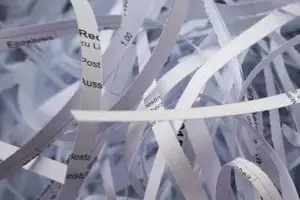
Given that destroying paper is rather generic, you’d think all paper shredders are the same, right? On the contrary, there are different types of commercial paper shredders, with so many models that it can be difficult to choose which one will best suit your needs. There are several reasons you may need a paper shredder, and these motives will help you determine which one you should purchase. In this guide, you’ll learn everything you need to about paper shredders, and why you may need to get one for your business sooner rather than later. The Importance of Paper Shredders Data security is a major concern for most businesses. If sensitive information gets into the wrong hands, it could destroy your company. Data breach cases are growing by the day, and one of the best ways to prevent them from happening is by destroying any documents you need to dispose of. Instead of looking for places to securely store this information, a paper shredder will help you maintain security effortlessly. Let’s look at some benefits of paper shredders. For Protection Against Identity Theft When sensitive documents are shredded, they pose no threat at all. If they’re unreadable, then your business is safe from unscrupulous parties. Shredding your documents means that confidential information will not be exposed to identity theft. The Law Requires It Some businesses, such as law firms, healthcare, and financial services, are required by law to shred their documents. If you fall under this category, you have a legal obligation to protect your clients’ sensitive information, and you would be complying with the GLB, SOX, HIPAA, and FACTA laws. Customer Confidence and Clutter Reduction Depending on your type of business, your customers highly depend on you to protect their medical, financial, and personal information. With a document shredding policy in place, your customers will have confidence that they are safe as they know their information will be well disposed of. Beyond that, paper documents pile up over time, and if you’re not careful, your office could be filled with clutter. This could dampen productivity and impact employee morale, so shred those documents to minimize clutter. All you have to do is digitize all the information you need then shred the documents, DVDs, and credit cards you have. Cost-Effectiveness and Eco-Friendliness Shredded papers can be recycled, which will reduce waste, and as long as you get the right paper shredder, you won’t have to worry about energy efficiency. This is an affordable way to get rid of excess papers, reduce clutter, and avoid data theft. What to Consider When Choosing a Paper Shredder Regardless of whether you want to protect your customers and employees from identity fraud or to comply with the law, there are several factors you must consider before choosing a paper shredder. Ask yourself what level of security you want, where you’ll be using the shredder, and what features you need to make things easy. Types of Paper Shredder Cuts There are many types of shredders, from home shredders to industrial shredders. All these give a different paper cut, so consider which one suits your needs. Strip-cut shredders are the most basic cut and most suited for non-confidential documents. The papers are shred vertically in long but narrow strips that are often still readable. Cross-cut shredders shred confidential documents, and they offer a medium level of security where the papers are barely legible. Micro-cut shredders are the advanced option, and they shred highly confidential documents, and they result in confetti-like papers. Crypto-cut shredders are used to destroy incredibly sensitive data, and they shred documents to dust. Additional Considerations There are several more considerations you need to make while choosing a paper shredder. Bin Size This will depend on how much shredding you plan to do, and the more the shredding, the bigger the bin you need. Maximum Page Load This refers to the number of documents you can feed to the shredder at the same time. If you’re just a small business, a maximum of 10 pages will do, but if you have a large business, then you may want to consider a larger capacity. Slot Size Shredders come in all sizes, so consider the size of the documents you need to shred. Beyond that, you also want to consider the format of the data you want to destroy. Some shredders will only shred paper documents, while others will go as far as shredding floppy disks, CDs, paper clips, DVDs, and credit cards. Mobility Consider how many people will need to use the shredder in the office to see whether you need a mobile one that can easily move from one place to the other. Run Time The run time and cool-down time of the shredding machine matters. Most people don’t consider this when choosing a paper shredder, but the run time, also known as the duty-cycle, means that you can only use it for a given period of time then wait for it to cool down. Manual vs. Automatic Feeding Manual feed shredders are exactly what they sound like. You need to feed them manually, and it’s okay if you don’t need to shred too many documents at once. However, an auto feeder would be ideal if you need to shred plenty of papers. Auto feeders have a tray where you place all your documents, then press a button and leave the machine to do the rest. The Noise Level This is also another overlooked feature, and most people only realize that noise is a factor when they use the shredder. On average, most shredders have a noise level of 65 decibels, so consider what will be a disturbance in the office. Look for one that shreds silently, especially if you do lots of shredding throughout the day. How to Maintain Your Paper Shredder Maintaining a paper shredder is relatively easy. It’s recommended that you oil the blades each time the capacity is full or after doing intensive shredding. You may also refer to manufacturer instructions when you choose the right shredder for your business. You also need to keep it clean using a vacuum cleaner to get rid of the paper dust that sticks on the blades. Start Shredding Your business may encounter legal penalties if it fails to dispose of sensitive documents and materials properly. Investing in a paper shredder might be one of the most important things you can do for your business. There are many options on the market, and now that you know what to look for, you can make an informed decision.If you’re looking for the best shredder for your business, contact us or check out our website to see some of your options.

Read More

Technical Resources & White Papers

Access engineering guides, technical specifications, and industry white papers to support your project planning.

Engineering Excellence Since 1918

Ready to Solve Your Toughest Processing Challenges?

Our team of engineers is ready to help you find the right equipment for your application.