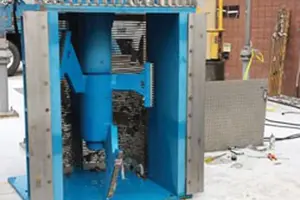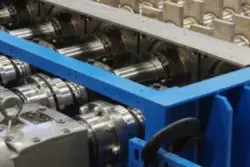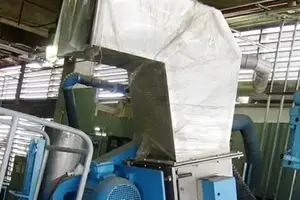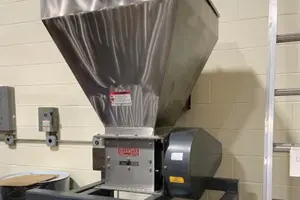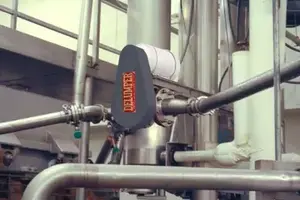
ADM Cocoa Plant in Hazle Township, Pennsylvania needed help with their cocoa bean production. The plant processes two and a half million pounds of cocoa beans each day, turning them into cocoa powder, cocoa butter, and chocolate liquor. The company needed a machine to process sugar with over-sized lumps that could occur in transport or storage. Unless these agglomerated clumps were reduced to a granular form, the process could not work dependably. The machine also had to handle the large quantity of sugar processed daily and be sanitary.
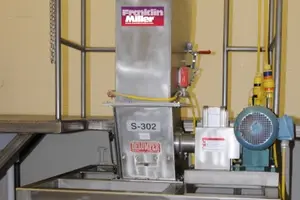
After researching available options, ADM decided on a Franklin Miller DELUMPER® L. They are thrilled that they did. It has saved them time, money and manpower. “If it wasn’t for the DELUMPER,” said Brian Shpock at ADM Cocoa, “we would probably have to beat on the sugar lumps with a sledgehammer 24 hours a day.”
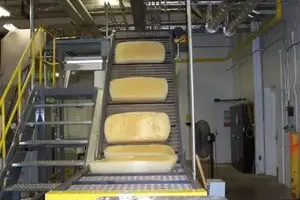
The DELUMPER® L handles 200,000 pounds of sugar each day, with lumps up to 24”, though on average they are 6-8 inches.
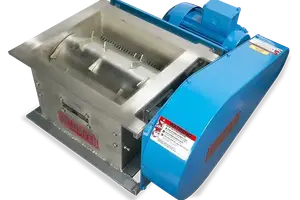
The DELUMPER® L has a unique streamlined design that is both versatile and easy to maintain and clean. The unit’s ultra-compact housing disassembles for cleaning and maintenance in less than a minute. The DELUMPER also features a variable speed direct drive that can precisely meet exacting application requirements. The unit is constructed with a sanitary, fully stainless steel design. The unit has a straight-through product flow with no bends or offsets to assure no accumulation within the unit and make installation easy.
The DELUMPER® Lhas been in use in the ADM plant for four and a half years. “It’s been great. No problems. So far, so good.” Shpock said.
The Pottstown, Pennsylvania Wastewater Treatment Plant handles the wastewater generated by 15,000 area homes, commercial businesses, and industrial sites located in the borough of Pottstown and three nearby townships. The facility is rated for 15.6 mgd and treats an average flow of 7 million gallons of sewage a day.
The plant uses a multi-stepped treatment process to purify the wastewater so it can be safely returned to the environment. Proper treatment of the influent remains an essential first step. By reducing plastics, rags, wood and other incoming solids to fine bits, downstream pumps, and other equipment are protected from abrasion and clogging.
With this in mind, the wastewater facility has relied upon the unparalleled grinding ability of the DIMMINUTOR® Wastewater Grinder to keep plant operations running smoothly. The units themselves are constructed for dependable service and simplified maintenance. Long life, too. This year, the plant purchased a Turbo DIMMINUTOR DM36 to be used in tandem with a unit bought in 1991.”That DIMMINUTOR was part of the original plant upgrade,” says Brent Wagner, Plant Superintendent. “ Over the years it has been rebuilt several times but is still operational. We have had no problems. The units do what they are designed to do.”
The two units are installed in channels at the headworks with a bar screen in front of each one. Once the solids are finely ground and screened, the wastewater flows into a grit system where centrifugal force removes the grit, pulling it to the bottom. The water passes into a pre-aeration tank and is oxygenated. It then flows to an aeration tank, mixing with microorganisms for treatment. A clarifier settles the organisms out and takes the cleared water off. The water is chlorinated and then returned to the Schuylkill River.
Mr. Wagner admits to some reservations about the way sludge is handled. “60% of our solids handling is exterior sludge. We currently send all of those solids to a landfill. With concerns about the long term effect on the environment, this doesn’t make sense. Hopefully, by the beginning of next year, the sludge will be recycled.”
In the meantime, the DIMMINUTOR, after 18 years, remains the grinder of choice. “We like the units. We have had no problems with them. They do what they are designed to do,” Wagner concludes.
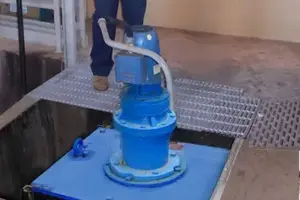
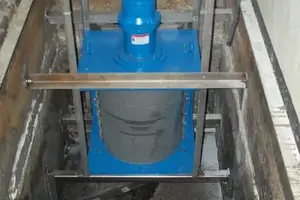
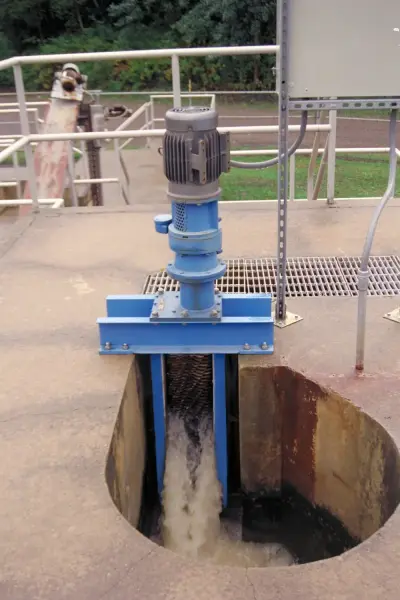
The DIMMINUTOR provides the first line of defense in a wastewater treatment plant headworks or pump stations. Sewage solids are captured on a curved screen where rotary cutters sweep them into adjacent stationary cutters with a continuously rotating high torque action. As the cutters intermesh at close clearance, they shear, tear and crush the solids to a size small enough to pass through the fine screen slots. This unit’s rugged screens are cut with laser precision from heavy stainless steel plates.
Unique features of the Dimminutor include
No seals or bearings located at the bottom of the unit where high concentrations of grit accumulate.
Stainless Steel screens and cutters.
Each cutter is independently removable and adjustable without unit removal.
The DIMMINUTOR is available in several models from 15″ (382 mm) through 36″ (915 mm) handling flow rates up to 30 mgd (1.3 cubic meters). They are available for submersible applications using our exclusive Submersible C.I.A. motors.
See our full line of wastewater grinders
American Laboratories, Inc. is a leading manufacturer of enzyme products for many food, dietary supplements, nutritional and industrial applications. The company has grown steadily, currently operating three facilities in Omaha, Nebraska. To keep pace with this expansion, the company realized, some years ago, that a more efficient way to process the enzyme material was necessary. After examining their options, they made a decision to purchase a Franklin Miller DELUMPER® Crusher DC1077S4.
“We use the DELUMPER Crusher to break up large cakes of enzyme products,” explains Vern Maly, Vice President of Production. “The solid, crunchy material is easily broken up into smaller pieces by the unit so that it can be further milled.”
“The DELUMPER Crusher suits our needs. Because it runs at a slower speed, it doesn’t generate much dust. When you are dealing with enzymes, that is very important,” says Maly. “Ease of cleaning is another benefit,” he continues. “We take off the cover, slide out the drum, clean it daily and its ready to go.”
“We’re very satisfied with the DELUMPER Crusher,” concludes Maly. “It worked well immediately after we installed it and, after seven years, the crusher continues to operate trouble-free.”
The DELUMPER® S4 series crushers are specially designed and built to meet the highest quality and sanitary standards. The units employ a precision aligned, smooth rotating drum with integral teeth that rotate through a set of sizing combs. This mechanism produces a once-through, non-destructive crushing action that reduces oversized particles to their basic grain size without over-grind or over-work of material. The result is improved product consistency for enhanced processing, feeding and packaging.
The units feature an ultra-sanitary design, easy interior access, cantilevered design, clean-in-place capability, quick change-over of cutting elements and a meticulously polished finish. A convenient access door provides fast and easy access to the interior of the cutting chamber for cleaning.
The Route 108 pumping station located in Howard County, Maryland serves a large, affluent mostly residential area. The station pumps 3.5mgd of wastewater for further processing to the Patapsco Wastewater Treatment Plant in Baltimore. When necessary, the treatment plant is bypassed and the wastewater is sent instead to the Little Patuxent Water Reclamation Plant. This arrangement, though uncommon, had always worked well until one day things took a turn for the worse.
“The problems began when the station was taken off-line while we did some upgrades to it,” said Superintendent, Bob Funk. “When we went back on-line a year later, the pumps were unable to run a full day without clogging up with rags.”
“Something had changed,” Funk explained. “We think that it was the construction of some nursing homes nearby. We began to see a lot more rags that were probably flushed down the toilets including shredded diapers, cleaning cloths, and other debris. It was a real mess. Every day someone had to spend up to four hours cleaning out the pumps. We desperately needed to find a solution and soon.”
“”We contacted several vendors and asked them for their ideas on how to best manage the situation,” he continued. “One suggestion was a climber screen to catch the rags before they entered the pumps. But that meant dealing with the collected screenings. A better option was a grinder placed in front of the pumps to grind the debris finely enough so that it could be passed along to the treatment plants for further processing.”
“Our first choice was a Franklin Miller DIMMINUTOR® T25 Channel Disintegrator which we ultimately purchased. Before we made a final decision, we were invited to Ocean City, Maryland where we could see the DIMMINUTOR in operation and talk to the operators using it. They said they were very happy with it.”
“Franklin Miller did a great job of engineering the DIMMINUTOR for our conditions. Everything was prefabricated, making it easy for our maintenance crew to install and maintain. We are now able to run our pumps twenty-four hours a day every day with virtually no pump clogging. In the time we’ve owned the unit, we’ve cleaned out just two jams; one caused by a log and the other by a plastic manhole cover. In both cases, the DIMMINUTOR went right back to work.”
“The DIMMINUTOR T25 has proven to be an excellent choice,” Funk concluded.
PROBLEM: Maxton Meat Processors, Inc. in Maxton, NC, was experiencing a major pumping problem of their difficult to transport meat products.
As part of their process, Maxton employed a pumping system to transport the meat solids at 200 psi. The chicken parts mixed with powders and oils had a tendency to lump up, plugging their pipeline system, preventing the material from being pumped through the system pipes before further processing. Their pumps were clogging and bridging was occurring within the pipeline system. The result was a frequent need to dismantle and clean out the piping. The plugged pumps required frequent maintenance. When production schedules were not being met an urgent solution was called for.
SOLUTION: Franklin Miller engineers, working closely with Maxton, determined that a PIPELINE DELUMPER® would most likely solve the problem. Initially skeptical that this inline unit could handle the difficult solids encountered in their system, Maxton agreed to put a unit in on a rental basis.
The results were immediate and impressive. The solids and agglomerates were intensively processed and disintegrated by the forceful intermeshing of the unit’s cutting elements. Not only did the frequent plugging problems cease, but the need for pump tear down was eliminated as well. Based on the results of the initial rental, the unit was purchased by Maxton.
The PIPELINE DELUMPER is an inline, pressure rated, flanged unit that employs a rugged bar grating and impeller both constructed of stainless steel. The cutting elements in this case were provided with a fused coated hardfacing of chrome boride. The unit is driven by an electric motor and drive.
These pressure rated units are provided with a choice of packings, double or single mechanical seals or gas seals. The units are available for pipe sized of 3″ through 24.”
A leading mineral mining and processing plant recently turned to Franklin Miller for help in solving a long-standing problem. The facility, located in Wyoming , is a major producer of soda ash, the common name for sodium carbonate. Derived from trona ore, the soda ash has significant economic importance because of its application in manufacturing glass, paper, chemicals, detergents and other products.
Trona ore is converted to soda ash in a multi-step process. The ore is heated in a kiln and is transformed into sodium carbonate. Water is added, and the solution is filtered to remove impurities. The liquid is then boiled off to form crystals,which are separated in a centrifuge and dried. While the conversion process appears to be straightforward, it very often was complicated by a mineral called eitelite. During production, this scale-like material would form on the walls of the dissolver tanks. Thermal shifts would cause the eitelite to flake off and large chunks would clog small pumps and pipelines, impeding production and reducing process efficiency.
For years, the company had looked for a solution, testing many devices and units without success. The application is complicated by the severe abrasive nature of the material. Then, Franklin Miller was asked to assess the entire operation and they recommended a powerful in-line processor that would quickly pulverize the difficult agglomerate lumps. A PIPELINE DELUMPER® was installed and the processor was put through a testing program that lasted a year. The company was so pleased with the unit’s performance that they subsequently purchased and installed three more units.
The PIPELINE DELUMPER® in-line processor crushes, disperses and suspends tough solids in fully enclosed pipe systems. This unit eliminates blockages, works the stream to free flow and prevents damage to pumps and other equipment. It is suitable for wet, dry, pressure or gravity systems. In applications worldwide, the PIPELINE DELUMPER® has demonstrated its processing and cost-effective benefits. The ultra-compact, straight through PIPELINE DELUMPER is designed for easy installation. This fluid-tight pressure rated unit has the full throughput capacity of the pipe to which it is connected. Its working principle employs rugged impeller teeth passing through a heavy bar grating to reduce the size of the product. These teeth completely clear the slots of the bar grating and at the same time clean the entire pipe cross section area.
The unit can be supplied with optional hardfaced cutters. A heavy fused coating of chrome boride is applied in a nickle-based substrate to form a solid fused surface with a Rockwell C in excess of Rc 65. This provides extended life in abrasive service.
Franklin Miller offers a full line of crushers to handle a wide variety of applications.
Chef Rubber, based in Las Vegas, Nevada, is a manufacturer and distributor of specialty supplies for chefs and well-known confectioners. The products include silicones, molds, colorants and colored cocoa butter. These unique tools are widely used by artisan chefs to create edible works of art for special events, competitions and other artistic applications.
With the recent optimization of their web site, the company experienced worldwide demand for their products and a large increase in sales. It soon became clear that in order to keep up with the expanding business, they would have to upgrade some of their material handling and production practices.
“We needed to take a look at how we process cocoa butter, one of our most popular products,” explained Paul Edward, Director of Operation. “It is widely used by chocolatiers and pastry chefs to make their showpiece creations.” “We purchase a very specific type of cocoa butter from Venezuela that comes to us in fifty pound blocks,” he continued. “The first step in the process is to break the blocks down to smaller pieces. Until recently, this meant shaving each block by hand and that wasn’t going to work anymore.”
After examining their options, the company turned to Franklin Miller for a solution. A DELUMPER®1075 LP Crusher was subsequently purchased after a test run with the cocoa butter passed with flying colors.
The DELUMPER LP lump breaker processes hard, soft, sticky, dry or wet substances at high volume. The unit features extended cutter teeth that rotate through a rugged bar grating. This powerful processor reduces oversized solids up to the unit’s full input opening size. With each rotation, the teeth clean the slot openings making the unit automatically self-clearing. The result is an efficient, exceptionally low friction cutting action that is excellent for large quantities of food, chemicals, fats, waxes, plastics, filter cake, and more.
The units are provided in various sizes with single, dual or triple shaft configurations for capacities up to 27,000 lbs./hr. An optional hardfacing of chrome boride fused coated to all cutting teeth is provided for superior life in abrasive service. Units are available in carbon steel, T304L or T316L stainless steel construction.
“The DELUMPER lump breaker has made a big difference,” said Edward. “It chops the blocks down in no time at all. In addition, the stainless steel interior makes it very easy to clean.”
“The unit is so big and powerful that I could do a semi truck load of cocoa butter in a day if it was needed,” he concluded.
Fredericton, Canada, a city of 50,000 residents, is the capital of the Canadian Province of New Brunswick. The Wastewater treatment plant, operated by the Fredericton Pollution Control Commission, is a secondary activated sludge system designed to treat an average flow of 5mgd. Septage and incoming wastewater flow through screens which direct oversized objects to the channel grinders where they are reduced to a fine particulate. The solids are allowed to settle in the primary clarifier, are dewatered and sent to a compost site. Treated effluent is discharged into the Saint John River.
Until 2009, when the plant began construction for a major upgrade to the existing infrastructure, equipment was purchased as needed. Replacing the existing channel grinders with more cost effective units became a priority. “We had two Muffin Monsters at our wastewater treatment plant, but the cost of overhaul every three years got to be very expensive and our maintenance budget took quite a hit,” explained Doug Sewell, Maintenance Supervisor.
“We began to look for a less costly alternative,” he continued. “We installed the first DIMMINUTOR® DM25 xf in 2003 and liked it so well that we purchased another one in 2006.” According to Sewell, the decision was a very good one. “The units are extremely reliable, the cost to operate them is very low and the company’s service and personnel have been topnotch,” he concluded.
The DIMMINUTOR DM25 Channel Comminutor provides effective, automatic screening and grinding of wastewater solids in straight through channels and wet wells. This powerful unit reduces plastics, wood, rags and other solids to fine bits, enhancing plant operation and improving the reliability of pumps and other downstream equipment.
The unit employs a smooth, continuously rotating design with high torque. As its three bidirectional rotary cutters intermesh at close clearance with stationary cutters, solids are finely reduced to a size small enough to pass through a sizing screen. With no gaps or openings between the screen and cutters, output is controlled and complete reduction assured.
The DIMMINUTOR has an intrinsically open design to handle high flow rates with low head-loss. This unit is extremely easy and economical to maintain and features individually replaceable cutters, oil lubrication and a simple rotary design requiring no auxiliary diverter screens. A unique, cantilevered design eliminates seals or bearings near the gritty channel floor. Every component of the unit is constructed for precision and long life.
The Lower Bucks County Joint Municipal Water Works Authority in Levittown, Pennsylvania is an activated sludge primary treatment plant. The facility is responsible for thirteen lift stations in the district and processes 10 million gallons of wastewater per day.
One of the stations had chronic problems because it had no catch basin for rags, debris or grease. To make matters worse, it was located directly in the path of two major shopping centers that disgorged massive quantities of all these waste products into the wastewater. “The pieces of grease were so big, we called them aircraft carriers”, said Lift Station Mechanic, Ken Balcom. ” They’d come in and, without a catch basin, would block up the pumps and corrode the valves. We would be down for 8-12 hours of operation because we’d have to clean the pumps.”
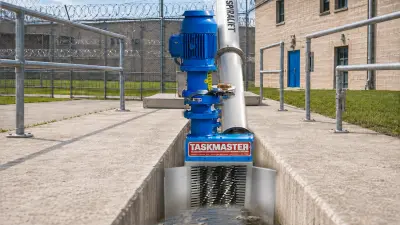
These rag-laden grease mounds would float downstream and present a menace to the entire system. That was until they installed a TASKMASTER® grinder. Purchasing the TASKMASTER TM8516, a powerful grinding unit, employing counter-rotating banks of intermeshing cutters, made all the difference.
The unit was installed right over the influent pipe, negating the need for a bar screen or a catch basin. When the debris entered the station, it passed directly through the grinder where it was ground up into small particles. As a bonus, the “aircraft carriers were completely destroyed and the grease was dispersed. Thereafter, it smoothly and easily passed through the pumps with no difficulties.
“We’re very pleased with the unit,” said Mr. Balcom. “It has improved system operations, cut down on maintenance and is very reliable. We maintain it according to the specs and we’ve had no trouble whatsoever.”
The TASKMASTER is a rugged workhorse of a grinder. The unit’s twin shaft mechanism is especially rugged due to the use of the CUTTER CARTRIDGE®, instead of standard individual cutter and spacer disks. This design gives it the extra strength needed to successful process these tough rags and grease.
SEE OUR FULL LINE OF WASTEWATER GRINDERS
“In 2007, flushable wipes came on the market and these products did not degrade before they got to the sewer pumps. The wipes tended to bind and clump together, creating huge balls that became tangled in the pumping equipment. The situation worsened as the wipes became more and more popular.” – Bruce Walczyk, Pump Station Foreman Northline Lift Station, Laguna Woods, California
For years, three pumps installed at the Laguna Woods, California Northline Station easily handled the 2.5 MGD average flow and even an occasional el Niño deluge. Maintenance was limited to deragging typical solids from the pumps every 3 months. Then, in 2007, flushable wipes changed all that and presented a real problem. Says Bruce Walczyk, Pump Station Foreman, “eventually it was taking two men four hours each, three times a week to de-rag the clogged pumps. They’d often be out at midnight on Sunday fixing a jam.” A unit to pre-shred the debris before it reached the pumps was desperately needed.
Dale Gruel of Dudek Consulting engineers, Encinitas California recommended grinding technology to alleviate the problem. After evaluating several units, the pump station chose a Franklin Miller SUPER SHREDDER® SS1200 inline disintegrator. Franklin Miller was the one company that made a heavy duty grinder with a short lay-in length that would fit into the site. The disintegrator was installed at the suction side of the pump. The debris was sucked in, shredded and then easily passed through the treatment plant. This placement avoided the potential for clogs and blockages in the pumps further down the line. Mr. Walczk reports, “Since its installation, the Super Shredder has run flawlessly, saving us countless labor hours.”
The problem with wipes is not going away anytime soon. In fact, “flushable” wipes sales are predicted to increase by 6% a year for years to come and the problem is not only in the USA. In London, a lump was discovered that was actually the size of a city bus that consisted of a mixture of cooking grease and wipes. Fortunately, Franklin Miller heavy-duty grinders are playing a critical role in combating this problem in plants nationwide and internationally.
Says Franklin Miller President Bill Galanty, “every one of our grinders is certified to reduce tough mops and solids such as flushable wipe products. We’re proud that our grinding equipment is solving this difficult problem that many plant operators are facing nationwide.”
The Southern Research Institute in Birmingham, Alabama conducts basic research for medical, environmental and engineering companies. The institute was faced with major waste management and disposal problems. The laboratories in the facility produce copious amounts of waste, much of it made of plastic and medical packaging materials. In order to be incorporated into landfills, it was necessary to reduce the waste to an unrecognizable state. The facilities manager considered incinerating the materials but realized that was not a viable disposal method.
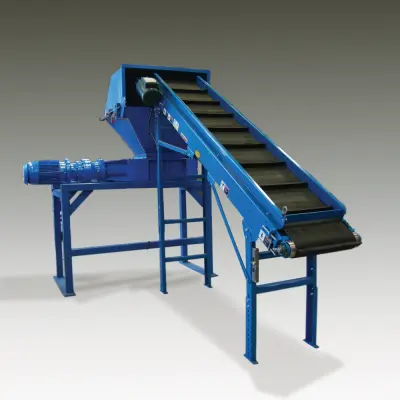
Clearly, a better alternative was desperately needed. After reviewing a video featuring Franklin Miller TASMASTER® industrial shredders, Facilities Manager, Thomas Hurn, found what he was looking for. ” I saw at once that it had the capacity requirements to manage the waste generated,” he said. “And based on what I saw, it was the best buy for the money.”
TASMASTER TM2300 shredders are versatile units with remarkable shredding capabilities on a wide variety of materials. Using counter-rotating banks of intermeshing cutters, they efficiently reduce bulk solids up to 80%. The units cut storage and disposal costs while aiding in the safe disposal of wastes. These units can reduce landfill costs, aid in recycling off-spec materials and waste, and enhance processing.
Since installation, the TASMASTER TM2300 industrial shredder has worked exceptionally well. According to Mr. Hurn, “We’ve had no problems. It’s a well-built piece of equipment as far as ruggedness and heavy construction. We’re very satisfied that we made the right decision.”
SEE THE FULL LINE OF TASKMASTER INDUSTRIAL SHREDDERS
The Millbury, Massachusetts pumping stations are part of a regionalized consortium of eight communities that discharge their wastewater to the Upper Blackstone Water Pollution Abatement District for treatment. The 56 MGD facility sits at the Headwaters of the Blackstone River, once considered one of the most polluted river ways in the country. As a result of plant upgrades and projects, the water quality was considerably improved, and the river will be swimmable by 2015.
“We originally were a secondary trickling filter treatment plant, but were decommissioned after the town of Millbury joined the district,” explained Plant Superintendent, Bradford Lange. “From then on, we were responsible for the maintenance and operation of sixteen pumping stations.”
“In 2005, we began a major upgrade of old equipment, including a Worthington comminutor that needed to be taken out of service,” said Lange. “It was very important to have an inline unit that could efficiently grind and screen wastewater solids so they could be easily processed by the pumps.”
“On the recommendation of our engineer, we installed a DIMMINUTOR® T20 Channel Disintegrator,” Lange continued. “The unit has an extended shaft and this was a major consideration in our selection. We are located in a flood plain and we needed that shaft to keep the motor up above any flooding that could occur.”
According to Lange, purchasing the DIMMINUTOR was a wise decision. “The unit has so many great features. It easily chops up everything in its path, rocks, sticks you name it. In case of a jam, there is a reliable reverse mode. Because of its open design, the unit has a lot less head loss. It takes in as much water as it can get, resulting in a higher velocity of flow. This higher flow speeds the entire process up for us.”
“We recently bought another DIMMINUTOR T20.The two units are placed side by side in a channel and are rotated monthly,” said Lange. “The original unit has never been taken out of service. It works as well four years later as the day it was installed. The DIMMINUTOR is a fine rugged piece of equipment. When you’re in the field, you want something dependable. We’re very satisfied.”
“Incidentally,” Lange concluded, “shortly after we installed the first unit in 2005, we experienced a tremendous flood, the kind that occurs once in a hundred and twenty five years. We were literally underwater for two day, but the DIMMINUTOR kept right on going.”
The DIMMINUTOR offers effective, automatic screening and disintegrating of wastewater solids in straight through channels and wet wells. This powerful unit reduces plastics, wood, rags and other solids to fine bits, enhancing plant operation and improving the reliability of pumps and other downstream equipment.
The DIMMINUTOR employs a smooth, continuously rotating design with high torque. As its three bidirectional rotary cutters intermesh at close clearance with stationary cutters, solids are finely reduced to a size small enough to pass through a sizing screen. With no gaps or openings between the screen and cutters, output is controlled and complete reduction assured.
The DIMMINUTOR has an intrinsically open design to handle high flow rates with low head-loss. This unit is extremely easy to maintain and features individually replaceable cutters, oil lubrication and a simple rotary design requiring no auxiliary diverter screens. A unique, cantilevered design eliminates seals or bearings near the gritty channel floor. Every component of the unit is constructed for precision and long life.