Choosing an industrial shredder comes down to what you are feeding it, what the pieces have to look like coming out, and what happens to them next. Model number follows from those three answers.
The TASKMASTER line runs from a compact machine with an 8.5 inch cutting chamber up to a platform that takes steel drums and pallets whole. That range is wide enough that picking by horsepower, or by a competitor's model number, usually lands wrong. What follows is the order that narrows the decision, and where each machine in the industrial shredders line sits. It settles no sizes. All of that is Applications Engineering work, done from real project data.
Describe how the material behaves
Two feeds with the same name can shred nothing alike. Rigid plastic cracks and throws chips. Film and fabric drape and wrap. Wet organics smear. Wood splits along the grain until a nail stops it. Anything carrying grit wears cutters whether or not it is hard to cut.
Say whether the material is wet or dry, loose or bagged, clean or arriving with soil and metal along for the ride, and whether it is chemically aggressive as well as tough. Those properties drive cutter profile and thickness, shaft size, seal type, and whether the body should be carbon steel or stainless.
Name the largest piece you will actually feed
What matters here is the worst case. Throat opening, hopper geometry, and shaft diameter all follow from it, because the machine has to accept that piece and hold it long enough for the cutters to take a bite. A stream that is mostly bottles but occasionally includes a wooden crate is a crate application.
Shape counts as much as mass. A long thin object that bridges the throat behaves nothing like a dense block riding on the cutters.
Decide whether you need smaller or you need a controlled size
This is where most shortlists divide. TASKMASTER twin-shaft shredders typically run without a sizing screen, so cutter design alone determines output, and what comes out is a strip or chip shaped fragment across a distribution rather than at one dimension. That suits volume reduction, and it suits a downstream step that only needs assurance nothing oversized reaches it.
If your process genuinely requires uniform particle size, say so at the start, because it changes the machine class rather than the model. The four-shaft QUAD SHAFT machines exist for that requirement. The other route is two stages, a coarse shredder feeding a finer mill or granulator.
One published account of a pharmaceutical plant describes exactly that: a TM2300 reducing bulky rejects and packaging first with a granulator behind it, in stainless because the waste had eroded the carbon steel units it replaced. That is one installation, not a standard configuration. The general comparison of dual-shaft against quad-shaft machines is worth a read before you commit.
Throughput and duty cycle, stated in operating terms
Rate is a property of the whole system, not a number on a nameplate. The same shredder handles very different tonnages depending on the material, how evenly it is fed, and how small the output has to be.
State the requirement operationally: material per shift, hours of running, peaks, and whether the machine works continuously in a line or in bursts between other tasks. A shredder running two hours a day on a loading dock and one running a full shift inside a recycling operation are different selections even on identical material.
Twin shaft and four shaft do different work
Twin shaft
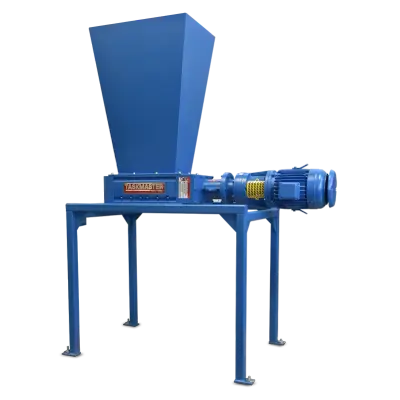
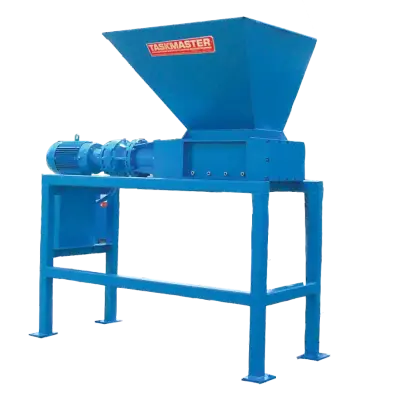
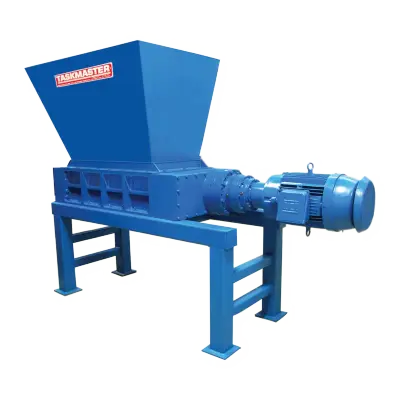
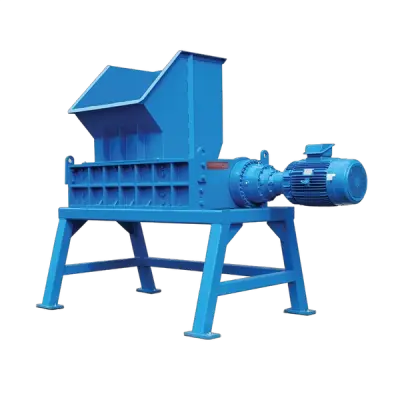
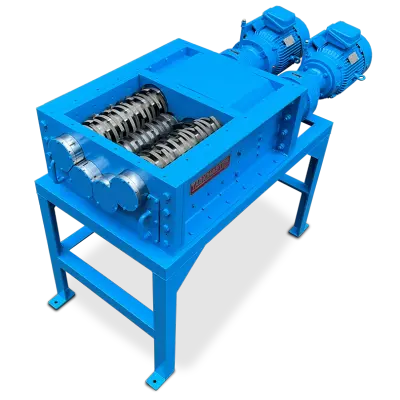
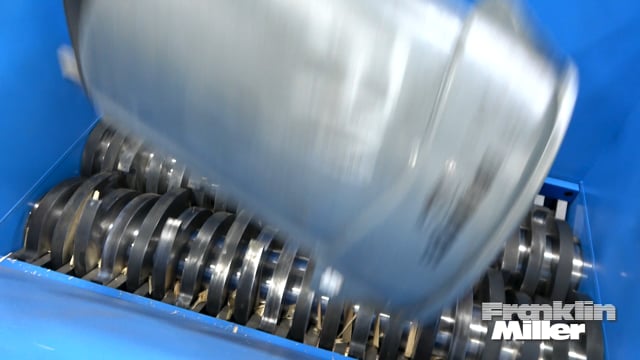
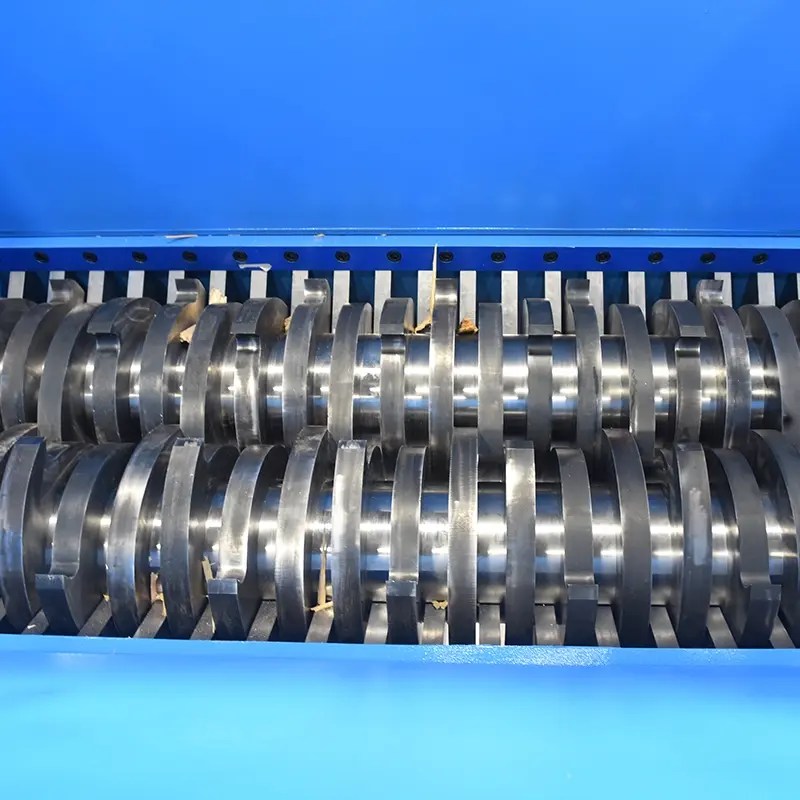
Two parallel counter-rotating cutter stacks intermesh at close clearance, turning at low speed under very high torque, so the cam-shaped cutters cut, shear, tear, slice, and rip material apart rather than smashing it. That same geometry is what draws material in, which is why twin-shaft units feed bulky and awkward solids well.
They are mechanically simpler, and across this line they cover the broadest range of materials and the highest throughput.
Four shaft
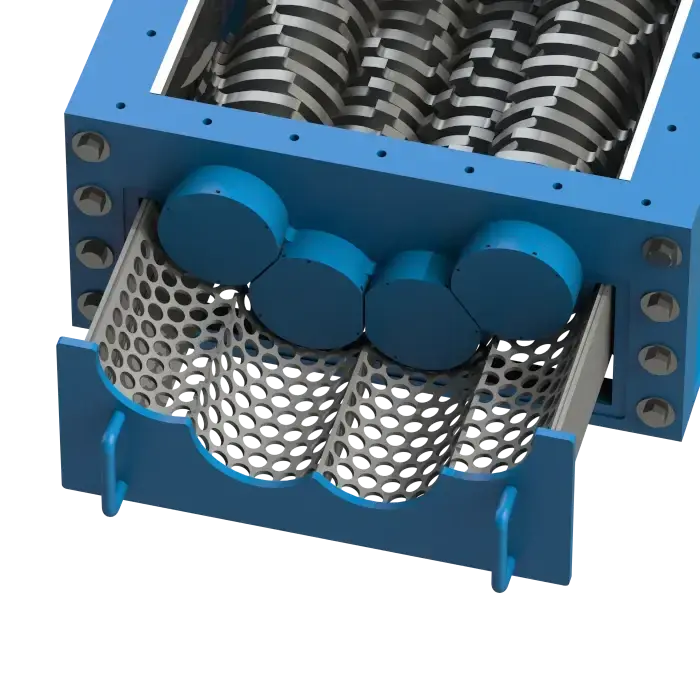
The QUAD SHAFT machines add a second pair of shafts and a removable sizing screen. Material recirculates in the cutting area until it is uniform enough to pass that screen, which is what makes them sizing shredders rather than simply bigger ones.
The recirculation is both the reason to choose one and the reason not to: controlled output, at lower throughput than a twin-shaft machine of comparable scale. The screen is a wear part whose opening is chosen for the job, and it sizes the shredded product. It is not a device for separating solids out of a liquid stream.
Feed and discharge shape the installation
Getting material to the cutters
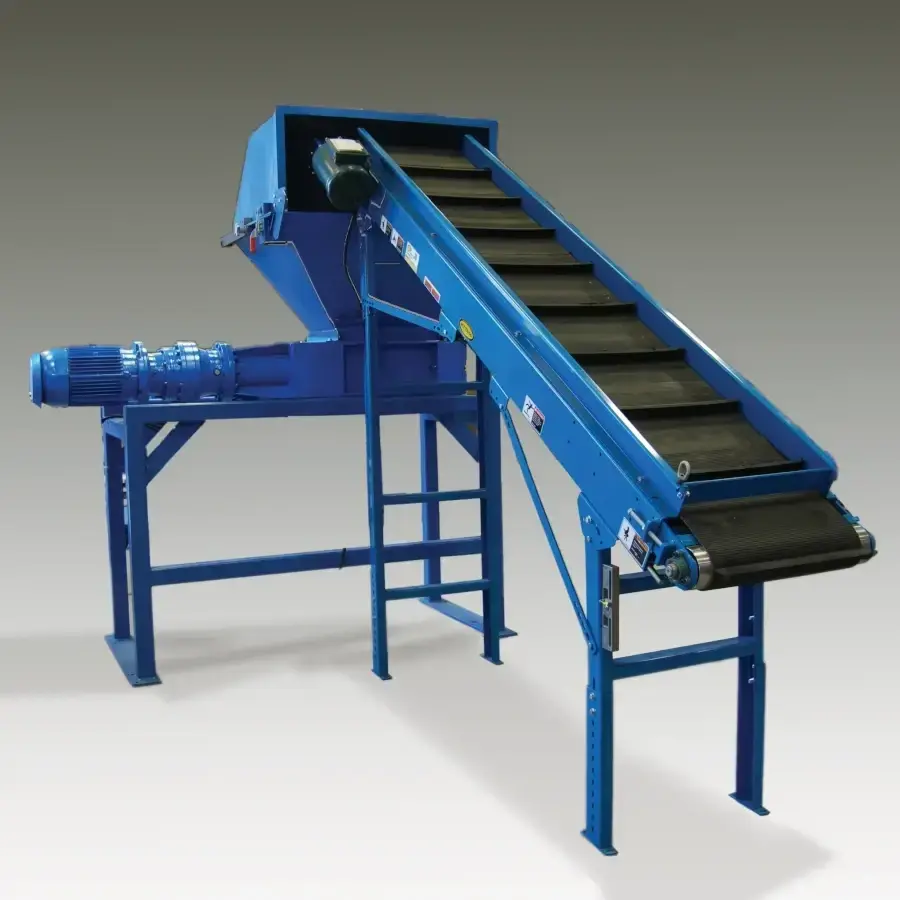
Gravity feed with a stand and hopper is the common arrangement, and the hopper has to suit the material and whoever loads it, whether that is a forklift tipping a container, an operator placing items by hand, or a conveyor metering a stream.
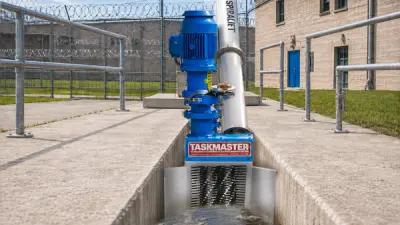
Bulk feeding a whole batch loads a machine very differently from a controlled infeed, and material that bridges or floats may need ram assist to stay engaged. Some duties deliver material entrained in liquid rather than dropped in dry, which both the TM8500 and the TM1600 are built for.
Where the shredded material goes
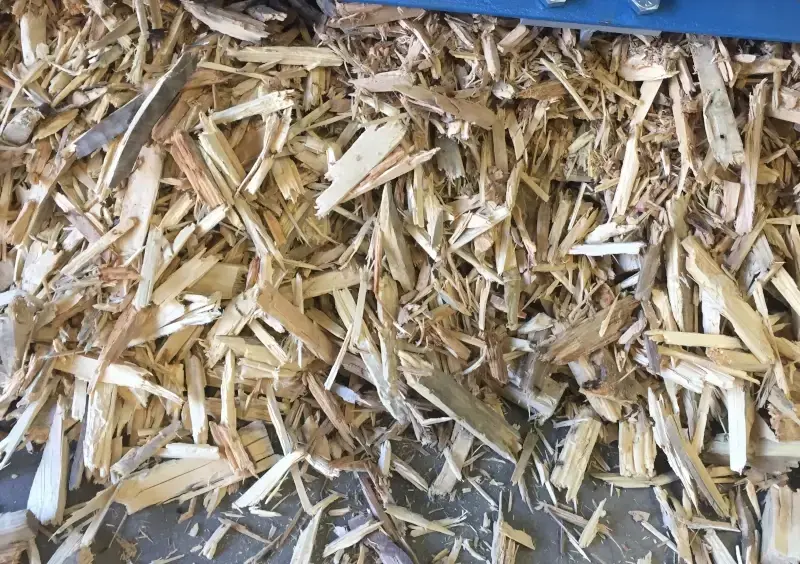
Shredded material lands directly beneath the machine, so decide early whether it drops into a container, onto a conveyor, into a second stage, or into a process vessel. Elevation and headroom follow from that answer.
Separation often belongs here too, magnetic removal of ferrous fragments being the usual case. If dust, odor, or containment matter, enclosure has to be in the machine scope rather than added later. The TM2300 has a fully enclosed dust-tight body, and several units in the line extend the housing beyond the cutters so they can drop into a closed system.
Contaminants, access, and what wears
Nearly every shredding application eventually sees something that was never supposed to be in the feed. TASKMASTER units come with an automatic reversing control sequence that senses a jam and reverses the cutters to clear it, which covers the ordinary case. Repeated jams mean the selection or the feed control is wrong.
Ask the harder question up front: when something genuinely unshreddable gets in, how does it come out, and what interior access does that take. Grit belongs here too, since abrasion shortens cutter life without ever stopping the machine.
Cutters, combs, seals, and bearings are the consumable end, so the practical question is how much labor a rebuild takes. On the TM8500, CUTTER CARTRIDGE technology replaces individual cutters and spacers with one-piece elements, removing the stack retightening chore that stacked assemblies create.
The larger twin-shaft machines use ground and hardened cutter and spacer disks with wrap-around cleaning combs built as individual adjustable plates. Mechanical shaft seals are standard on the TM8500 and TM1600, labyrinth arrangements on the heavier models. Plan clearance and lifting before the machine arrives.
Controls and safety are part of the scope
The standard control is a PLC-based panel with an automatic reversing sequence. The TM8500 ships with the S260 controller and its jog reversing function, and the TM4000 control comes in a NEMA 4 housing.
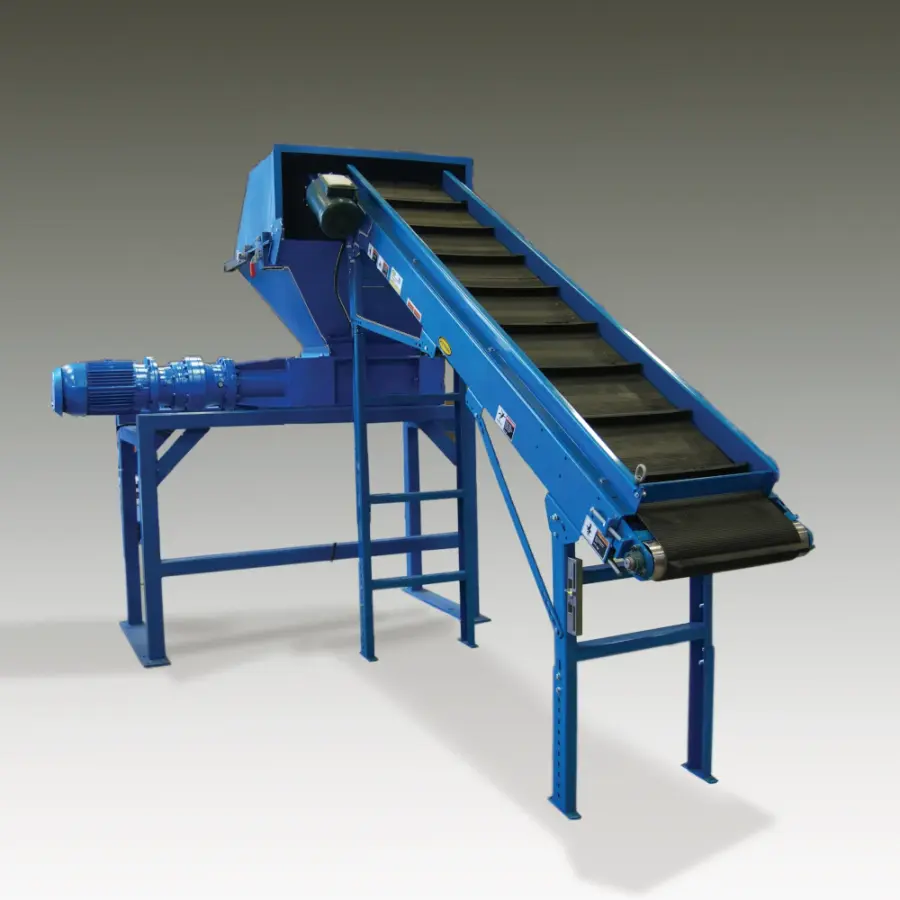
Scope grows as soon as auxiliaries appear, since conveyors bring their own gearmotors and variable frequency drives and are usually started from the shredder's main panel. Guarding, interlocks, lockout provisions, and emergency stops have to be engineered for the actual installation and reviewed on site.
How the machines line up
At a high level, the shortlist breaks four ways:
- General volume reduction: the twin-shaft TM8500, TM1600, TM2300, TM3000, and TM4000 family
- Controlled output through a product sizing screen: the four-shaft QS2400 or QS3200
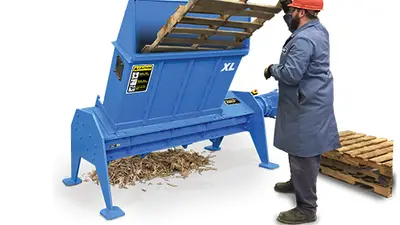
- Whole natural wood pallets: the purpose-built XL Pallet Shredder
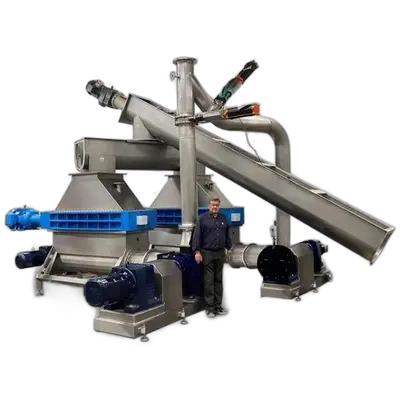
- A complete line with conveyors, separation, enclosure, or multiple stages: Customized Shredding Solutions
Material, largest feed piece, duty cycle, and available space decide where within those groups the application lands.
TASKMASTER TM8500
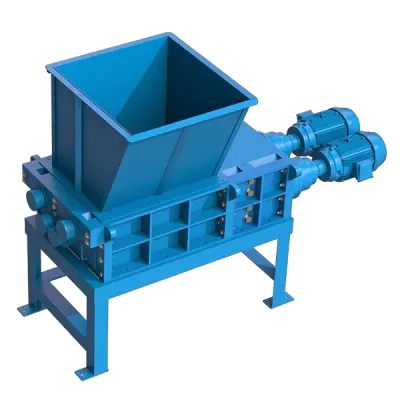
The TM8500 is the smallest and most compact machine in this line, and the platform where CUTTER CARTRIDGE technology is standard. Its 8.5 inch cutting chamber and two inch hex shafting suit space-constrained installations and moderate duty, with cutters offered in configurations aimed at the output the application needs.
A published account of a chemical company describes contaminated plastic trays being washed and separated first, then shredded to size in a TM8500.
TASKMASTER TM1600
The TM1600 is the stronger compact workhorse, with a 14.5 inch chamber and 2-3/4 inch hex shafting. It spans gravity-fed and liquid-entrained duties, and turns up on rejects and returns, garments, filters, packaging, wood, paper, electronics, and institutional waste.
When a TM8500 is close but the solids are heavier or the duty more abusive, this is the next step up on the same concept.
TASKMASTER TM2300
The TM2300 is the heavy-duty twin-shaft general industrial workhorse: four inch hexagonal shafting, one inch cam cutters as standard, cleaning combs, and that enclosed body. It is what gets specified for bulk waste, packaging, plastics, wood, crates, and mixed electronic waste at real industrial scale.
TASKMASTER TM3000
The TM3000 is the larger heavy-duty twin-shaft step, with 5.5 inch heat-treated alloy shafting, two inch cam cutters, and a substantially larger throat. It suits work demanding high power, big openings, and extra heavy construction: tires, crates, computers, hides, steel drums, and high volumes of tough solid waste.
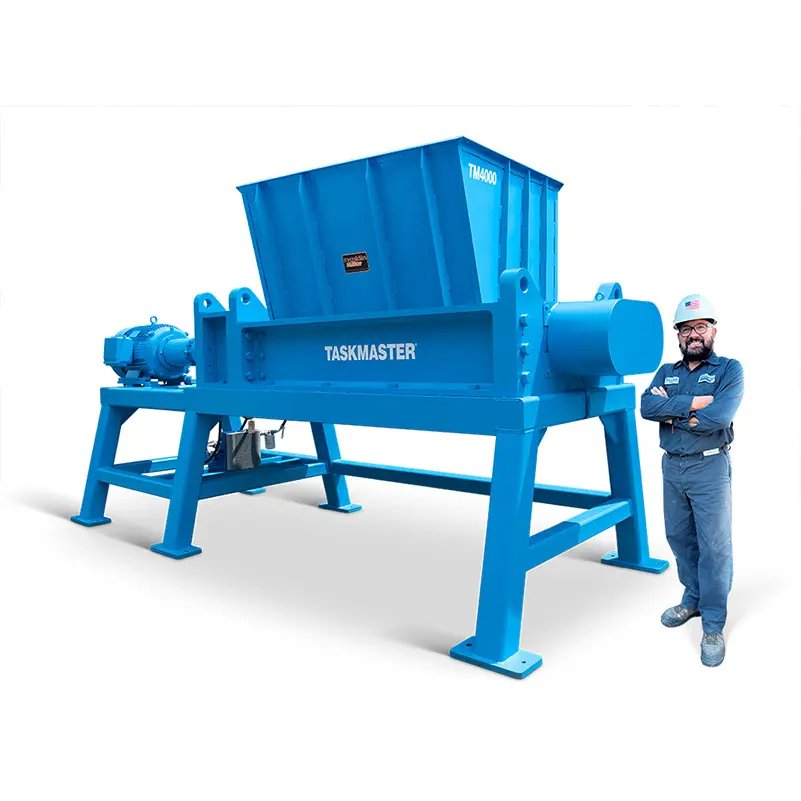
TASKMASTER TM4000
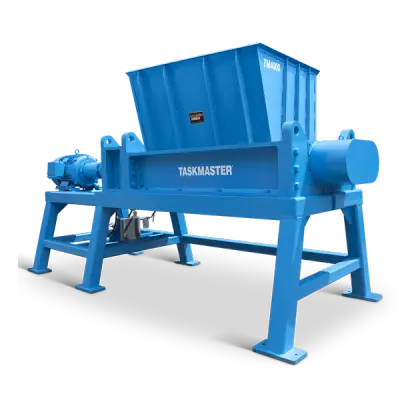
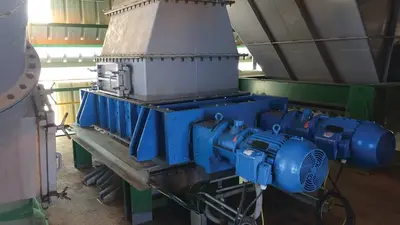
The TM4000 is the largest and heaviest platform in this line, with heat-treated alloy hexagonal shafting, steel plate and channel body construction, and a throat supplied in a range of lengths. Size does not change the geometry here: the TM4000 is still a twin-shaft machine. It handles pallets, steel drums, mattresses, construction debris, tires, and bulk documents en masse.
TASKMASTER QS2400 and QS3200
The QS2400 and QS3200 are the four-shaft sizing machines, the QS3200 being the larger format. Both use four counter-rotating shafts, hardened precision cutters, planetary reducers, active shaft cleaning, and two motors, and both recirculate material over a removable product sizing screen until it passes at a controlled size. Choose one when uniform output is a hard process requirement.
TASKMASTER XL Pallet Shredder
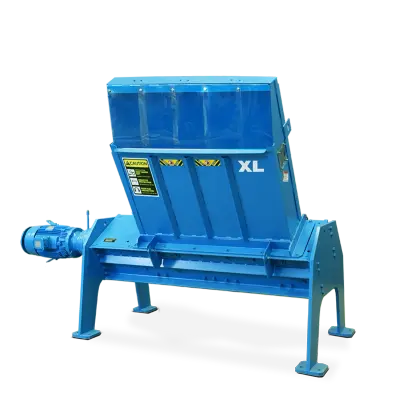
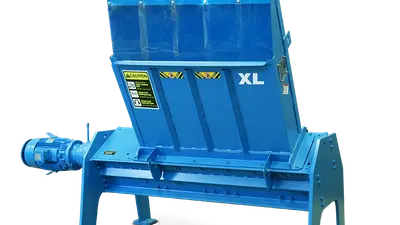
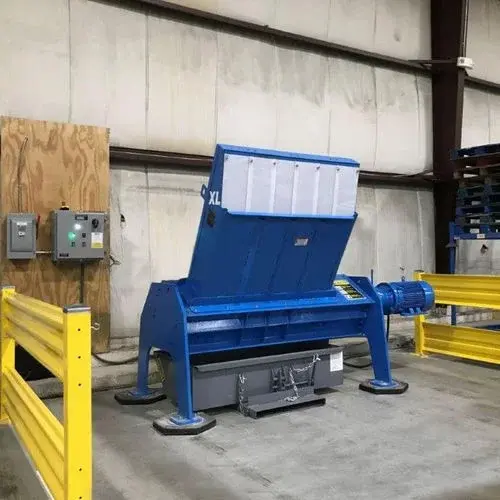
The XL Pallet Shredder is a specialized system built for one job. It reduces entire natural wood pallets, nails included, to chips or mulch, and comes complete with stand, closed-top single pallet hopper, direct coupled gear drive, and automatic reversing controls.
Discharge is configurable as a rear or side conveyor or as gravity discharge into a forklift waste hopper, and either conveyor can carry magnetic separation to pull ferrous nails out of the wood. The wood pallet shredders page and the XL video show it working. For anything other than pallets, this is the wrong machine.
Customized Shredding Solutions
Customized Shredding Solutions is the entry point when the process needs more than a shredder: integrated conveyors and feeders, engineered hoppers, separation equipment, enclosure, multiple reduction stages, or materials no catalog description fits.
That work starts with consultation and evaluation before any design, which is the right order when the machine has to fit the plant rather than the reverse.
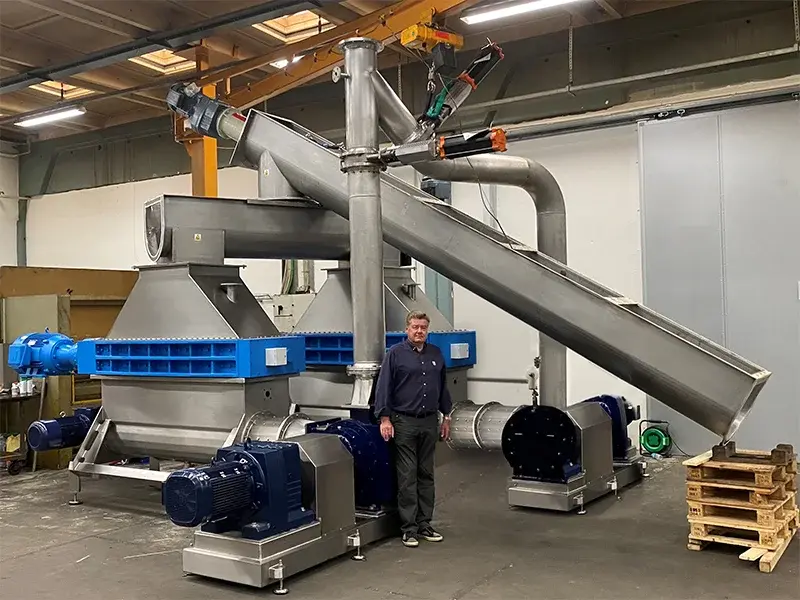
Applications that require an engineered system and a site safety review
Some streams are not drop-in work at any size. Battery shredding is the clearest example. Franklin Miller's own literature describes a TM8516 pilot plant unit with a specially designed chamber where batteries are shredded under vacuum with nitrogen blanketing, either fully submerged or with an intermittent water shower.
That is a purpose-built system, and battery processing should be treated that way from the first conversation. The same holds for hazardous and regulated waste, medical waste, secure destruction, and anything generating combustible dust or carrying fire or explosion risk. Those need hazard analysis, containment, inerting or suppression where appropriate, and a safety system engineered for the installation and reviewed on site.
What to send Applications Engineering
The package that gets a real answer is short. Send:
- The material, how it behaves, the largest feed piece, and the typical mix
- The desired output, and whether a controlled particle size is genuinely required
- Volume per shift, operating hours, peak loads, and expected duty cycle
- How material is loaded and where the shredded output has to go
- Known contaminants, upset conditions, and the available space, headroom, power, and service access
- Anything hazardous, regulated, combustible, or chemically aggressive
From that information, Franklin Miller can size the machine and select the cutters, drive, hopper, supports, controls, safety system, and auxiliaries for the application.