Most wastewater grinder decisions come down to two things: the hole the machine has to fit in, and the equipment sitting downstream of it. A grinder reduces solids and leaves them in the flow, so nothing gets hauled off site. If you are not yet sure that reduction rather than removal is what this plant needs, the grinder versus screen comparison settles that question first. What changes is the size of what your pumps, valves, and processes have to swallow. Describe the installation, describe what shows up on a bad day, and name the assets you are trying to keep running. That eliminates most of the catalog before anyone opens a capacity table. What follows is how the Franklin Miller grinder families actually differ and where plants have used them. It is not a sizing tool: dimensions, flow, cutter configuration, motor, and materials get settled with Applications Engineering against real numbers.
Start with the installation
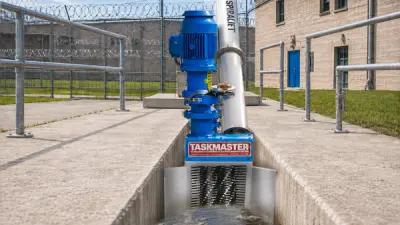
Geometry decides the housing, how the unit is supported, and how you get it back out when a cutter needs attention. An open channel wants a straight-through machine that keeps flow moving while it works on rags, wipes, plastics, and whatever else the collection system delivers. A wet well or lift station adds intermittent flow, difficult access, and often submergence, which pushes seals, drive type, and retrieval hardware to the front of the conversation. A gravity line brings solids by grade rather than pump pressure, so isolation and bypass for service become the practical questions. A pressurized pipeline needs a unit that flanges into the line, and the inline grinders page shows the usual placements. Sludge lines are thicker, more abrasive, and stringier, and sludge grinders covers where reduction protects pumping and dewatering. Septage receiving is its own animal: batch loads, concentrated solids, and rocks that were never supposed to be in a sewer. A constrained manhole may have no room for a poured channel at all.
If you cannot sketch the layout, including how the unit comes out and what lifts it, stop there. A capable grinder in the wrong geometry is still the wrong grinder.
What has to be reduced, and what it protects
Say it in operator language. Wipes and rags behave differently from wood, bottles, and coarse debris; the first group ropes and wraps, the second needs a bigger bite. Then decide how fine the output has to be, because coarse reduction that keeps pumps and valves passing is a different target from the finer output you want ahead of dewatering equipment. Name the assets: the submersible pumps, the plug valves, the centrifuge, the filter press, the screenings conveyor. Describe the flow pattern in words, including peaking and storm influence, and say whether the plant can divert. Be honest about service, too: whether the unit can come out of service at all, how you lift it, and who clears a jam at two in the morning.
A duty statement that reads "open-channel headworks, heavy rag and wipe loading, protecting submersible pumps, seasonal peaking, bypass available, daily access from grade" is worth more than a model number someone found in an old spec.
How the families differ
DIMMINUTOR
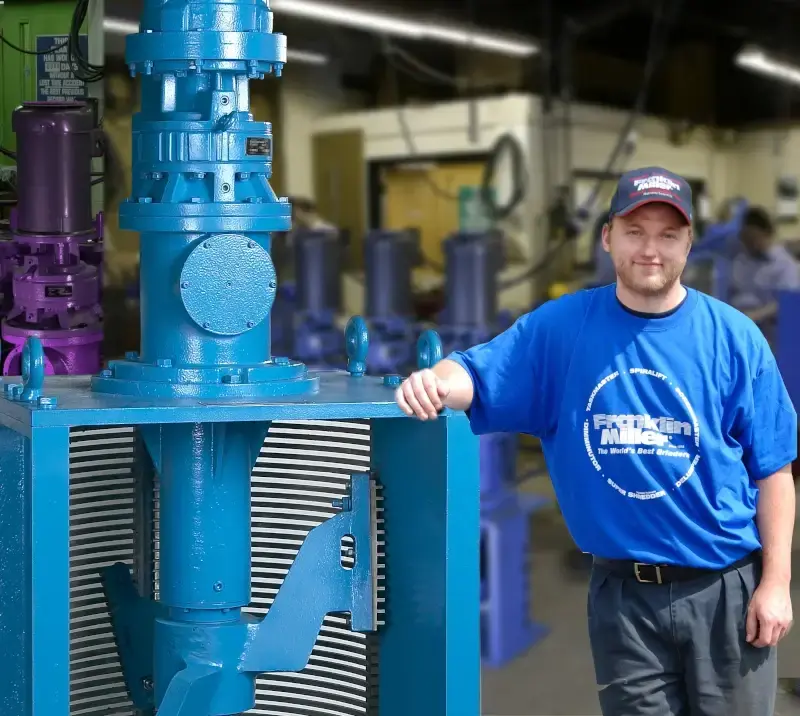
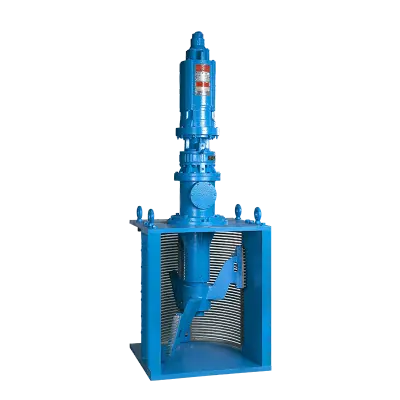
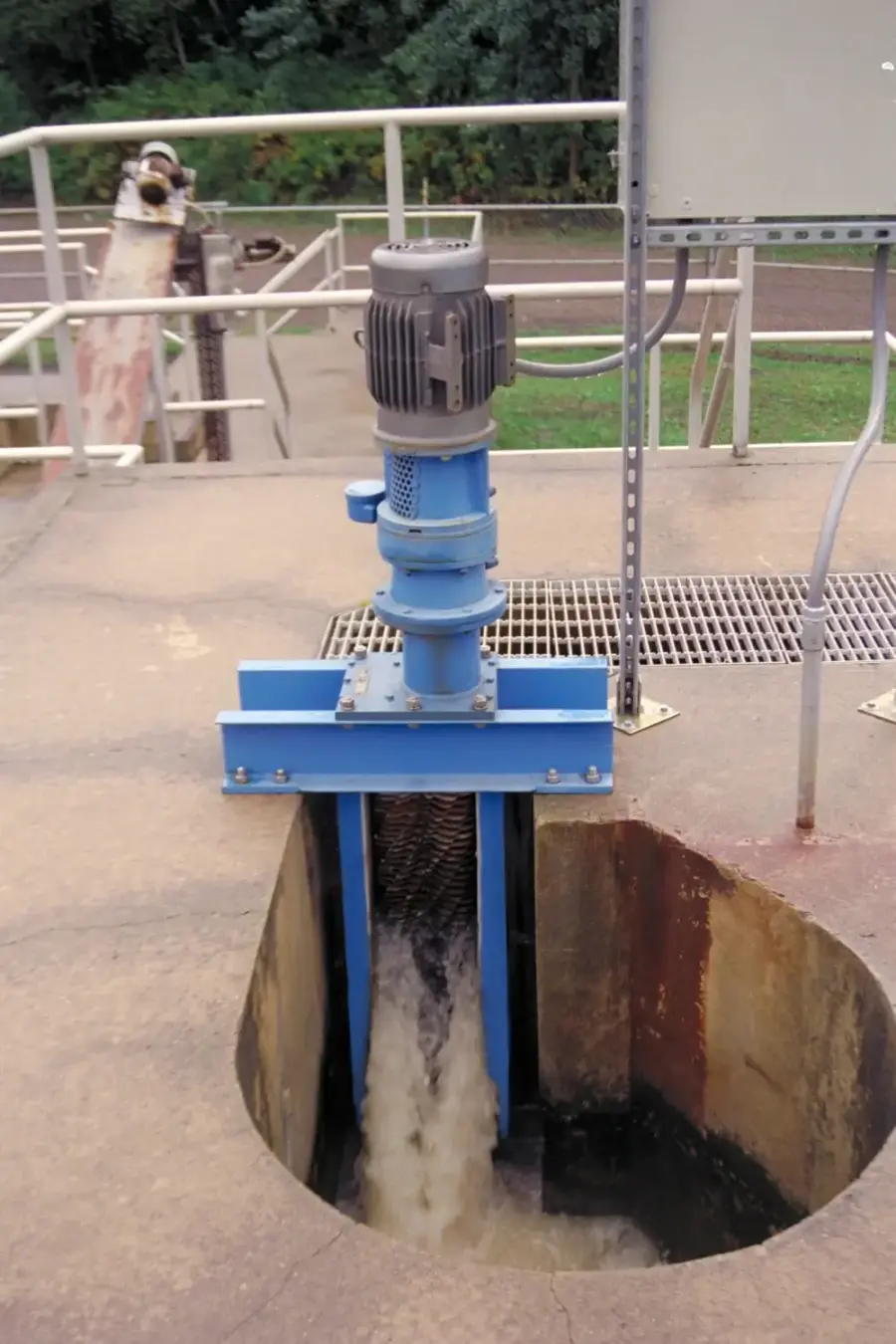
The DIMMINUTOR is a comminutor, not a screen and not a twin-shaft grinder. Flow passes straight through it in the channel. Its sizing screen is stationary, and it holds oversized material back only temporarily: three bidirectional rotary cutters intermesh at close clearance with stationary cutters and keep working that material until it is small enough to pass through the screen slots and continue downstream with the flow. The reduced material stays in the flow; nothing leaves the stream. There are no gaps between the screen and the cutters for solids to slip past unreduced, and the cutters penetrate the individual slots and clear them on every revolution.
The rest of the arrangement follows from where it lives. The machine is cantilevered, so no seals or bearings sit down at the gritty channel floor, and because the screen does not move it never wears against bottom grit. Seals and bearings run in an oil bath. Each cutter is individually replaceable and adjustable, so one damaged cutter does not mean tearing down the whole unit. Installations include straight-through channels, wet wells, and water inlets, with full or occasional submergence, on a bolt-down sole plate, support frames, or channel frames matched to how much wider the channel is than the machine. Guide rails make wet-well removal straightforward, and drives can be standard electric, submersible explosion-proof, extended-shaft, or hydraulic. The standard control senses a jam and reverses the unit.
Reach for it when oversized material has to be reduced in the channel and stay in the flow. The Pottstown, Pennsylvania case study describes DIMMINUTOR units running in channels with a separate bar screen ahead of each one, which is the usual pattern when a plant wants both capture and reduction.
TASKMASTER TM8500
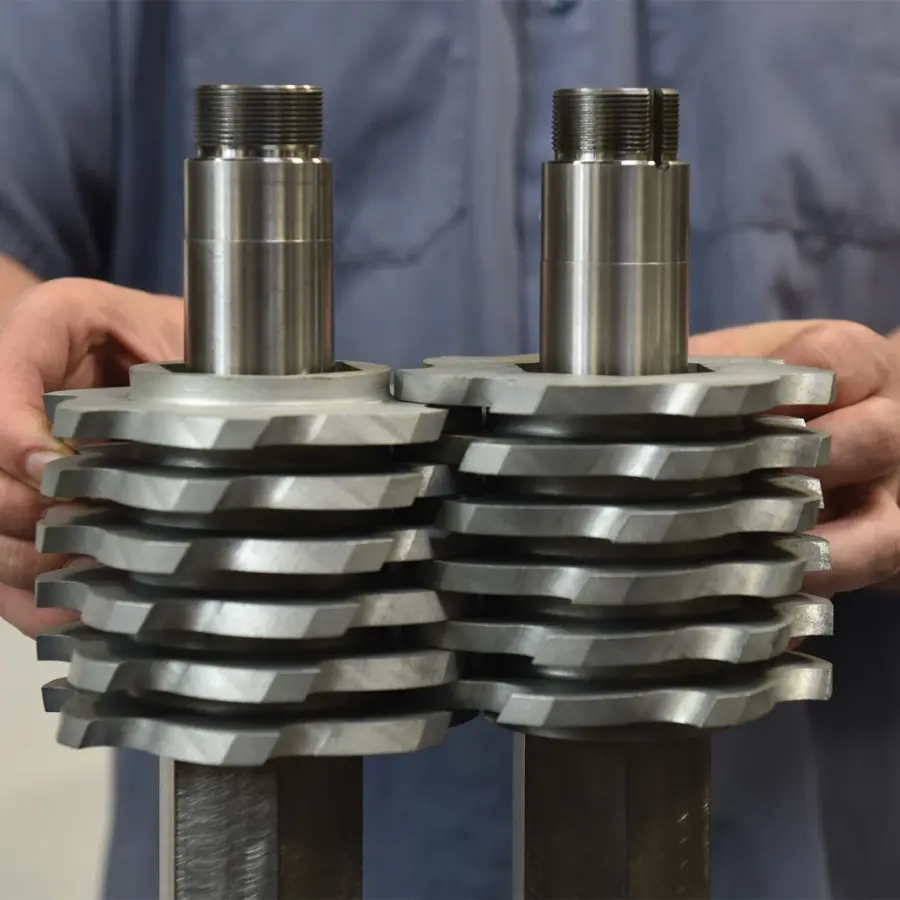
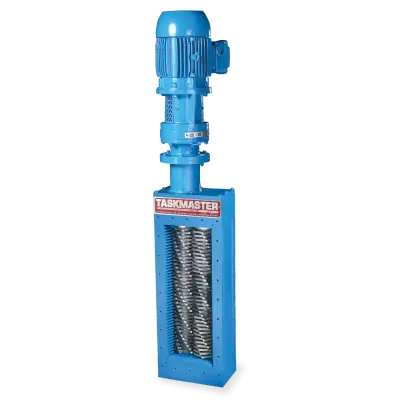
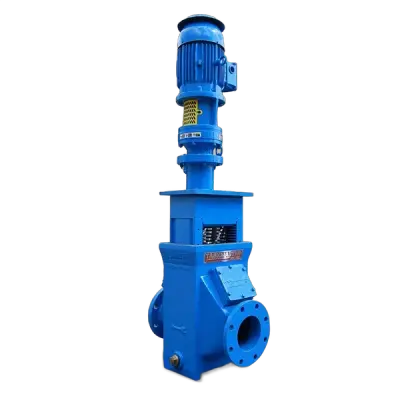
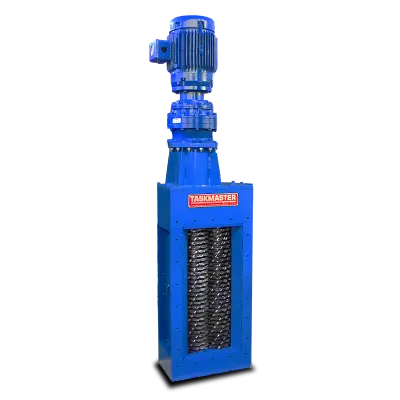
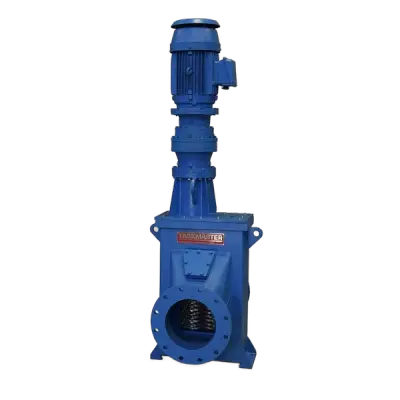
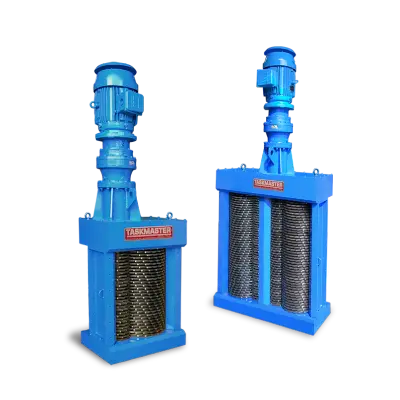
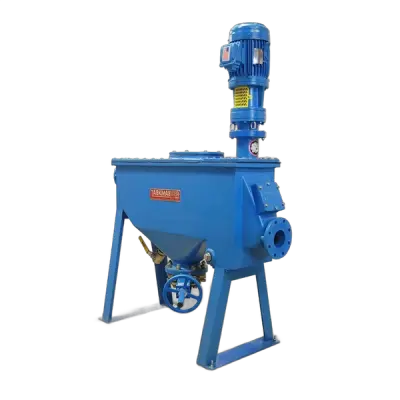
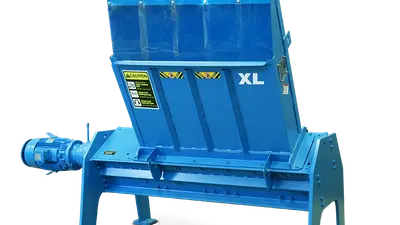
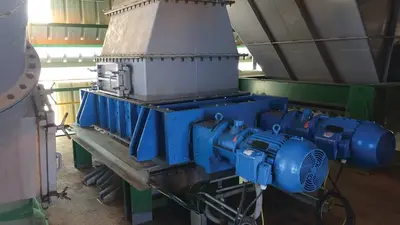
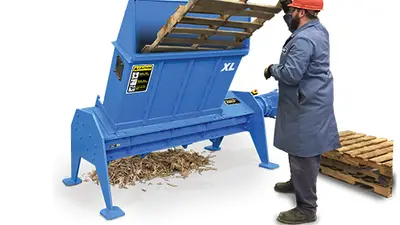
The TASKMASTER TM8500 is the twin-shaft workhorse. Two counter-rotating cutter stacks intermesh at close clearance and shear rags, plastics, wood, sanitary debris, and similar solids into the stream. The same mechanism is configured for channel duty in a range of heights, for gravity feed with a stand and hopper, which is where it shows up on screenings reduction and washing, and as the TM8500 Inline for gravity or pressurized pipe.
Two construction details matter to whoever maintains it. The cutter cartridge replaces a stack of individual cutter and spacer disks with a one-piece element, which cuts the parts count in the cutting chamber and removes the stack-loosening and re-tightening chore that stacked grinders create. On the inline unit, the drop-in housing lets the grinder come out without disturbing the pipe run, so a service pull is not a piping job. Channel frames, wet-well mounting, guide rails, submersible and hydraulic drives, and stainless construction are configuration choices. Confirm flange size and unit height on the product page against your actual pipe or channel.
TASKMASTER TM1600
The TASKMASTER TM1600 and TM1600 Inline take the same roles, channel, wet well, gravity, and pipeline, when the solids are heavier or the duty is more abusive. They use cutter and spacer elements combined into heavier assemblies, and the inline version shares the drop-in housing approach. Gravity arrangements with a stand and hopper are common for screenings discharged off a bar screen, which is a screenings-handling job rather than a substitute for the screen.
TASKMASTER TITAN
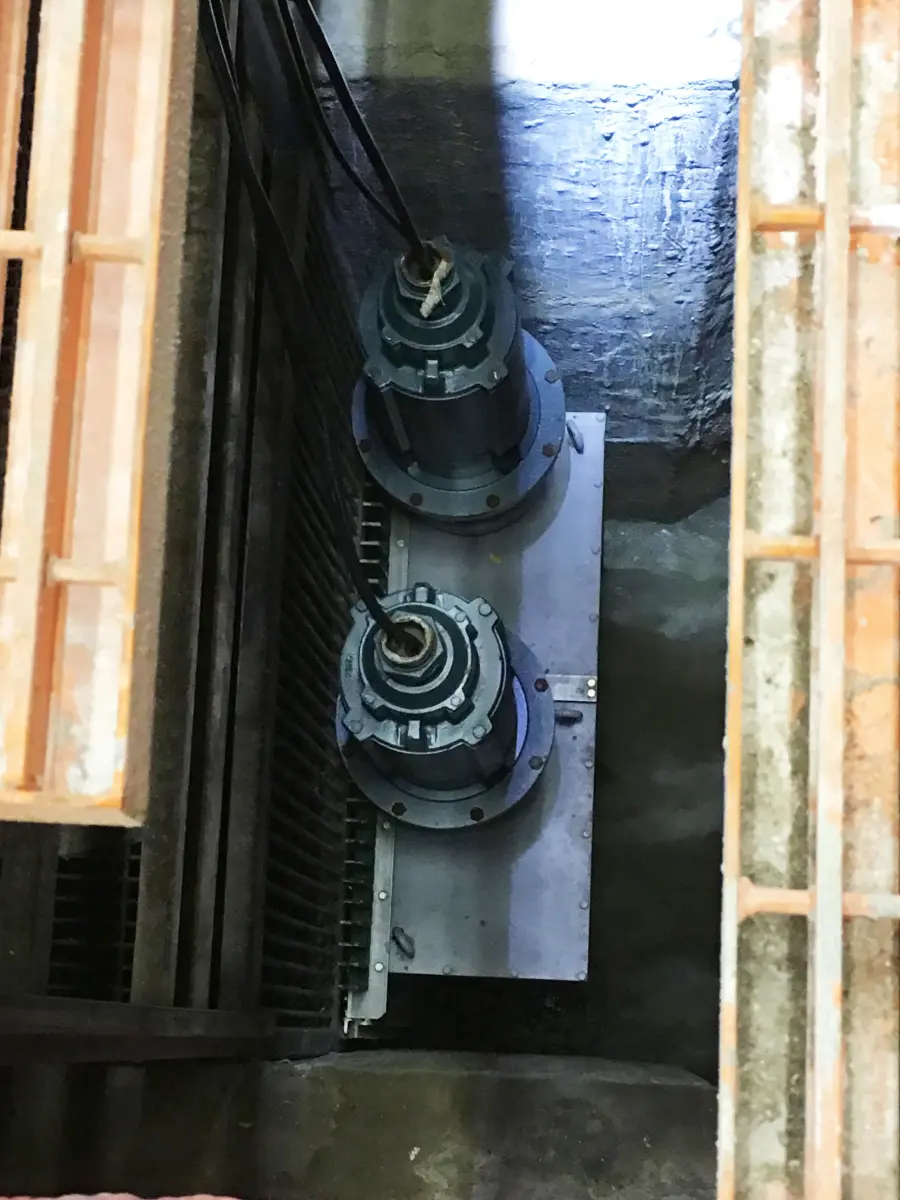
The TASKMASTER TITAN is the twin-shaft design for high-flow channels. One cutter stack is much larger in diameter than the stack it intermeshes with, which opens up both the throat and the percentage of open area. Bulky and round objects feed into the cutters instead of riding on top of them, solids are ground across the entire throat opening, and there is no need for diverter screens or flow-restricting baffles that would otherwise give solids a path around the cutting zone. That is the mechanical reason it comes up when a channel is passing a lot of water and headloss is tight. Channel frames cover narrow and wide channels and wet wells, with electric, submersible, or hydraulic drives. It is also built as a solids shredder with a horizontal stand and hopper, and as the grinding element inside a SPIRALIFT system.
The Emerald Coast Utilities Authority case study describes TITAN duplex units at coastal pump stations on large gravity feeds. Read it as that utility's account of its own debris and flow, not as a template for another plant.
SUPER SHREDDER
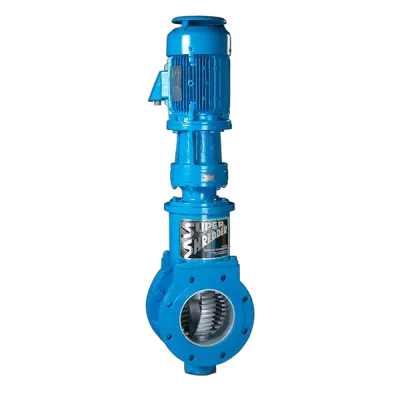
The SUPER SHREDDER is an inline disintegrator rather than a channel machine. It runs a low-speed, high-torque, open-center spherical rotor whose rotating cutting edges intermesh with stationary cutters at close clearance, which leaves only two working cutting elements to maintain. The open center keeps a high percentage of open area through the cutting chamber, so it comes up when a pipeline cannot give up much headloss and you still need fine reduction of wood, rags, sludge, wipes, paper, and plastics. It installs into a straight-through pipe run on flanges. Cutters are stainless with an abrasion-resistant fused coating, seals and bearings live in two cartridges, and the bidirectional cutters are reversed by the controller on a jam and periodically on their own. Typical duty is pumps and valves that keep ragging, and filter presses and centrifuges on sludge service.
TASKMASTER TT and TASKMASTER Manhole
The TASKMASTER TT puts an inline grinder in a housing with a trap area that lets heavy tramp material settle out before it reaches the cutters. That is the right starting point for septage receiving and any stream that brings rocks and metal along with the organics, rather than stretching a channel machine into a receiving pit. Related process context is on the sludge grinders page.
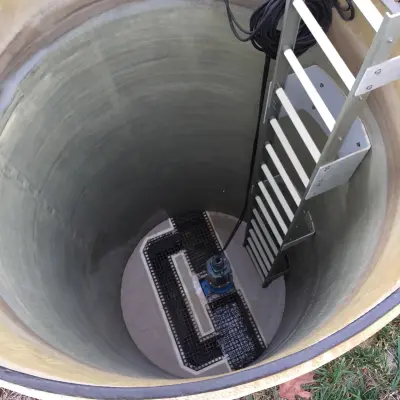
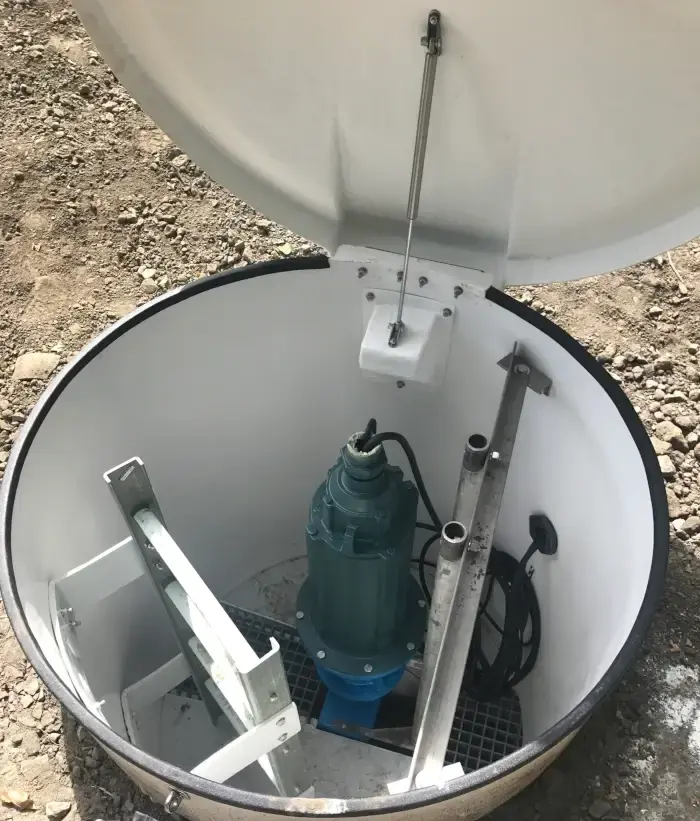
The TASKMASTER Manhole solves a civil problem instead of a cutting one. It is a pre-engineered FRP manhole with a built-in channel sized for a standard TM8500: dig the hole, set it, hook it up. Access is a hatch rather than an entry into a custom concrete structure, and it can be supplied with a ladder, guide rails, submersible drive, and controls.
Narrowing it down
The shortlist mostly writes itself once you have the installation, the solids, and the protected equipment. Channel duty with rag and wipe loading points at the TM8500 or the DIMMINUTOR, and the deciding question is whether you want twin-shaft shearing or reduction against a sizing screen in a straight-through path. High flow through a wide channel points at the TITAN. A pressurized line points at an inline unit, with the choice between the TM8500 Inline and the SUPER SHREDDER turning on headloss tolerance and how fine the output needs to be. Hauled septage points at the TT, and a site with no room for a channel points at the manhole package.
Then look at the plant on its worst day. Peak flow, storm response, redundancy, and whether the unit can be isolated at all are usually what separate two families that look equally suitable on paper. The wastewater treatment, inline grinders, and wipes pages are useful for confirming where the grinder sits in the process before you make the call.
What other plants have reported
These are the plants' own published accounts. Conditions differ, so read them for the pattern rather than the outcome.
The Brewer, Maine case study describes a municipal facility with several pump stations where plastics, wipes, and debris were fouling ball checks and pumps. The plant put a TASKMASTER inline grinder in a pressurized line and added units on other streams as it expanded.
The Ross Valley Sanitary District case study describes residential pump stations in California with frequent ragging. The district installed DIMMINUTOR units and credits the reduced ragging and simpler maintenance to that installation, including the stationary sizing screen and the independently serviceable cutters.
Pottstown and Emerald Coast, both linked above, cover the other two patterns: a comminutor working behind a bar screen, and high-flow channel grinding at coastal pump stations.
Where engineering takes over
Nothing here settles a size, a flow rating, a cutter configuration, a motor, a headloss number, or a materials spec. Before you talk with Applications Engineering, gather:
- Measured average, peak, and storm-influenced flow
- A plain-language description of the solids, including unusual debris and abrasive grit
- Channel or pipe dimensions, pump curves, and the downstream equipment being protected
- Available bypass, isolation, lifting access, power, and controls requirements
Those details are reviewed together for the specific project. Severe peaking or difficult access should come up early, since either can change the recommendation.
One distinction is worth keeping straight to the end: a grinder does not replace a screen. If solids have to leave the liquid stream, or screenings have to be washed and compacted for disposal, you need screening, either alongside grinding or as an integrated system, and the wastewater screen selection guide covers those families. The DIMMINUTOR's sizing screen is not an exception. It holds material only long enough to cut it down to size, then passes it along with everything else in the channel.