A screen belongs at headworks when solids have to leave the water rather than travel downstream with it. That one condition separates screening from grinding, and it is worth settling before anyone opens a capacity table. Once removal is the goal, the next question is what the machine does with the material after it has captured it. Lifting coarse debris out of a rectangular channel, separating finer solids on a rotating surface, capturing and conveying along one path that also washes and dewaters, screening a wet well too tight for a channel, and conditioning screenings another screen already removed are five different jobs and five different machines.
If you have not settled whether the plant needs removal at all, the companion article on grinding versus screening at headworks works through that, and the wastewater grinder selection guide covers the reduction side. This one assumes the solids are coming out of a wastewater treatment headworks. Opening size, flow rating, and layout come later, from measured numbers reviewed by Applications Engineering.
Name the job before you name the machine
Coarse capture means pulling leaves, branches, sticks, rags, and plastics off the flow in a rectangular channel before they reach the pumps. Fine separation means holding smaller material on a screening surface continuously, usually because cleaner downstream flow is the point rather than protecting one asset. Screening plus transport means the solids have to arrive somewhere handleable, which brings washing, conveying, and dewatering into the same machine. Tight wet-well screening is a geometry problem before it is a screening problem, and conditioning happens after capture and cannot substitute for it. Duty statements that mix two of those jobs are common and usually correct: a plant needing coarse capture and drier screenings for hauling needs a capture screen and a conditioner, not one machine doing both.
Bar rack and rotating drum: how the SCREENMASTER units differ
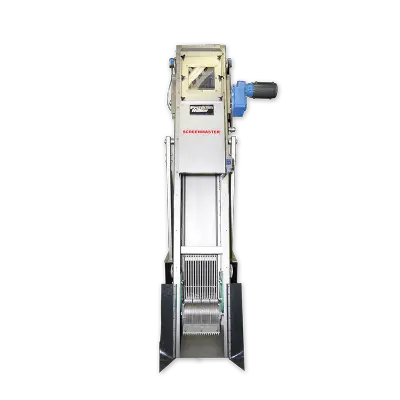
The SCREENMASTER CS is a mechanical bar screen for rectangular channels, and its work is lifting and removal rather than filtration. A rake head fitted with comb-like trapezoidal fingers passes up through the slots of a stainless bar rack, clears them, carries the debris up the unit's dead plate, and meets a scraper with a dash pot that sweeps the load into the discharge chute, from where screenings drop into a bin, onto a conveyor, or into a washer and compactor. The motion is a continuous rotary cycle on a front clean, front return path, and the unit installs at a 75 degree inclination, so it takes up little of the channel and goes into new or existing concrete without much civil work. Its controller runs the rake on a timed cycle or on a high-level signal from a level sensor, the practical answer to a rack blinding faster than a timer anticipates.
The Little Ferry, New Jersey case study is the published field example. A new bridge at a traffic circle left a drainage pond below the level of the Hackensack River, and the neighborhoods behind it flooded regularly. The township installed pumps, and the New Jersey Department of Transportation specified a SCREENMASTER CS to keep leaves, branches, sticks, and other storm debris away from them. The unit had to go in while the system kept running, since flow could not be diverted, and it was built oversized for a channel wider than the standard range, with a special bottom grating chosen for the debris stormwater brought. The case study reports the screen lifting those solids out of the flow before they reach the pumps, and it is that township's account of its own site.
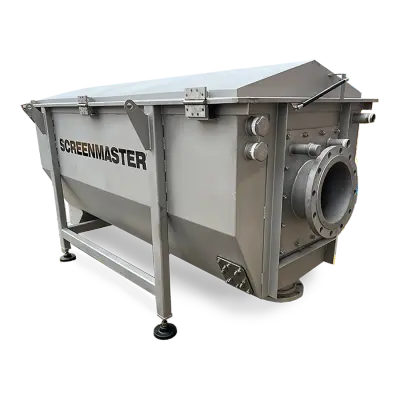
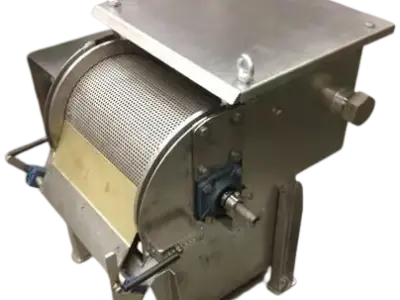
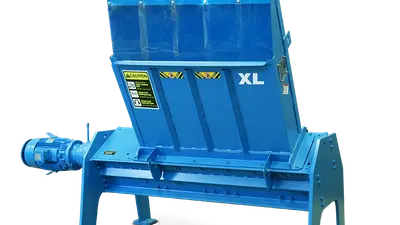
The SCREENMASTER RT answers a different question with an internally fed rotary drum. Flow enters the inlet and a precision weir system distributes it evenly across the inside of a rotating cylindrical screen. Liquid passes outward through the screening surface and discharges from the bottom of the unit while internal flights walk the retained solids along the drum to the discharge flange. Because the drum turns continuously, the surface presents itself to the flow all the time rather than being raked on a cycle. The media is a real selection rather than a fixed slot: perforated metal, wedge wire, and filter cloth are all offered, which lets one frame cover coarse municipal duty at one end and specialized liquid and solids separation at the other. Keeping that surface open is an operating requirement, since every unit carries internal and external high-pressure spray nozzles and needs wash water at pressure in a way a bar screen does not. The frame is heavy stainless steel for low vibration, the drum turns slowly on heavy-duty rollers, drive is direct through a C-face motor and gear reducer, control is PLC-based in a NEMA 4X enclosure, construction is T304 or T316, and BABA compliant units are available. Published applications run past municipal wastewater into pulp and paper, slaughterhouse, offal, and fat streams.
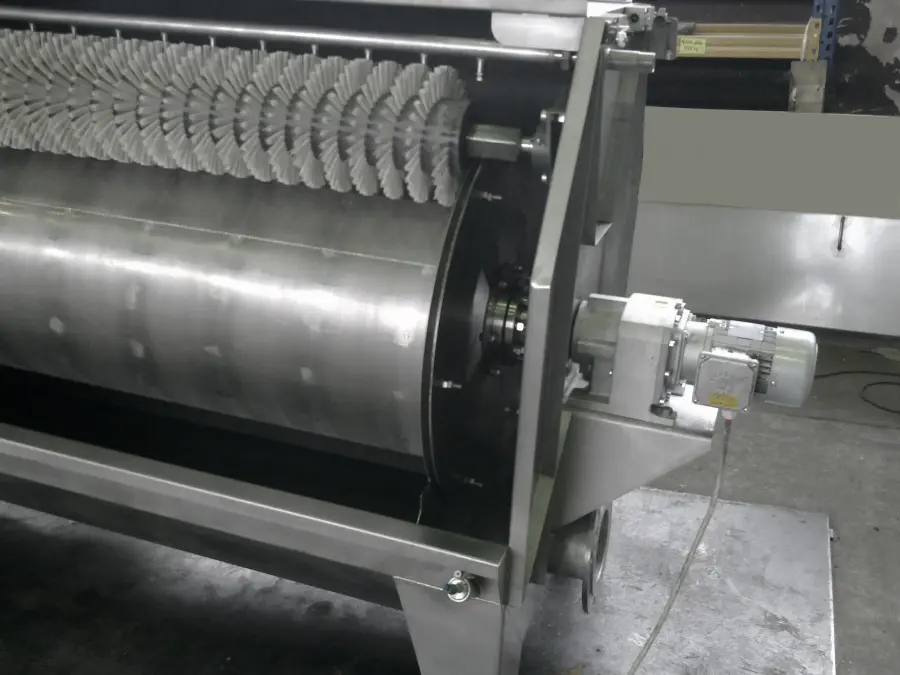
The SCREENMASTER ES is the externally fed counterpart. Gravity distributes influent across the outside of the rotating drum, solids are retained on that outer surface, screened liquid passes inward, and an internal spray system cleans the drum as it turns. Feeding from outside means captured material never travels through the inside of the machine, which keeps internal components out of the debris stream. Both drums are enclosed, self-cleaning, and stainless, so the choice turns on feed direction and how operators reach the captured material. The ES turns up on municipal headworks, industrial wastewater process streams, and sludge screening, with dairy wastewater treatment a related context.
The SPIRALIFT configurations are not interchangeable
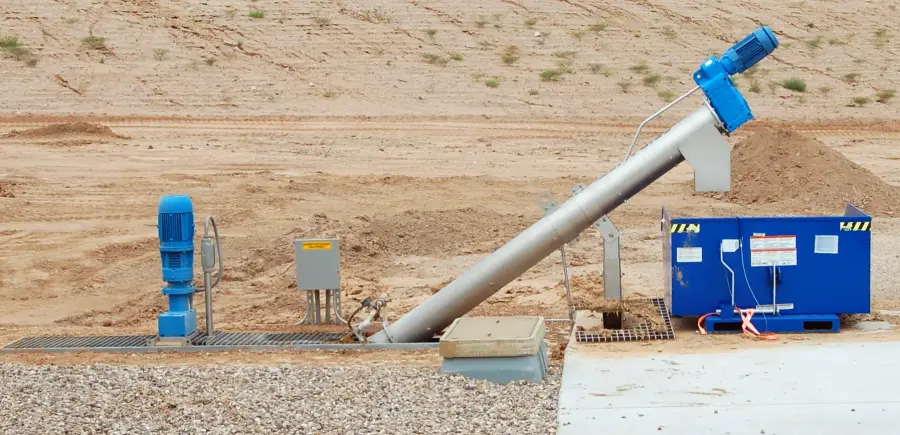
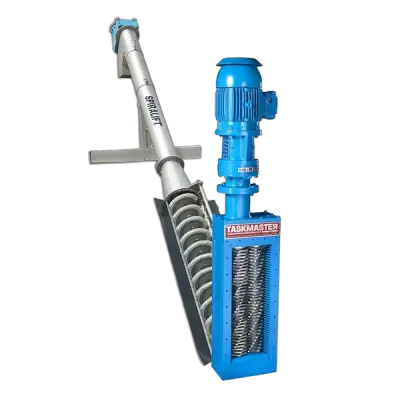
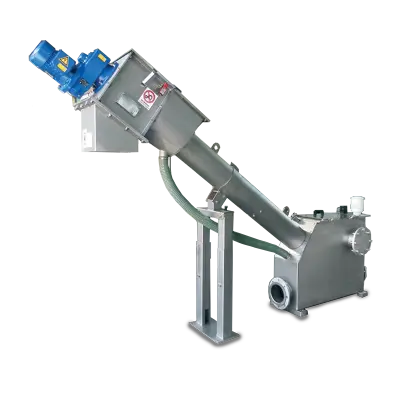
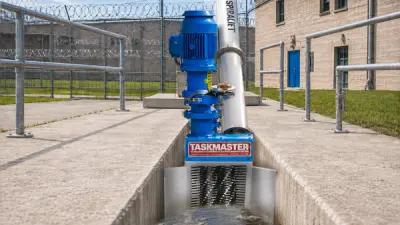
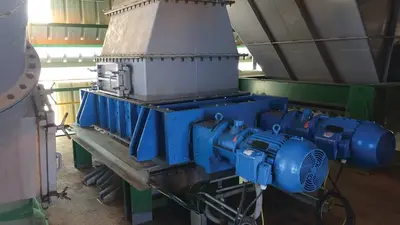
SPIRALIFT is a family of auger screening systems, and the letters after the name carry most of the meaning. The SPIRALIFT SL is the channel screw screen with a TASKMASTER TM8500 twin-shaft grinder ahead of it. Solids arrive already broken down, which exposes more surface to the spray wash, and the screen basket captures them while a shaftless auger with brushes around its perimeter sweeps the basket and carries the load up the transport tube. Free water drains back as the solids climb, an optional compaction zone squeezes them near the discharge, and organics are washed back into the flow. The same screw screen without the grinder is the SPIRALIFT S. Heavier variants change the grinder rather than the screen: the SLX handles concentrated institutional effluent such as clothing, sneakers, sheets, and blankets with a TM1600, while the SLT and SLD use the TASKMASTER TITAN and TITAN Duplex, with channel dividers keeping pre-screened flow separate from the solids-laden portion.
The SPIRALIFT SL headworks case study describes a facility taking domestic flow plus a Veterans home stream whose cooking grease congealed into blocks that clogged lines while rags fouled the pumps. That account describes the installed SL as a shaftless auger and finely perforated screen working with a TASKMASTER TITAN grinder, which is what that site received rather than the standard SL arrangement the current brochure lists with a TM8500. The City of Plymouth case study covers a small plant with no headworks at all before 2009, where a SPIRALIFT S channel screen now discharges into a SPIRALIFT SC conditioner.
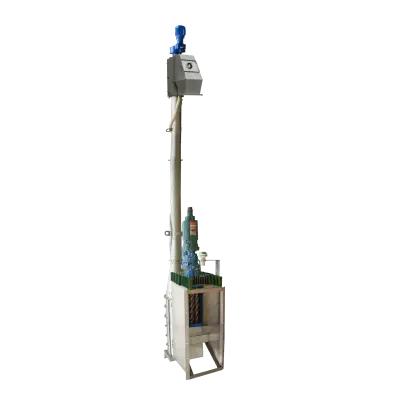
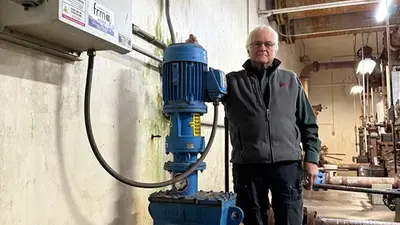
The SPIRALIFT SLV takes the same idea and stands it up. It drops into pump station wet wells where no conventional screen will fit and conveys captured solids straight up, and it is typically supplied with a TASKMASTER grinder that pre-conditions solids before they reach the screen area. Brushes on the rotating auger sweep the semicircular perforated basket, liquids drain back into the flow as the solids climb, and a split screen design lets a crew change brushes without pulling the unit from the wet well. The Northeast Correctional Facility case study, at a plant in Bowling Green, Missouri, is the published deep-pit example: a 35 foot pit taking prison waste, pumps clogging and needing frequent replacement, and an operator who reports the SLV was the only machine that could handle that duty in the space available.
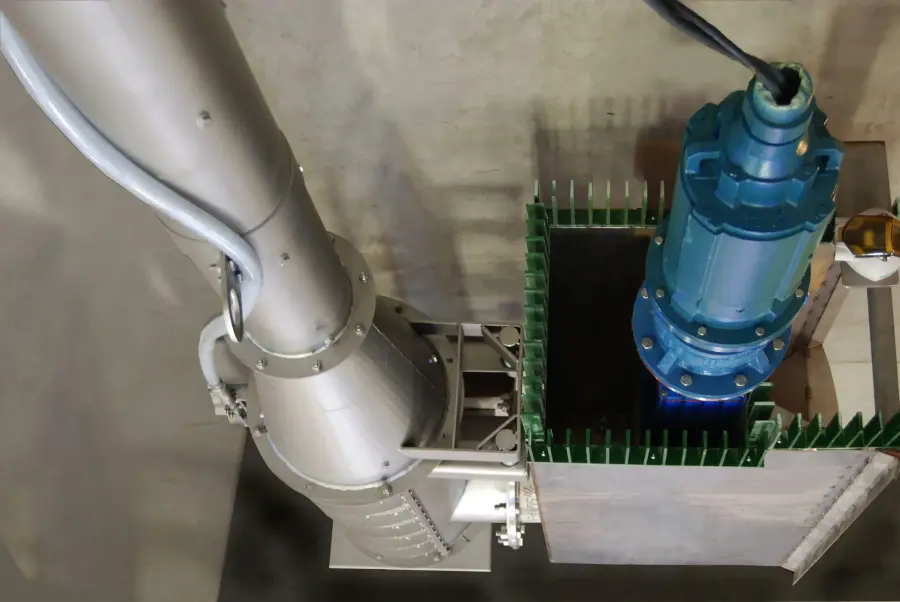
The SPIRALIFT SI solves the layout problem rather than the depth problem. It puts the screw screen inside an enclosed stainless steel tank that connects to a pipeline through standard ANSI flanges, so no concrete channel is required. Spray wash is built in, a compactor sits near the discharge, and the tank carries a safety-interlocked hinged cover for access to the interior. That cover is the honest limit on the configuration: the SI is a self-contained screening enclosure, not a pressure-retaining housing, so a line that must stay under pressure is work for an inline grinder rather than an inline screen.
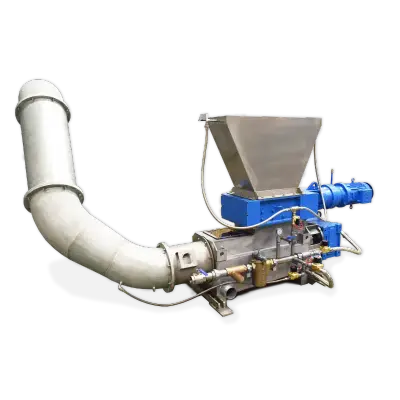
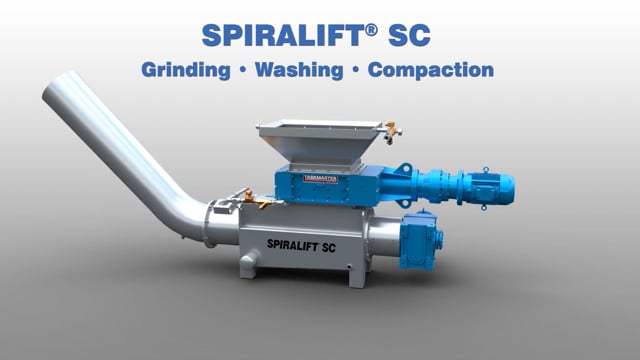
The SPIRALIFT SC is the one configuration that never sees raw channel flow. Screenings from upstream screens drop into its hopper, a spray system flushes them into a TASKMASTER grinder that breaks them up and loosens organics, and the material passes into a wash tank with a rotating center spray before a perforated screen drains it and the compaction section squeezes it out. Units are also supplied without the grinder. The Collinsville, Illinois case study describes bar screen screenings that were wet, odorous, and costly to dispose of, an SC supplied for a trial that operators converted into a purchase, and output the plant describes as clean, dry, and homogeneous. What matters for selection is the boundary: an SC does not capture raw channel solids; it conditions screenings that another screen has already removed.
What engineering needs, and where this guide stops
Every family above gets sized from the same working information:
- The flow pattern, including diurnal behavior, storm response, and whether bypass or a redundant channel exists
- The solids as they actually arrive and whether the goal is coarse removal or fine separation
- Channel width and depth or the piping arrangement, plus the lift to the discharge point
- The headloss the hydraulic grade line can absorb with the screen loaded
- Wash-water availability, the screenings destination, corrosion exposure, controls, and access for removing the unit
Nothing above settles an opening size, a flow rating, a screenings quantity, a headloss figure, or a layout. Those come out of that package reviewed together for a specific project. Bring the duty statement to Applications Engineering, and be ready to point at the product page you think fits and say which of the five jobs it is doing.