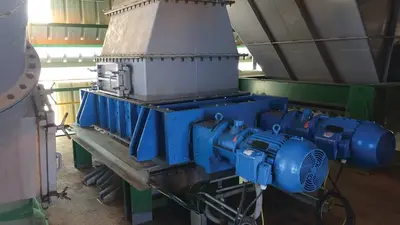
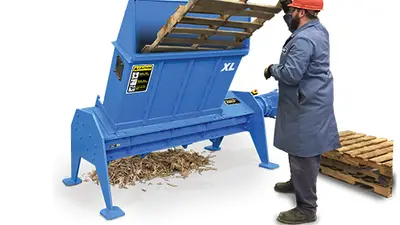
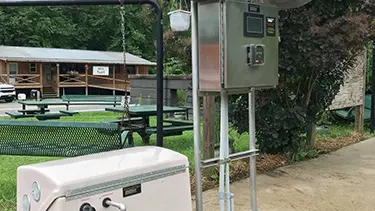
A grinder reduces solids and leaves them in the flow. A screen captures solids and takes them out of the flow. Every other difference at headworks follows from that one, including what the plant hauls away, what the hydraulic grade line has to absorb, what maintenance looks like, and how much room the structure needs. Plenty of plants need both, either as two machines in the same channel or as one system that grinds and screens in a single frame, and that is a legitimate answer rather than a compromise.
The wastewater grinder selection guide and the wastewater screen selection guide go family by family once the direction is settled. What follows is how to settle it, in the context of wastewater treatment headworks. Sizing, ratings, and layout are Applications Engineering work in every case.
Whether solids leave the stream
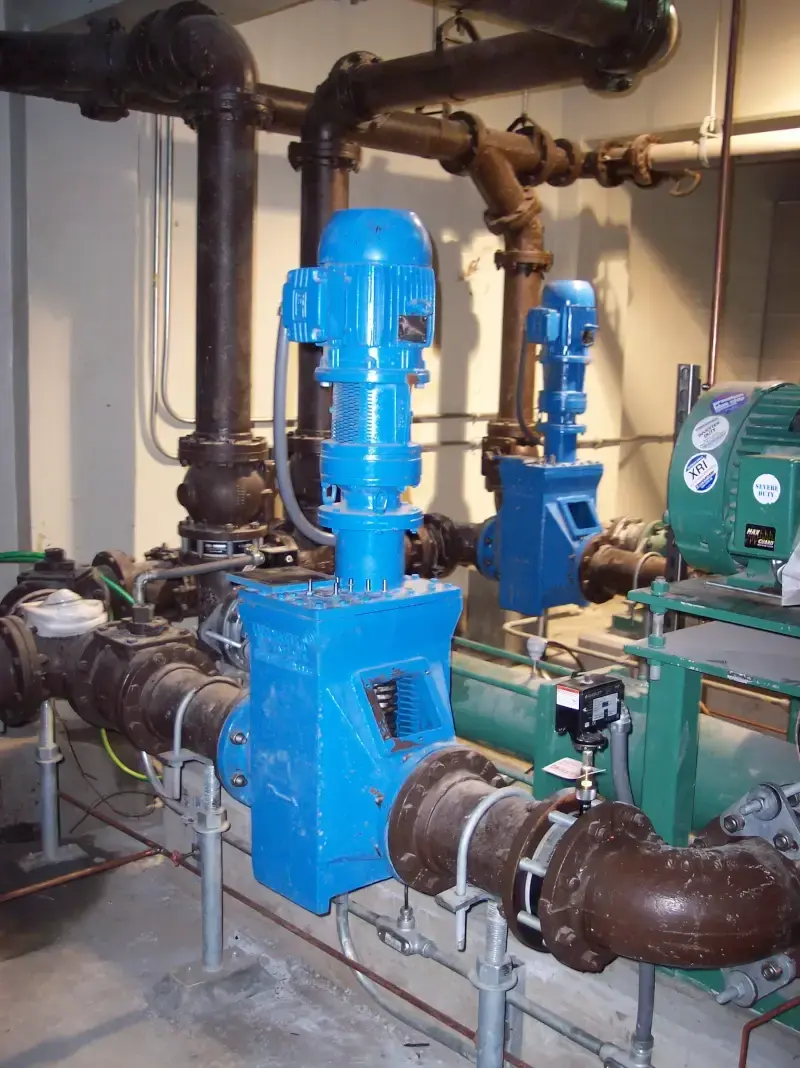
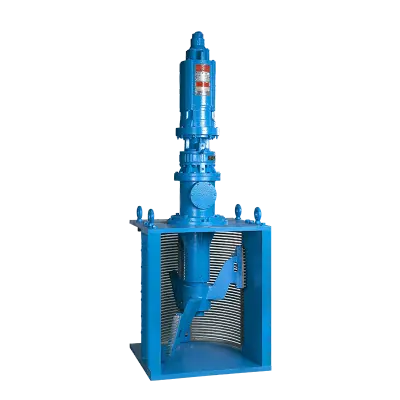
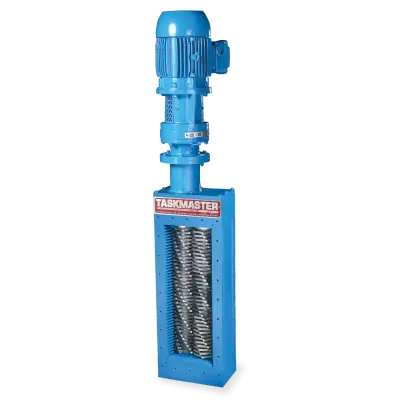
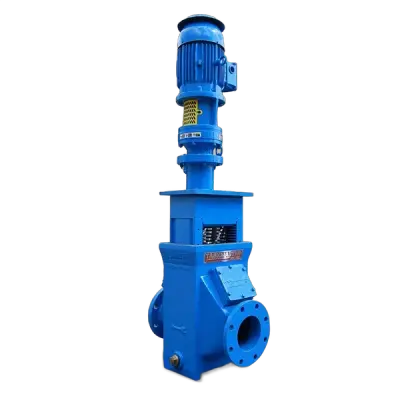
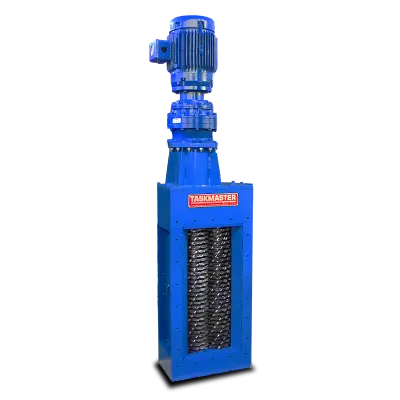
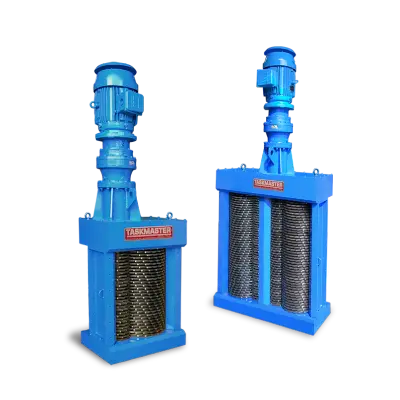
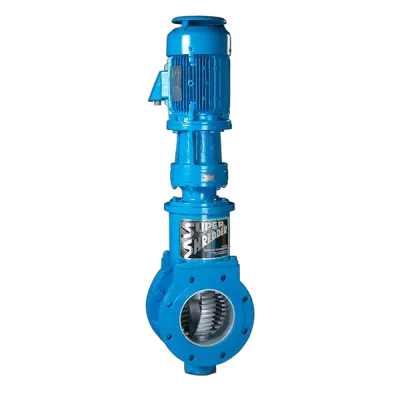
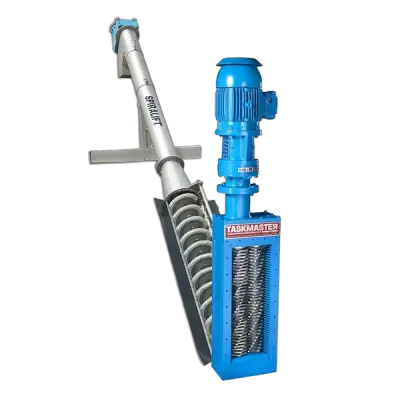
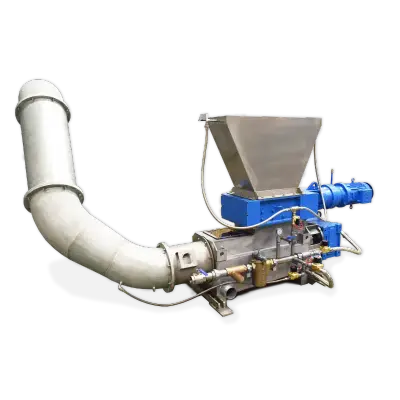
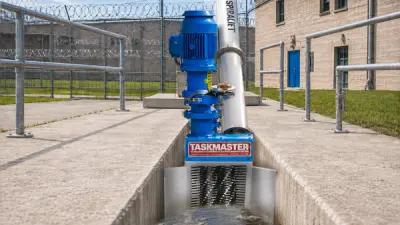
Grinding keeps everything in the water. Plastics, rags, wipes, wood, and debris are sheared down to fragments that pumps, valves, and downstream processes can pass, and the plant produces no separate residual to handle. Channel and gravity duty sits with the TASKMASTER TM8500, heavier or more abusive solids with the TASKMASTER TM1600, high-flow channels with the TASKMASTER TITAN, and pressurized pipe with the TM8500 Inline or the SUPER SHREDDER.
The DIMMINUTOR belongs on that side of the line even though it has a screen in it, and the distinction is worth stating plainly because the name of the part invites the wrong conclusion. It is a comminutor. Its stationary sizing screen holds oversized material in place while three bidirectional rotary cutters intermesh with stationary cutters and work that material down until it fits through the slots. The reduced material stays in the flow; nothing leaves the stream. There is no discharge chute, no bin, and no screenings to haul. The cutters penetrate the individual slots and clear them on each revolution, and there are no gaps between screen and cutters for solids to slip past unreduced, so the output is controlled rather than partial.
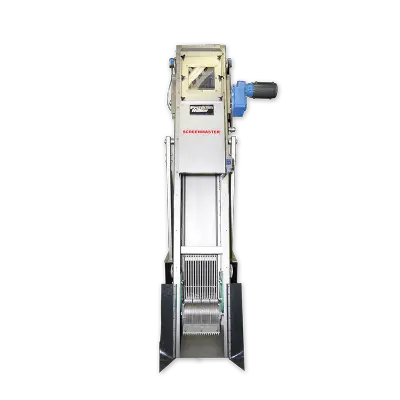
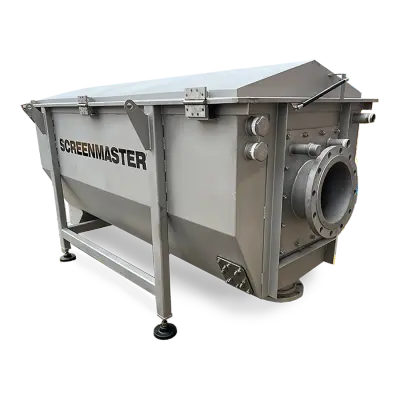
Screening does the opposite and creates a physical pile. The SCREENMASTER CS rakes a bar rack and lifts coarse debris out of a rectangular channel into a chute. The SCREENMASTER RT retains finer material on a continuously rotating drum surface and walks it to a discharge flange. The SPIRALIFT systems capture solids on a screen basket and convey them up and out of the channel. In each case the plant now owns a screenings stream, and the question shifts from what the machine does to where that material goes.
What the residuals decision commits you to
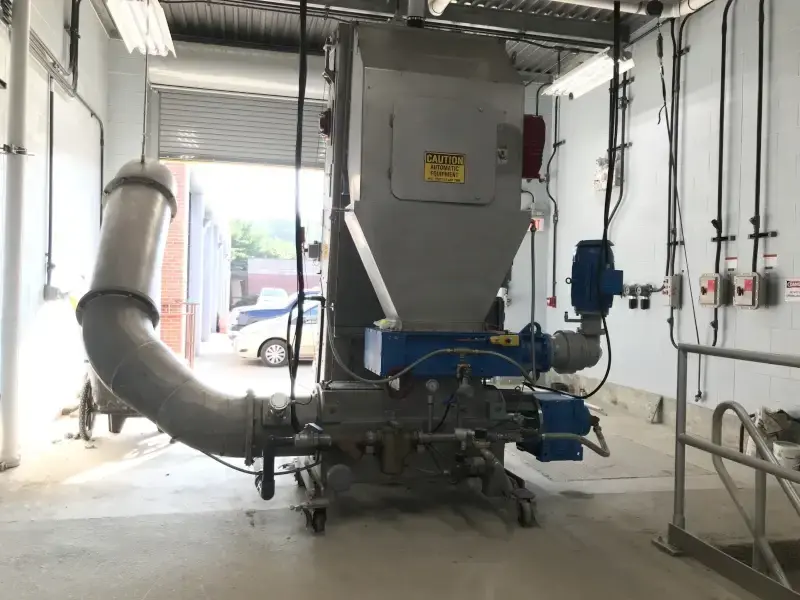
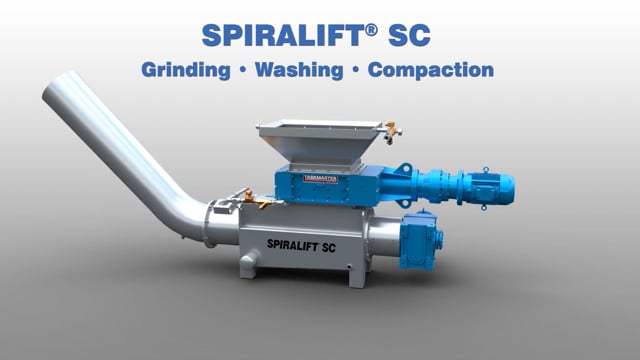
A screenings stream needs a discharge point, which means a bin, a bag, a conveyor, or a washer and compactor, and it needs somewhere to go after that. Raw screenings are wet, odorous, and heavier than they need to be, which is why conditioning usually follows capture. The SPIRALIFT SC exists for exactly that step: screenings drop into its hopper, a TASKMASTER grinder breaks them up and loosens organics, a wash tank with a rotating center spray flushes the organics back into the plant, and a compaction section squeezes the remainder out for disposal. The Collinsville, Illinois case study is the published account of a plant that had wet, odorous bar screen screenings and costly hauling, tried an SC, and kept it. Grinding sidesteps all of that, at the cost of leaving the material in the process for the downstream train to deal with.
Headloss behaves differently on the two sides
A grinder's headloss is mostly a property of its geometry, so it stays roughly where the design puts it. Open area through the cutting chamber is what the products compete on. The TITAN intermeshes one cutter stack with a second of much larger diameter, which enlarges the throat, raises the percentage of open area, and grinds across the full throat opening, so no diverter screens or flow-restricting baffles are needed to keep solids in the cutting zone. The SUPER SHREDDER applies the same thinking in a pipe with an open-center rotor. Even a comminutor has a floor rather than nothing: the DIMMINUTOR's published flow charts plot upstream head against flow and instruct the engineer to substitute a minimum headloss value whenever the calculated difference between upstream and downstream head comes out below it.
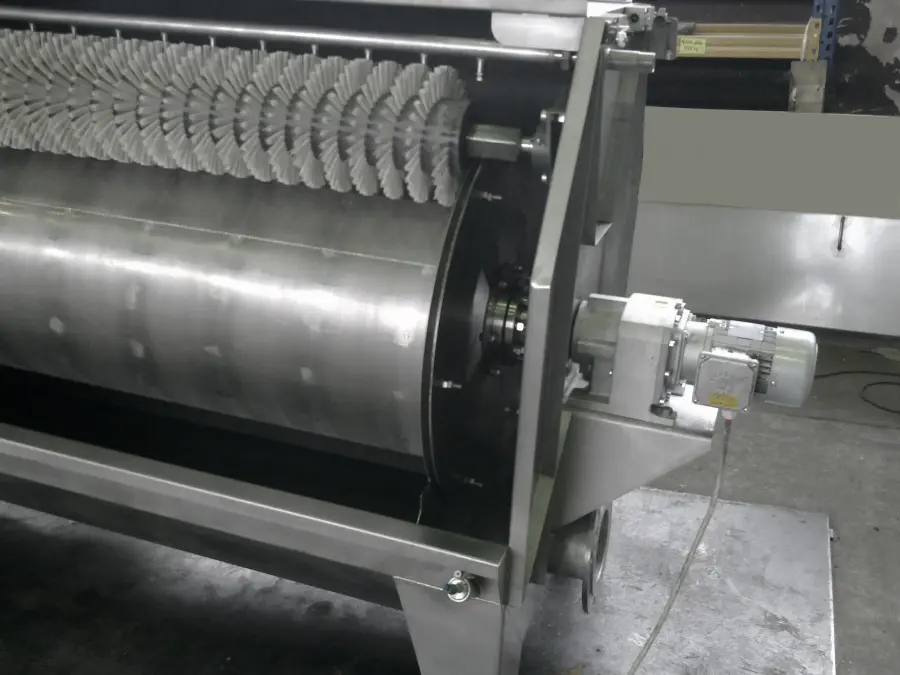
A screen's headloss is a variable, because it climbs as the surface loads and drops when the surface is cleared. That is why screens are controlled rather than simply switched on. The SCREENMASTER CS starts a rake cycle on a timer or on a high-level signal from a level sensor, a SPIRALIFT channel screen energizes when the upstream level reaches a set point, and the drum screens rely on continuous spray cleaning to keep the media open while the drum turns. The figure to record is not the clean-screen loss but what the hydraulic grade line can absorb on the worst day with the surface loaded.
Geometry decides more than preference does
Rectangular channels accept bar screens, comminutors, channel grinders, and channel screw screens, so geometry rarely eliminates anything there and the residuals question does the work. Wet wells and deep pits are more restrictive: they favor vertical arrangements, submersible or extended-shaft drives, and guide rails for pulling the unit without entering the structure.
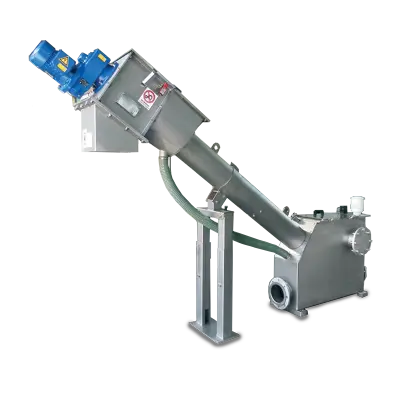
Pipe is where the two sides separate hardest. A line that has to stay under pressure needs a machine flanged into the run that retains that pressure, which is inline grinder territory and not something an open-channel screen can do. The SPIRALIFT SI also connects to a pipeline through standard ANSI flanges, and it is easy to file next to an inline grinder for that reason, but it is a different animal. The SI is a screw screen inside a self-contained stainless steel tank with a safety-interlocked hinged cover for access to the interior. That makes it an enclosed screening system that removes the need for a concrete channel, not a pressure-retaining housing. It solves a civil and layout problem; it does not make screening a pressurized-line operation.
The SPIRALIFT configurations, one at a time
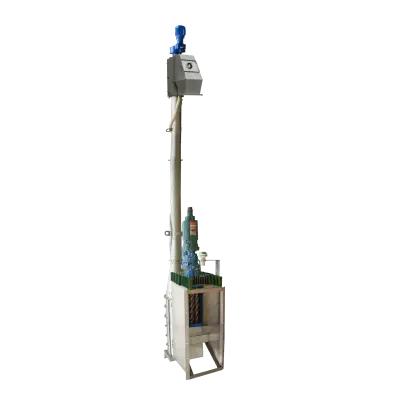
SPIRALIFT is a family rather than a product, and the suffixes are not decorative. The SL is the channel screw screen with a TASKMASTER TM8500 twin-shaft grinder ahead of the screen, so solids are broken down before the spray wash reaches them, then captured on the basket, swept by brushes on a shaftless auger, carried up the transport tube, dewatered, and discharged. The S is that same screw screen without the grinder. The SLX is built for concentrated institutional effluent such as clothing, sneakers, sheets, and blankets and pairs the screen with a TM1600. The SLT and SLD substitute the TASKMASTER TITAN and TITAN Duplex and add channel dividers that keep pre-screened flow separate from the solids-laden portion. The SLV turns the screen vertical for pump station wet wells where nothing else fits, conveying solids straight up with a TASKMASTER grinder pre-conditioning them first. The SI encloses the screw in a tank for pipeline connection. The RD is an inclined drum-style basket for wide channels and high capacity, and the SR is a packaged septage receiving station. The SC is the outlier, since it never touches raw channel flow and only conditions what another screen has already removed.
How plants have combined the two
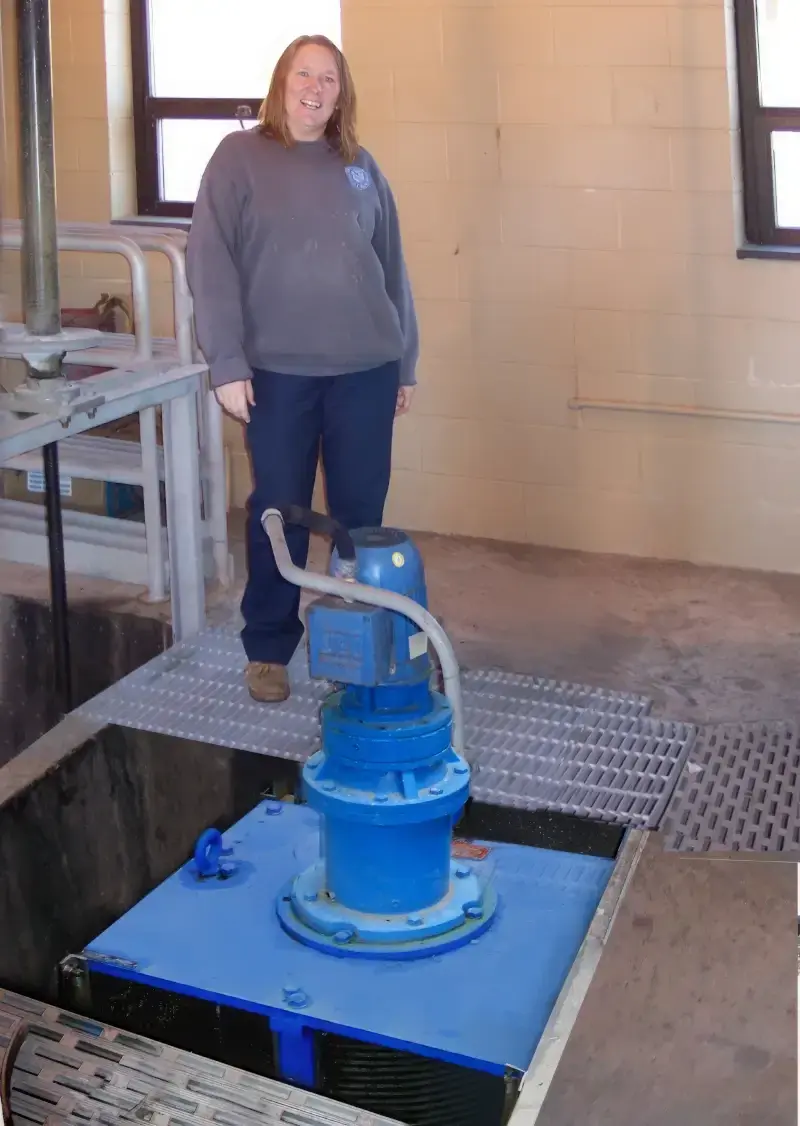
The Pottstown, Pennsylvania case study is the staged-channel example. The plant treats wastewater from roughly 15,000 area homes plus commercial and industrial sites across the borough and three nearby townships, and its headworks runs two DIMMINUTOR units in channels with a bar screen in front of each one. The bar screens are what remove material from the flow. The DIMMINUTOR units reduce plastics, rags, wood, and other incoming solids so that downstream pumps and equipment are protected from abrasion and clogging, and the reduced material stays in the flow rather than leaving the stream at that step. The plant superintendent's account in the case study is about service life, describing a unit installed in the original plant upgrade in 1991 that has been rebuilt several times and remains operational, alongside a newer Turbo DIMMINUTOR DM36 running in tandem with it.
The Central Valley Water Reclamation Facility case study from Salt Lake City is the other combination, and it runs in the opposite order. Grease balls, sticks, rocks, and wood were arriving at the headworks and plugging the vacuum system that conveys screenings away from the screens. The plant put a heavy-duty TASKMASTER TM1600-series screenings grinder between the screen discharge and the conveyor inlet, and the maintenance manager reports that it stopped the plugging. The screens still do the removal. The grinder makes what they remove small enough for the conveying system to handle, which is a screenings-handling job rather than a substitute for screening.
Taking the decision to engineering
A useful project brief answers five questions:
- Should solids be removed, reduced, or both, and what problem should that solve?
- Is the installation an open channel, wet well, gravity line, or pressurized pipeline?
- What solids arrive, and which pumps, valves, or processes need protection?
- Can the plant accept and haul a screenings stream, and how much headloss and footprint are available?
- Can either unit be bypassed, isolated, or backed up while it is serviced?
None of this settles a size, a rating, a headloss number, or a layout. Those come from measured flows, sampled solids, real dimensions, pump curves, process limits, and the disposal contract, reviewed together by Applications Engineering for the specific project.